

Now Reading: Who Gains More—Trump or Pakistan? The Real Story Behind the Sudden Alliance
-
01
Who Gains More—Trump or Pakistan? The Real Story Behind the Sudden Alliance

Who Gains More—Trump or Pakistan? The Real Story Behind the Sudden Alliance


What’s Behind Trump’s Latest Move?
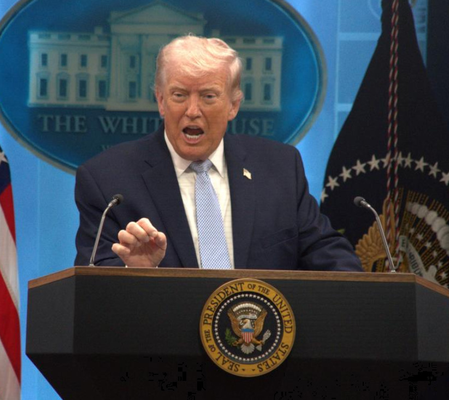
In June 2025, former U.S. President Donald Trump hosted Pakistan’s army chief, Field Marshal Asim Munir, at the White House. This high-profile meeting—complete with lunch in the Cabinet Room and an extended Oval Office session—marked a significant shift in America’s approach to Pakistan (Indian Defence News).
Previously, U.S. leaders rarely met Pakistani military officials without civilian context. Trump praised Munir as a key figure in stopping the brief military conflict between India and Pakistan in May, though Indian Prime Minister Narendra Modi rejected that claim (The Guardian). This sudden warmth raised questions across New Delhi and Washington alike.
What’s the Strategy?
Trump appears to see value in engaging Pakistan again—for various reasons:
- Pakistan’s geographic proximity to Iran, which could become crucial if the U.S. ever needed access to launch bases for covert operations near Iran’s underground nuclear facilities (The Guardian, The Economic Times, Indian Defence News).
- The U.S. aims to reduce reliance on China for critical minerals and energy. Pakistan may offer direct opportunities in these sectors (striveindia.in).
- Trump praised Pakistan for handing over an alleged ISIL-K orchestrator behind the 2021 Kabul airport bombing—highlighting Islamabad’s “counter-terror” credentials (Reddit).
As trust with Pakistan is restored, U.S. officials rolled back earlier plans to reduce military aid—signaling a clear strategic recalibration (thenews.com.pk, ipca.com.pk).
India’s Concerns Grow
New Delhi has expressed serious unease over this maneuvering:
- Trump’s repeated claim of facilitating the India–Pakistan ceasefire—a claim viewed as self-promotion by many analysts — risks damaging India’s confidence in Washington as a strategic partner (Wikipedia, timesofindia.indiatimes.com).
- The sudden warmth toward Pakistan’s military leadership has reopened old wounds about unbalanced U.S. influences in South Asia (The Guardian).
- Experts warn that praising Pakistan’s military shines a spotlight on Islamabad’s undermining of civilian authority, raising democratic concerns across the region (Indian Defence News).
Economic and Energy Deals
Importantly, Trump announced a new trade agreement with Pakistan focused on developing its oil reserves. He even suggested Pakistan might someday supply oil to India—a remark met with scepticism from Indian industry leaders who questioned the viability of such a scenario (apnews.com).
This comes shortly after the U.S. imposed 25% tariffs on Indian imports, raising concerns about Washington’s transactional approach to its partners (The Economic Times).
What’s Trump Getting in Return?
While signaling renewed engagement with Pakistan, Trump continues his strong U.S.–India outreach:
- India has received clearance for advanced defense deals, including jet fighters and radar systems—balancing the U.S. relationship in the region (blogifyzones.com, thenews.com.pk).
- Analysts note that the U.S.–Pakistan reset may actually be an attempt to drive a wedge between Pakistan and China, which remains Pakistan’s primary military and economic backer through the CPEC initiative (Al Jazeera, owsa.in).
Firming this, Pakistan faces pressure to diversify its partnerships—balancing China, the Gulf states, and Washington while resisting becoming overly dependent on any one power (stimson.org, owsa.in).
Jan Jagran Darpan’s Editorial View
Our team has carefully reviewed these developments: This is not merely a friendly gesture—it is a calculated recalibration. Trump is betting on Pakistan yet again, but it’s far from a one-sided favor. With strategic motives in Iran, minerals, counterterrorism, and regional balance, Washington aims to extract value while keeping India in the loop.
For India, this shift in U.S. diplomacy presents a complex challenge. Maintaining strong ties with the U.S. amid renewed engagement with Pakistan demands cautious diplomacy. Any misstep could jeopardize long-term trust and cooperation.
In this geopolitical chess game, the question Is Trump playing Pakistan, or is he himself being played? Either way, New Delhi must remain vigilant and proactive.
Sources-
Related Posts


Stay Informed With the Latest & Most Important News
Previous Post
Next Post


Advertisement








Advertisement