

Now Reading: Bharat Jodo to Courtroom Blow: Is Rahul Gandhi’s Love for India Under Attack?
-
01
Bharat Jodo to Courtroom Blow: Is Rahul Gandhi’s Love for India Under Attack?

Bharat Jodo to Courtroom Blow: Is Rahul Gandhi’s Love for India Under Attack?

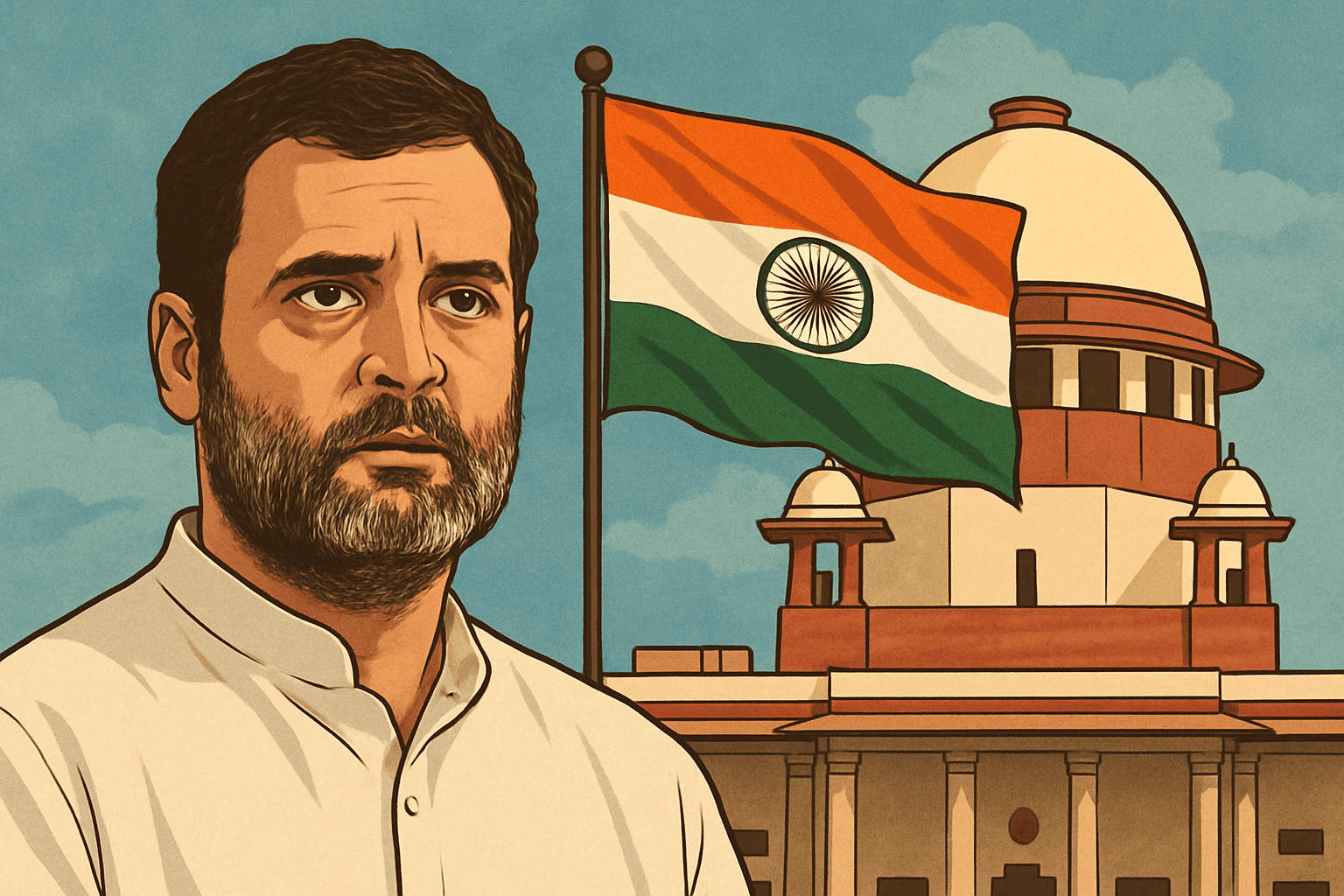
1. The Controversy: What Triggered the Debate
During a defamation hearing stemming from Rahul Gandhi’s remarks during the Bharat Jodo Yatra—where he said Chinese troops were “thrashing Indian soldiers” in Arunachal Pradesh—a Supreme Court judge, Justice Dipankar Datta, posed a striking question:
“If you are a true Indian, you would not say this.”
He also questioned the absence of credible evidence for Gandhi’s claim and why such statements were made publicly rather than in Parliament. (The Federal, Wikipedia)
This prompt was not brought in a vacuum—it instantly sparked a fierce debate over public dissent, accountability, and the judiciary’s role in defining patriotism.
2. Reactions from Political Circles
Opposition Pushback
- The INDIA bloc labeled the Court’s comments as “extraordinary” and “unwarranted”, claiming they violate democratic norms of dissent and debate. (The Economic Times)
- Priyanka Gandhi Vadra defended her brother, asserting that “judges cannot decide who is a ‘true Indian’,” recalling his consistent respect for the Indian Army. (Daijiworld)
- Former Rajasthan CM Ashok Gehlot went further, calling Rahul Gandhi “the biggest patriot,” citing his long march (Bharat Jodo Yatra) and family sacrifices as proof of his devotion. (AP News)
BJP’s Hostile Response
The ruling party seized on Justice Datta’s remark to question Rahul Gandhi’s national loyalty. BJP spokesperson Gaurav Bhatia told media that the assassination of the remark underscores Rahul’s need to be more cautious. (LawBeat)
3. Commentaries & Legal Perspectives
- Madhavan Narayanan wrote that patriotism isn’t the monopoly of courts or political classes. He emphasized that the Supreme Court is a custodian of the Constitution, not a patriotism licensing authority. (TheQuint)
- Editorial views in major publications like The Hindu, Indian Express, and Deccan Herald criticized the Court’s foray into questioning dissent and cautioning that dissent must not be equated with sedition. (The Indian Express, Telegraph India, Deccan Herald, The Economic Times)
4. Constitution, Dissent, and Democratic Spaces
The Indian Constitution was deliberately drafted to protect liberty, expression, and a pluralistic patriotic identity—unlike a singular, monolithic definition. The preamble underscores values like justice, fraternity, and dignity for all, without prescribing the only way one must express love for the nation. (Wikipedia)
The Supreme Court’s oral criticism risks blurring the line between patriotism and conformity, a concerning step in a vibrant, plural democracy.
5. Political and Constitutional Implications
For Rahul Gandhi: This episode gives him a platform to highlight the importance of questioning authority and reinforcing the opposition’s function in democracy.
For the Judiciary: It raises questions about its boundaries—should judicial comments step into defining patriotism? Legal experts warn such comments can impair public trust, especially when transparency on territorial issues is low. (TheQuint)
For Citizens: The message remains—criticism of the government, even on security matters, must be allowed and protected. Democratic health is measured not by uniform agreement, but by the freedom to question.
6. Final Thoughts from the Jan Jagran Darpan Editorial Desk
Patriotism is not a singular token granted by any courtroom or political mob. It is deeply personal, shaped by love, questioning, sacrifice, and action. The Constitution allows space for dissent because democracy thrives when conversations aren’t silenced but scrutinized.
Today’s narrative isn’t just about Rahul Gandhi. It’s about safeguarding our democratic spirit, ensuring that dissent remains an act of active citizenship, not a sign of disloyalty.
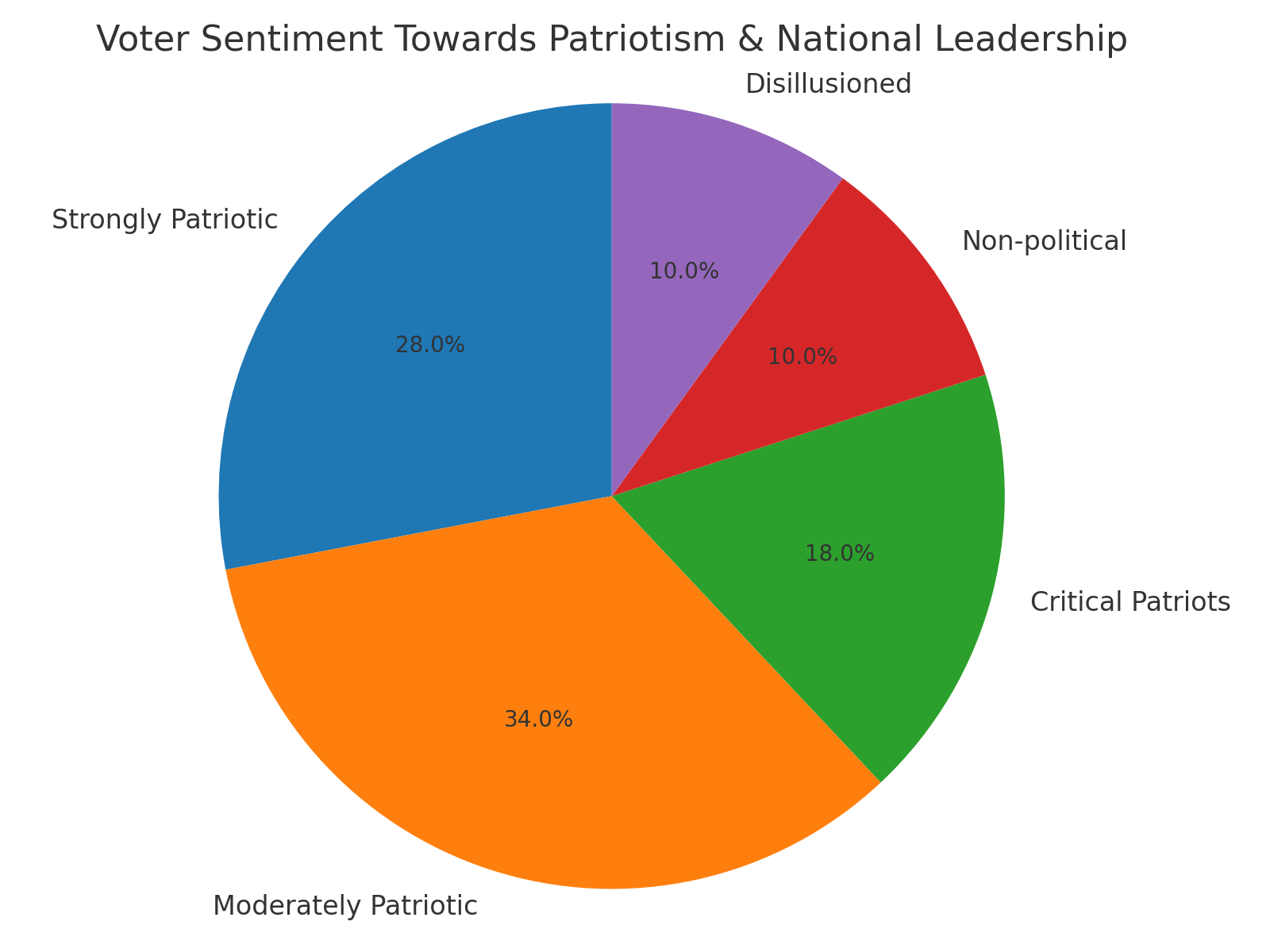
Voter Sentiment Towards Patriotism & National Leadership
Related Posts



Stay Informed With the Latest & Most Important News
Previous Post
Next Post

Advertisement





Advertisement
