Now Reading: Opposition’s Planned March from Parliament to Election Commission Blocked by Police – Political Tensions Rise
-
01
Opposition’s Planned March from Parliament to Election Commission Blocked by Police – Political Tensions Rise

Opposition’s Planned March from Parliament to Election Commission Blocked by Police – Political Tensions Rise

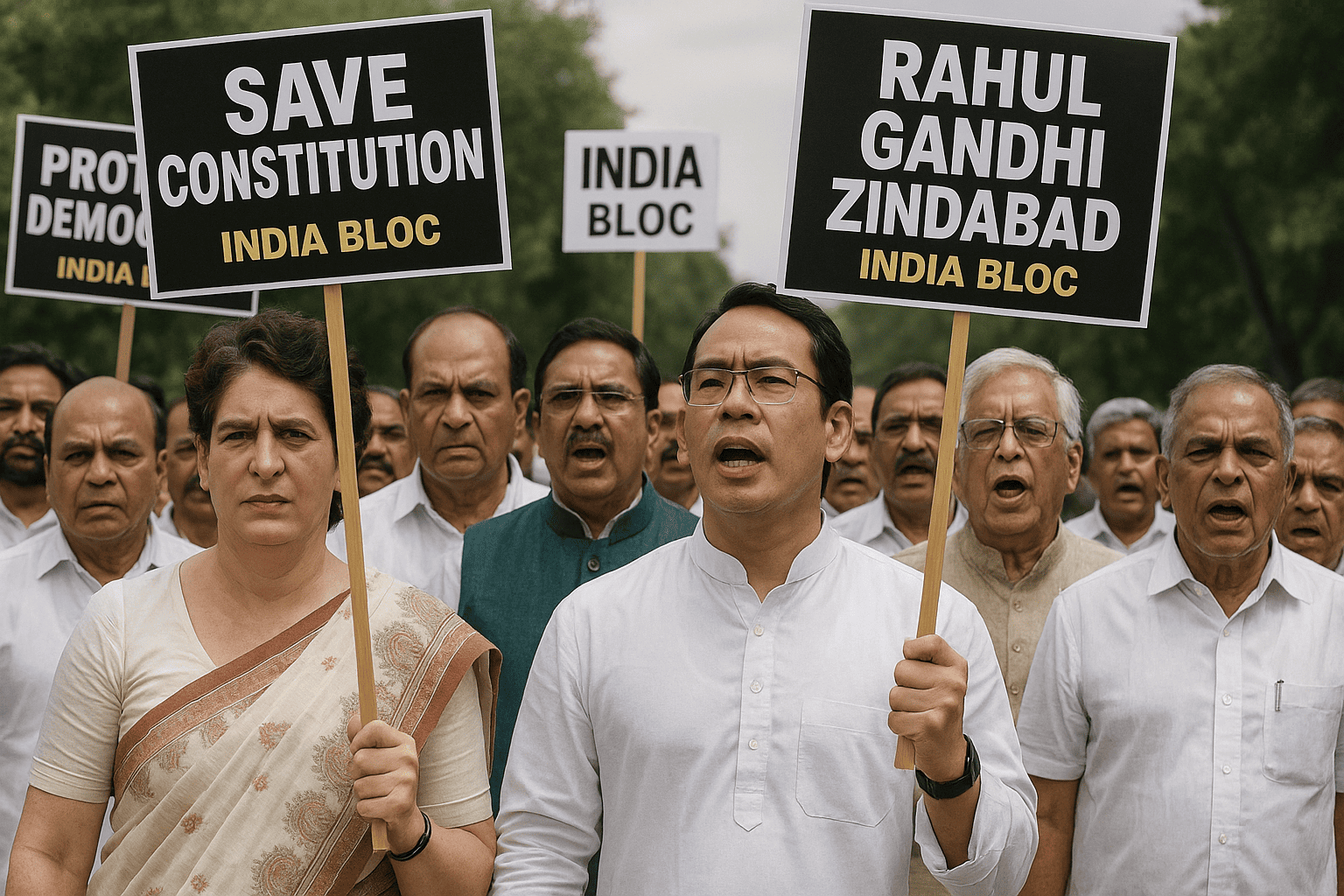
The political atmosphere in the national capital turned tense today as nearly 300 Members of Parliament from opposition parties planned to march from Parliament to the Election Commission’s office. The march, intended as a united show of dissent against what the opposition claims are “unfair election practices” and “lack of transparency” in the electoral process, was halted after Delhi Police announced that no formal permission had been granted for the gathering.
What Triggered the Protest?
The decision to organise this march reportedly came after a series of heated debates in Parliament, where opposition leaders accused the Election Commission (EC) of ignoring their repeated demands for clarity on voter list discrepancies, election code enforcement, and alleged political bias. The leaders have claimed that such issues, if left unchecked, could damage the credibility of the upcoming elections.
According to political insiders, the march was designed to symbolically take the protest “from the House to the institution that safeguards democracy” — the EC. The opposition intended to submit a detailed memorandum demanding reforms, stricter monitoring of election expenditures, and a commitment to impartial conduct.
Police Intervention
However, the Delhi Police made it clear early in the day that no prior approval was sought or granted for such a large-scale public march. Citing security concerns and traffic disruption, police officials stated that the movement of hundreds of MPs from Parliament to the EC’s headquarters could cause significant public inconvenience and risk to safety.
Barricades were put up along key routes, and a heavy security presence was deployed around Parliament Street and the Ashoka Road stretch leading to the EC office.
Opposition’s Reaction
The opposition bloc leaders strongly criticised the police action, calling it an “attack on democratic rights.” Some MPs expressed frustration, saying that as elected representatives, they should have the right to approach a constitutional body collectively. Many leaders also accused the government of using law enforcement to stifle dissent and prevent public awareness of their concerns.
One senior MP from the opposition remarked that this was “not just about a march, but about the larger principle of whether voices questioning the system will be allowed to be heard.”
Government’s Stand
On the other hand, sources from the government dismissed the accusations, maintaining that the police decision was purely administrative. They stated that Parliament is the rightful place for MPs to raise issues, and street protests by lawmakers could set a “chaotic precedent.”
Possible Next Steps
While the police blockade prevented the physical march, opposition leaders are now considering taking the matter to court or organising similar demonstrations within permissible legal limits. There are also reports that the opposition may hold a sit-in protest within the Parliament premises itself to draw attention to their demands.
Political observers note that such confrontations between the opposition and the ruling government are likely to increase as the country moves closer to the election season. For now, the focus shifts to whether the Election Commission will respond to the opposition’s complaints and whether the standoff will escalate into a larger political flashpoint.
Related Posts

Stay Informed With the Latest & Most Important News
Previous Post
Next Post


Advertisement