

Now Reading: Each Dog Costs ₹110 a Day — The Price Tag That’s Draining Delhi’s Civic Funds
-
01
Each Dog Costs ₹110 a Day — The Price Tag That’s Draining Delhi’s Civic Funds

Each Dog Costs ₹110 a Day — The Price Tag That’s Draining Delhi’s Civic Funds

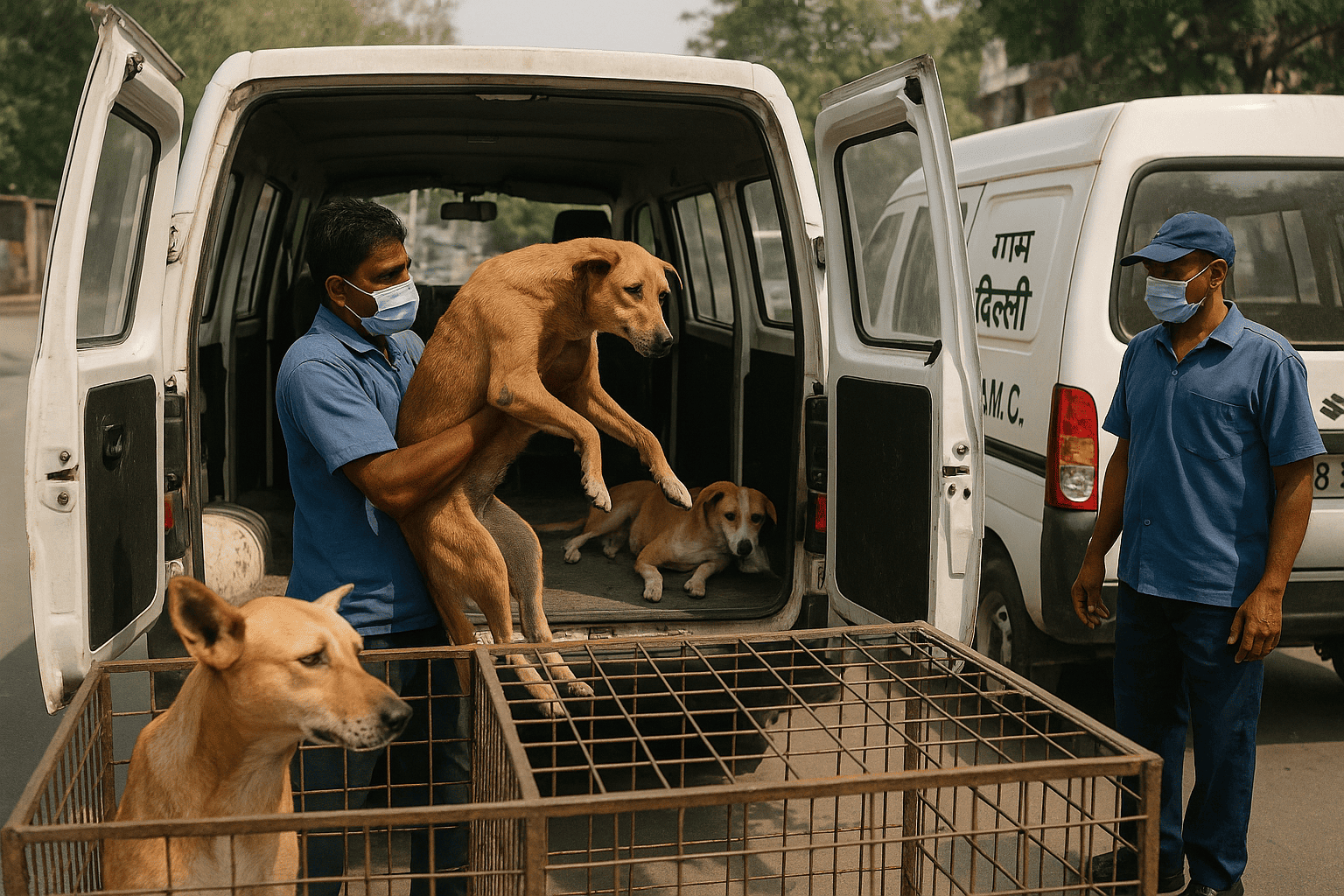
1. Understanding the Concept of Relocating Stray Dogs
Relocating stray dogs refers to the process where civic authorities capture, sterilize, vaccinate, and shift stray canines from one area to another—either to designated shelters or to new locations within city limits. While in some cases the term ‘relocate’ simply means temporarily moving the dogs for treatment or sterilization before returning them to their original area, in others it has involved shifting them to new zones entirely.
The aim, as per civic bodies, is to control the stray population, reduce instances of dog bites, and maintain public hygiene. However, the process is highly debated among animal rights groups, who argue that moving dogs away from their territory can cause stress to the animals and upset local ecological balances.
2. The Massive Financial Cost
Delhi’s three major municipal corporations—North, South, and East—are together spending an astounding ₹11 crore every single day on managing stray dogs. That translates to ₹110 per dog, per day, covering expenses such as:
- Capture and transport
- Sterilization surgeries
- Rabies vaccinations
- Shelter maintenance
- Feeding and medical care
With the city estimated to have over one lakh stray dogs, these costs quickly accumulate into one of the largest recurring civic expenditures outside of sanitation and waste management.
3. How the Money is Spent
The daily ₹110 per animal is not just food and water—it also covers operational and manpower costs:
- Dog-catching teams: Salaries, equipment, and vehicles
- Veterinary services: Doctors, surgeries, and post-op care
- Shelter management: Rent or upkeep of facilities, cleaning, and security
- Medical supplies: Vaccines, antibiotics, and wound care
- Logistics: Fuel, transportation cages, and administrative overhead
Animal welfare contracts are often given to private NGOs or veterinary agencies, adding another layer of cost.
4. Legal and Policy Backdrop
India’s animal welfare rules under the Prevention of Cruelty to Animals Act and Animal Birth Control (ABC) Rules make it clear that stray dogs cannot be arbitrarily culled and must be sterilized, vaccinated, and returned to their original locations. However, relocation beyond sterilization zones has led to legal disputes, with activists accusing authorities of violating Supreme Court guidelines.
In Delhi, civic officials argue that public safety concerns—especially in areas with rising dog bite incidents—sometimes necessitate shifting strays to controlled shelters. The policy is still evolving and remains under judicial scrutiny.
5. Public Sentiment: Divided Opinions
Residents’ opinions are split:
- Pro-relocation voices say the growing stray population creates safety hazards, especially for children and elderly people, and needs urgent control.
- Animal rights advocates insist that relocating dogs destabilizes their packs, causes fights in new areas, and can worsen aggression.
This clash of viewpoints has created an ongoing debate between welfare groups, civic bodies, and the public.
6. The Road Ahead
Delhi’s municipal bodies are now exploring more efficient models to bring down costs while still complying with legal and ethical standards. Proposals include:
- Expanding sterilization capacity to speed up population control
- GPS tagging of dogs to monitor movements and health
- Community feeding zones to reduce roaming and aggression
- Public awareness campaigns about safe interaction with strays
The long-term goal is to reduce both the population growth rate and the financial strain on the civic administration.
Editorial View
From an editorial standpoint, the ₹11 crore daily spend highlights the massive logistical and financial challenge that stray dog management has become for Delhi. Balancing public safety, animal welfare, and fiscal responsibility will require transparent planning, community cooperation, and scientific execution of sterilization programs. Without systemic reform, the current approach risks becoming an endless—and expensive—cycle.
Related Posts



Stay Informed With the Latest & Most Important News
Previous Post
Next Post


Advertisement









Advertisement
