Now Reading: Moments of Mayhem: How Arizona’s First Big Dust Storm of 2025 Turned Day into Night
-
01
Moments of Mayhem: How Arizona’s First Big Dust Storm of 2025 Turned Day into Night

Moments of Mayhem: How Arizona’s First Big Dust Storm of 2025 Turned Day into Night

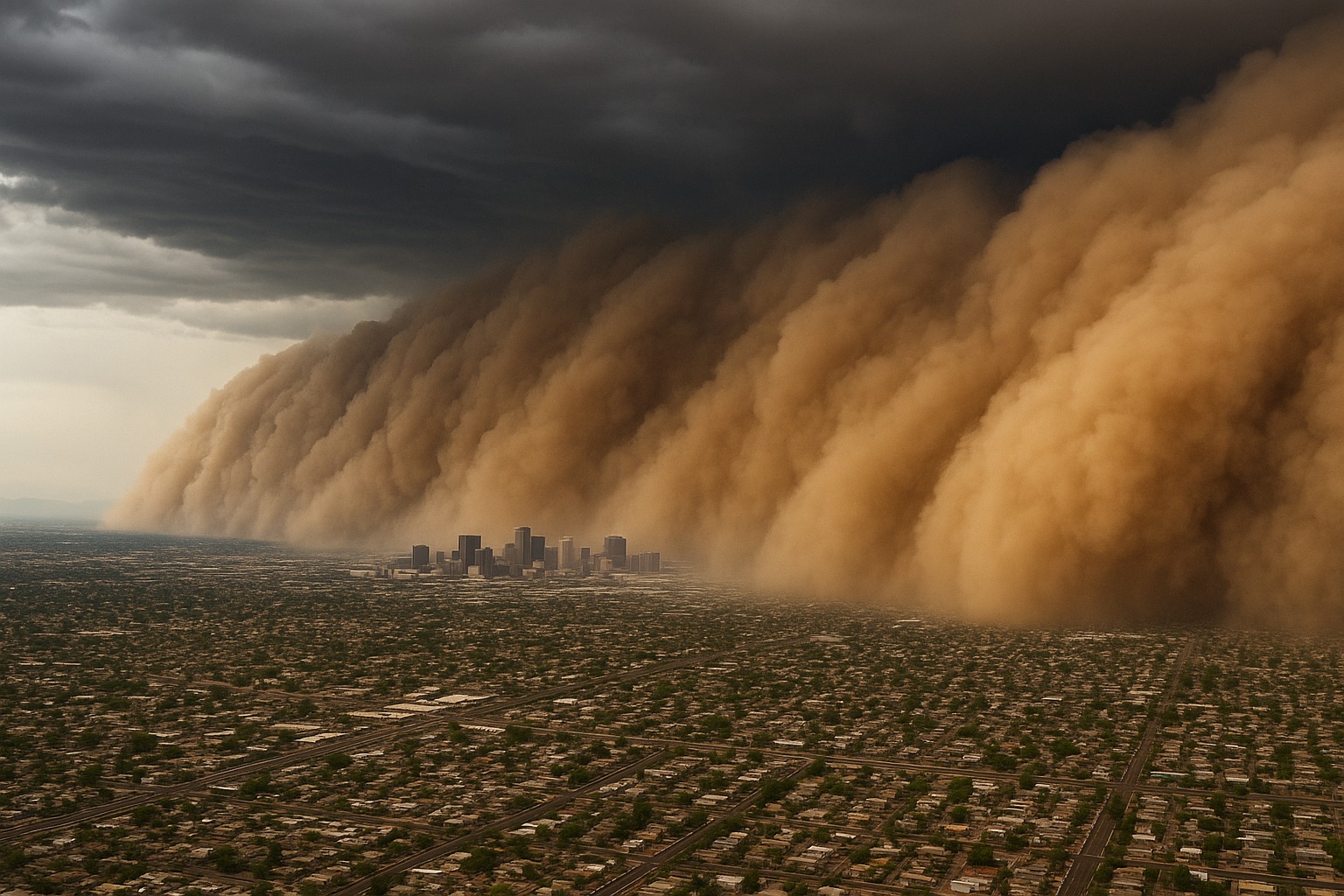
On the afternoon of Monday, August 25, an enormous dust storm—locally known as a haboob—descended upon Phoenix and its surrounding areas, casting an eerie darkness over the region. Clouds of wind-driven dust swept across the city, turning day into something resembling a desert twilight and drastically cutting visibility across neighborhoods and highways.
Chaos Unleashed: Flights Halted, Power Disrupted
- Sky Harbor International Airport faced immediate disruption: flights were delayed or suspended, and roof damage compounded operational chaos.
- Over 15,000 residents lost power in Maricopa County alone, with outages affecting homes, businesses, and traffic signals—roadways turned treacherous under the dust wall.
- The storm earned comparisons to scenes from The Mummy, as massive columns of sand rolled through, leaving commuters grabbing for safety.
In the Eye of the Storm: Personal Accounts
- Bernae Boykin Hitesman, driving home with her two children, recounted the chilling moment her car was swallowed by dust: “I couldn’t see my hand in front of my face if I put my hand outside.” The family endured the 15-minute ordeal tense but uninjured.
- In Gilbert, resident Richard Filley watched as trees swayed violently, bird feeders crashed, and dust permeated through every possible opening in his home. “They are kind of beautiful in their own way,” he reflected, marveling at nature’s visceral display.
- In Marana, at least one home lost part of its roof, while interiors across metro Phoenix were coated with a fine dust that slipped through closed doors and windows.
Meteorological Breakdown: Why It Happened
This haboob was driven by downdrafts from collapsing thunderstorms, a phenomenon common in arid regions during monsoon season:
- As storm-cooled air plummets, it fans outward, whipping up desert dust and forming towering walls that can span miles and reach heights of thousands of feet.
- Winds in this event peaked between 60–94 mph, rendering visibility to nearly zero and amplifying its destructive reach.
- Though monsoon rains followed, the storm’s intensity and timing—coinciding with afternoon rush hour—exacerbated its impact.
Community Impact and Response
- Authorities urged residents to avoid travel unless absolutely necessary. Streetlights failed, debris blocked roads, and cleanup crews worked overnight to restore order.
- Airport teams dealt with leaks from wind-driven rain and expedited cleanup to restore operations.
- Despite chaos, meteorologists reminded the public that such storms—while rare—are part of the region’s seasonal rhythm.
A Stirring Reminder of Nature’s Fury
Phoenix’s defiance against nature was never more fragile than during those dusty 15 minutes. The haboob forced the city to confront a powerful meteorological force that, by no measure, is science fiction—but reality. For residents, it was a cinematic spectacle that humbled and awed, while reinforcing the importance of preparedness in an increasingly unpredictable climate.
Related Posts



Stay Informed With the Latest & Most Important News
Previous Post
Next Post










Advertisement