

Now Reading: US Expert Warns of India-China-Russia Alliance Amid Trump Tariffs: “Americans Can’t Compete”
-
01
US Expert Warns of India-China-Russia Alliance Amid Trump Tariffs: “Americans Can’t Compete”

US Expert Warns of India-China-Russia Alliance Amid Trump Tariffs: “Americans Can’t Compete”

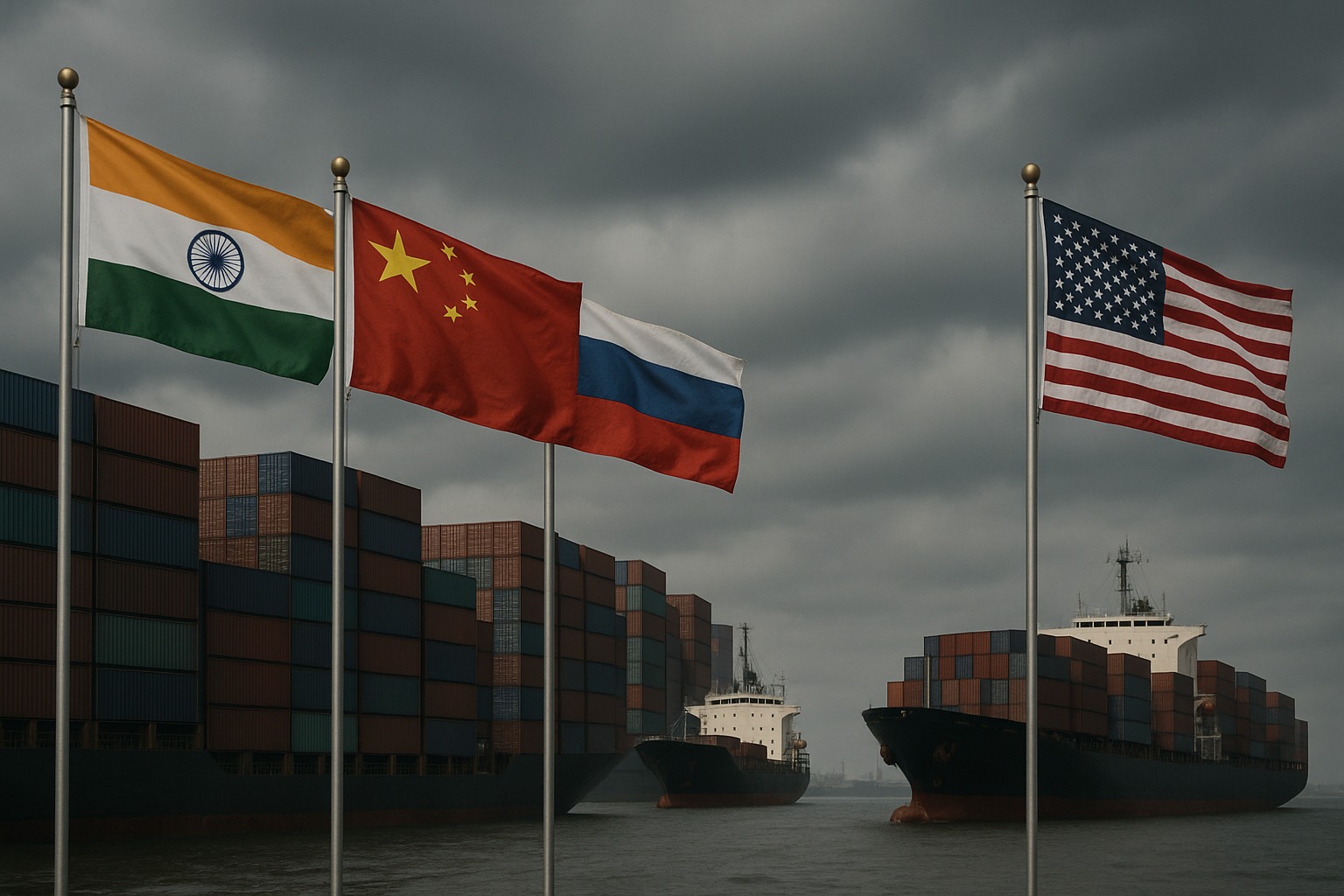
The debate over trade, tariffs, and shifting global alliances has intensified after a US expert warned that President Donald Trump’s new tariff strategy could inadvertently strengthen ties between India, China, and Russia. The warning highlights growing anxiety in Washington that an aggressive tariff regime may push major global economies into a counter-alliance, reducing America’s influence in international trade.
This comes at a time when the US is struggling to balance domestic manufacturing interests with global competitiveness, and when India, China, and Russia are actively seeking to deepen their economic and strategic cooperation.
The Trigger: Trump’s New Tariffs
Former US President Donald Trump, known for his “America First” policies during his previous term, has once again turned to tariffs as a tool to protect American industry. His administration has announced a 10% tariff on all imports, and in some cases, even higher levies on specific goods such as steel, aluminum, and automobiles.
While Trump insists this move will revive American manufacturing and protect jobs, many trade experts argue the opposite. Higher tariffs mean increased costs for American companies that rely on global supply chains, leading to more expensive products for US consumers.
According to critics, this strategy risks isolating the US economically while unintentionally driving other powers closer together.
US Expert’s Warning: “Americans Can’t Compete”
Speaking to international media, a senior US trade expert expressed deep concern over Trump’s policies. The expert argued that forcing higher tariffs on imports while not boosting domestic productivity will create a dangerous imbalance.
“If the US walls itself off with tariffs, countries like India, China, and Russia will look toward each other for trade and technology partnerships. Americans simply won’t be able to compete in the long run if this alliance strengthens,” the expert warned.
The concern reflects a broader fear: that the tariff wall could speed up the emergence of a multipolar trade system, where the US no longer holds the dominant position it once enjoyed.
Why India, China, and Russia Matter
The idea of an India-China-Russia economic axis has been discussed in global circles for years, but Trump’s tariffs may accelerate its development. Each country brings unique strengths to the table:
- India: A fast-growing consumer market with over 1.4 billion people, emerging as a global tech hub.
- China: The world’s largest manufacturing powerhouse with deep global supply chains.
- Russia: A leading energy exporter with strong defense capabilities and geopolitical reach.
Together, these three nations represent a formidable bloc in terms of population, resources, and industrial capacity. If pushed closer by US trade policies, their collective weight could reshape global commerce.
India’s Balancing Act
For India, this situation is particularly complex. Traditionally, India has maintained strong ties with the US, especially in defense, technology, and strategic cooperation. However, India also has deep historical and economic links with Russia, and increasingly significant trade ties with China despite border tensions.
If Trump’s tariff regime escalates into a full-fledged trade war, India could find itself naturally aligning with Asian partners to secure supply chains and reduce dependency on the US market. This doesn’t mean abandoning Washington, but rather hedging bets by participating in both Western and Eastern blocs.
China and Russia: Strengthening Bonds
China and Russia, meanwhile, have already strengthened ties in the face of Western sanctions. Energy deals, defense cooperation, and joint diplomatic stances in global institutions like the UN and BRICS demonstrate their growing alignment.
For Beijing and Moscow, bringing India more firmly into the fold would be a strategic coup—giving them access to India’s vast market while showcasing that the “Global South” can thrive without relying heavily on the US.
Global Economic Consequences
A potential India-China-Russia alliance would have sweeping implications for the global economy:
- Shift in Trade Flows
Trade between these countries could expand rapidly, bypassing traditional US-dominated systems. - New Payment Mechanisms
To avoid US dollar dependency, the alliance might promote alternative currencies or digital settlement systems. - Technology Partnerships
India’s IT expertise, China’s hardware ecosystem, and Russia’s energy technology could create joint ventures capable of rivaling Western giants. - Energy Security
With Russia’s oil and gas, China’s industrial demand, and India’s growing consumption, the bloc could create mutual energy guarantees that lessen Western leverage.
American Industries at Risk
The US expert’s statement that “Americans can’t compete” reflects growing worry about American companies’ vulnerability:
- Automobiles: Tariffs on imports make cars more expensive in the US, while Asian markets become more integrated.
- Technology: Restricting Chinese imports could push Beijing to double down on homegrown innovation, leaving US firms behind.
- Agriculture: If India and China increase trade with Russia, American agricultural exports could lose market share.
The bottom line: tariffs meant to protect may actually isolate.
The Political Angle
Domestically, Trump’s tariffs play well with certain voter bases—especially workers in traditional manufacturing states. However, experts argue that long-term competitiveness cannot be built on tariff walls alone.
Internationally, Trump’s strategy risks alienating allies and pushing rivals together. For Washington, the nightmare scenario is a formalized India-China-Russia trade bloc that actively competes with American economic leadership.
What Lies Ahead
Whether this alliance takes concrete shape depends on multiple factors:
- India’s willingness to fully engage despite border disputes with China.
- Russia’s ability to navigate Western sanctions while expanding trade with Asia.
- China’s balancing act between expanding BRICS partnerships and dealing with its slowing domestic economy.
Yet, even the perception of such an alliance could alter global markets, weaken US leverage, and encourage other nations to consider alternative trade groupings.
Conclusion
The warning from a US expert that “Americans can’t compete” if India, China, and Russia deepen their alliance amid Trump’s tariffs underscores the fragile state of global trade politics. While the US attempts to shield domestic industries, its policies may instead accelerate the rise of a powerful alternative bloc.
For India, China, and Russia, this moment presents an opportunity to enhance cooperation and push back against Western dominance. For the US, it is a reminder that isolationist policies carry global consequences—and may ultimately weaken the very competitiveness they aim to protect.
The Editorial Team of Behind The Headlines will continue to track this evolving story, ensuring readers receive fact-checked insights on one of the most significant shifts in the world economy today.
Related Posts



Stay Informed With the Latest & Most Important News
Previous Post
Next Post


Advertisement








Advertisement