Now Reading: ‘Apologise To India’: US Expert Criticises Trump Tariffs, Praises PM Modi’s ‘Pretty Smart’ Diplomacy
-
01
‘Apologise To India’: US Expert Criticises Trump Tariffs, Praises PM Modi’s ‘Pretty Smart’ Diplomacy

‘Apologise To India’: US Expert Criticises Trump Tariffs, Praises PM Modi’s ‘Pretty Smart’ Diplomacy

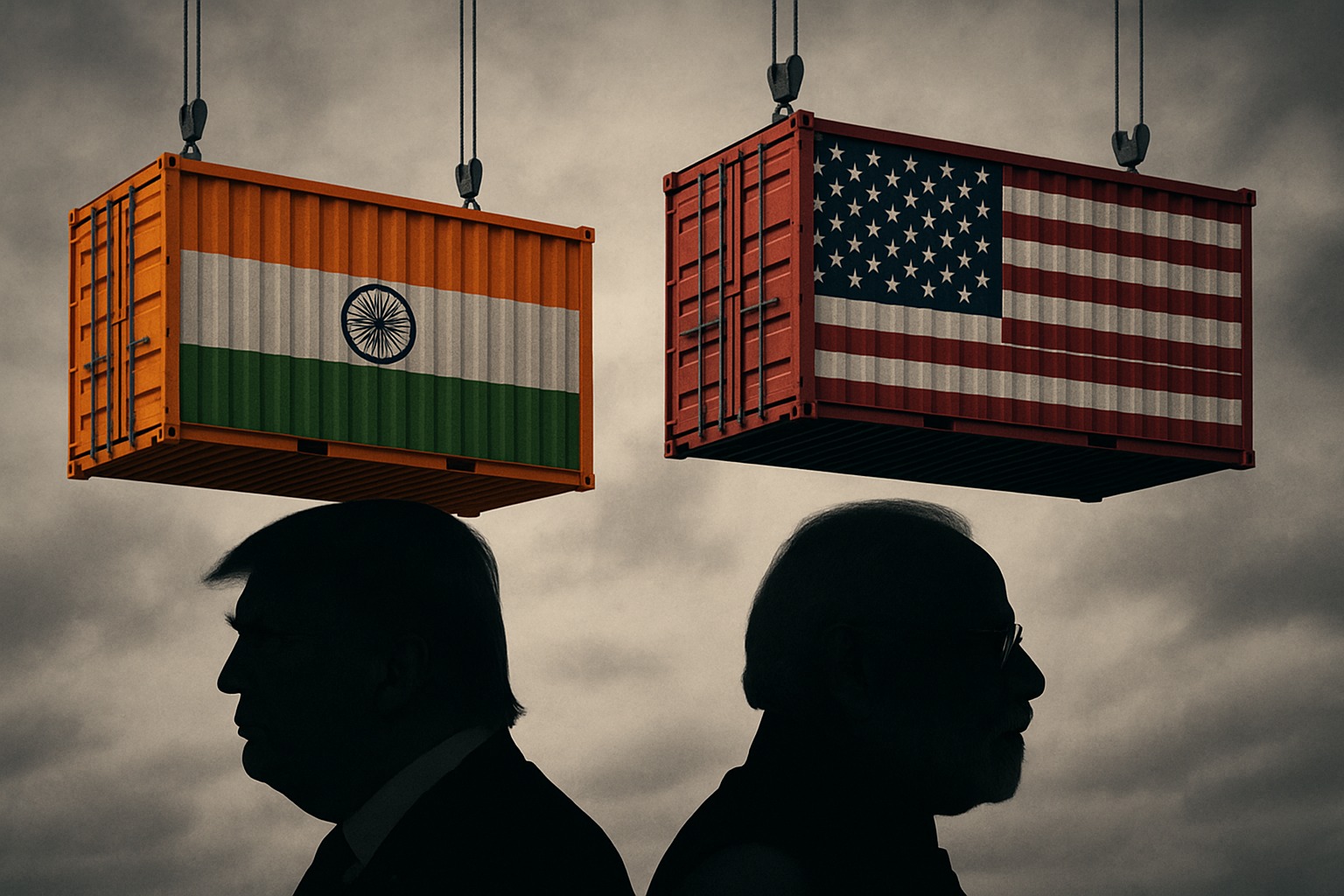
The debate around tariffs on Indian imports has taken a dramatic turn in the United States after a leading policy expert slammed former US President Donald Trump’s trade stance. The expert said Trump’s tariff-heavy approach towards India has been counterproductive and even suggested that Washington owes New Delhi an apology. At the same time, the expert lauded Prime Minister Narendra Modi’s diplomatic handling of the issue, calling it “pretty smart” and effective in protecting India’s interests during a turbulent phase in global trade.
The Editorial Team of Behind The Headlines analyses the expert’s remarks, the history of Trump’s tariffs, their impact on India-US ties, and the growing recognition of Modi’s diplomatic balancing act in the global arena.
The Expert’s Remark: A Sharp Rebuke to Trump
In a televised discussion on US foreign policy, the expert made a blunt observation that America’s handling of trade relations with India under Trump was misguided. He argued that imposing tariffs on one of America’s key strategic partners weakened trust and damaged economic opportunities.
The expert’s statement that the United States should “apologise to India” quickly gained traction in policy circles, as it challenged the notion that protectionist measures help American workers. Instead, he noted that tariffs only created friction with India, a country that Washington increasingly relies upon to counterbalance China in Asia.
Modi’s Diplomacy: Acknowledged as ‘Pretty Smart’
The expert also acknowledged Prime Minister Narendra Modi’s response to the tariffs. Rather than escalating tensions, Modi pursued what he described as “pretty smart diplomacy.” India retaliated selectively with tariffs of its own but simultaneously kept dialogue channels open, preventing the dispute from derailing broader cooperation.
By engaging directly with the US administration and rallying Indian industry to adjust strategically, Modi ensured that India avoided heavy long-term damage while also signalling firmness. This balance of assertiveness and restraint is now being recognised internationally as an example of effective leadership.
Trump’s Tariff Legacy with India
During his presidency, Donald Trump introduced a series of tariffs that directly impacted India’s economy. Key developments included:
- Withdrawal of India’s preferential trade status under the Generalized System of Preferences (GSP), affecting billions worth of duty-free exports.
- Tariffs on Indian steel and aluminum exports.
- Pressure on India to reduce tariffs on US goods, particularly motorcycles, medical equipment, and agricultural products.
Trump often framed India as a country taking “unfair advantage” of the US in trade. However, analysts point out that India’s overall trade surplus with the US is modest compared to other economies like China or Germany.
The Impact on India
India’s exporters bore the brunt of Trump’s protectionist policies. Key sectors that felt the pressure included:
- Textiles and garments, which lost competitiveness due to higher duties.
- Pharmaceuticals, although less affected by tariffs, faced uncertainty around US regulatory decisions.
- Agriculture, where India had to impose retaliatory tariffs on American products like almonds and apples.
- Small manufacturers, who found it harder to maintain US contracts under the new cost pressures.
Despite these challenges, India’s overall trade relationship with the US continued to grow, underlining the resilience of economic ties.
How Modi Balanced Retaliation and Engagement
Prime Minister Modi’s approach was seen as carefully calculated. India did not escalate the tariff dispute into a larger trade war. Instead, the government:
- Imposed retaliatory tariffs only where necessary.
- Engaged with US business lobbies to highlight India’s role as a reliable partner.
- Expanded ties in defence, technology, and energy sectors to offset friction in trade.
- Ensured that diplomatic channels with Washington remained strong, paving the way for continued strategic cooperation.
This prevented a complete breakdown in relations while allowing India to signal firmness against unfair trade measures.
Global Context: Why This Matters Now
The expert’s comments come at a time when global trade is once again under strain. With Trump indicating his continued interest in shaping US policy and tariffs remaining a political talking point, India finds itself at the centre of international attention.
For Washington, India is a key partner in countering China’s rise, and experts argue that trade disputes risk undermining this larger strategic objective. Recognising Modi’s diplomacy as “pretty smart” is an acknowledgment of how India has managed to keep its options open and continue building global partnerships despite tariff pressures.
The Larger Diplomatic Picture
Beyond economics, Modi’s handling of the Trump-era tariffs is being linked to India’s broader diplomatic strategy. India has carefully positioned itself as:
- A strategic partner for the US in the Indo-Pacific.
- A balancing force in the evolving multipolar world.
- A country willing to protect its sovereignty while engaging constructively with all powers.
By not allowing trade disputes to overshadow security, technology, and energy cooperation, Modi demonstrated the ability to prioritise long-term interests over short-term frictions.
Expert Opinions Converge
Other foreign policy analysts have echoed similar sentiments. Several have noted that while tariffs were framed as measures to protect US workers, they hurt American consumers by raising prices and disrupted established supply chains.
At the same time, India’s restrained but firm response is being studied as an example of how smaller economies can stand up to bigger powers without triggering all-out confrontation.
The Road Ahead for India-US Trade
While the expert’s call for an “apology” may be symbolic, it highlights a shift in thinking within the US policy community. There is growing recognition that:
- India should be treated as a trusted partner, not an adversary, in trade policy.
- Protectionist measures undermine larger strategic objectives in Asia.
- Diplomacy, rather than tariffs, will build stronger and more sustainable economic ties.
For India, the priority remains ensuring fair access to US markets while protecting domestic industries from sudden disruptions. Negotiations on issues like digital trade, intellectual property, and clean energy cooperation are expected to dominate the next phase of economic dialogue.
Conclusion
The US expert’s blunt remark that America should “apologise to India” for Trump-era tariffs has reignited debate about the role of protectionism in global trade. More importantly, it highlights how Prime Minister Narendra Modi’s measured and “pretty smart” diplomacy helped India navigate the turbulence without sacrificing long-term partnerships.
As global geopolitics becomes more competitive, this moment serves as a reminder that diplomacy, dialogue, and balance are often more effective than tariffs and confrontation.
The Editorial Team of Behind The Headlines will continue to track evolving India-US relations, analysing how trade, diplomacy, and leadership shape the future of one of the world’s most important partnerships.
Related Posts
Stay Informed With the Latest & Most Important News






Advertisement