

Now Reading: How China Sent a Message to US and India with its Military Parade
-
01
How China Sent a Message to US and India with its Military Parade


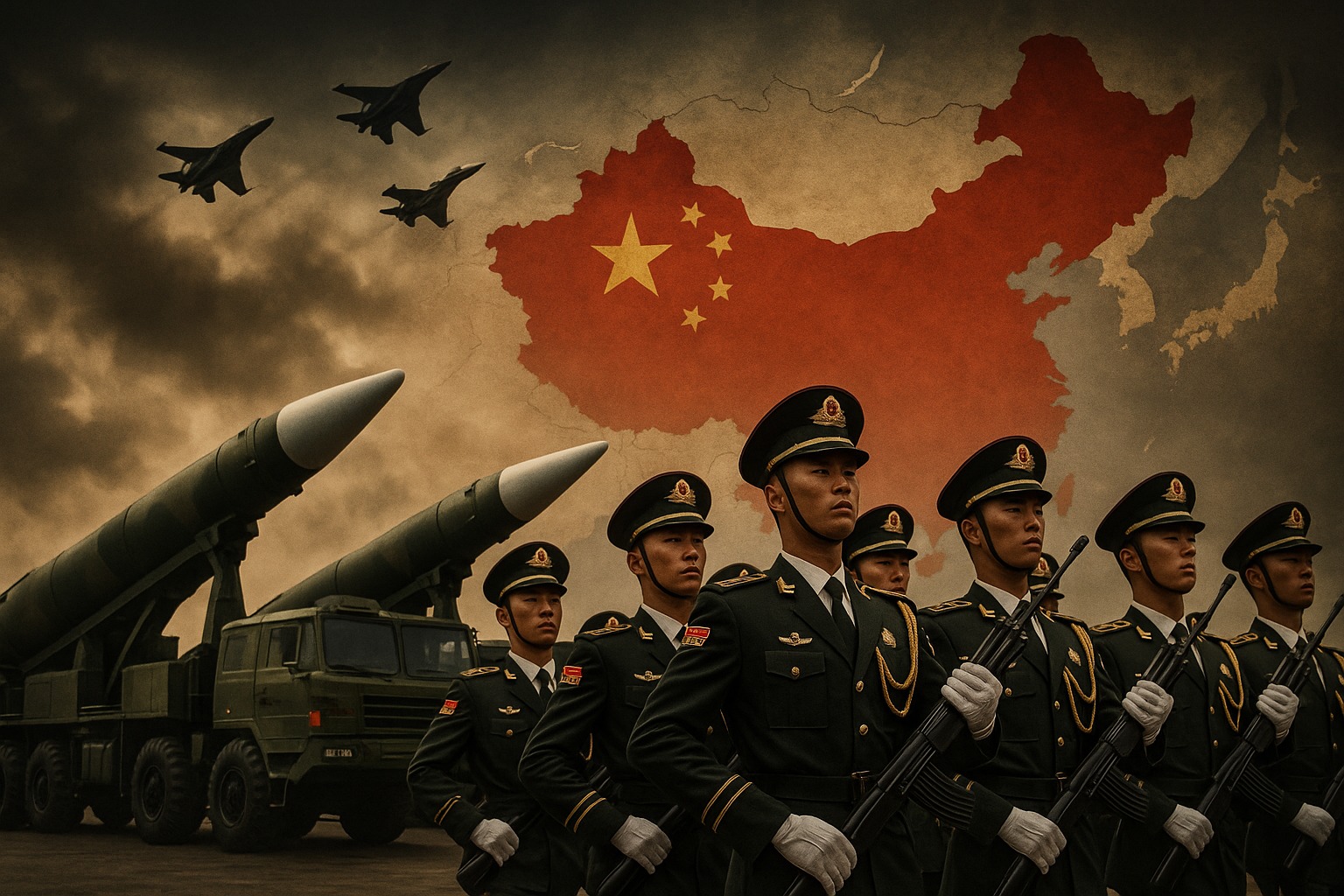
China recently staged an elaborate military parade showcasing its advanced weaponry, air power, and strategic capabilities. While such parades are not new for Beijing, the timing, the scale, and the messaging behind this event point to a clear geopolitical signal directed at both the United States and India.
The Editorial Team of Behind The Headlines examines how this parade was more than a display of national pride — it was a statement of power, influence, and intent in an increasingly volatile world order.
The Parade: A Show of Strength
The event featured thousands of troops, cutting-edge aircraft, missiles, armored vehicles, and naval units. Precision drills and synchronized displays demonstrated China’s focus on discipline and technological modernization. Key highlights included:
- Intercontinental Ballistic Missiles (ICBMs) capable of striking long-range targets.
- Hypersonic missiles designed to evade existing defense systems.
- Advanced fighter jets, including stealth aircraft with enhanced radar-evading capabilities.
- Drones and unmanned systems reflecting China’s push into AI-powered warfare.
- Naval displays underlining Beijing’s growing presence in the South China Sea.
The sheer scale of the exercise was intended to remind rivals that China’s military modernization is on track and accelerating.
Messaging to the United States
The United States remains China’s principal strategic competitor. The parade served multiple signals:
- Deterrence: By displaying its hypersonic and nuclear capabilities, Beijing sought to counter US military superiority in the Pacific.
- Taiwan Warning: Analysts note that the emphasis on air and naval drills carried a direct message regarding Taiwan, where tensions with Washington are rising.
- Global Ambition: The parade was also a signal that China intends to challenge the US not just regionally but on a global stage.
The India Factor
India too was an indirect target of the display. Despite ongoing talks on border disengagement, the standoff along the Line of Actual Control (LAC) remains unresolved. By showcasing military might, China aimed to:
- Reinforce its dominance along the Himalayan border.
- Signal disapproval of India’s growing closeness to the US, particularly through the Quad alliance.
- Remind New Delhi that any confrontation would be met with overwhelming firepower.
For India, the parade was a sobering reminder of the challenges posed by its northern neighbor, especially at a time when defense spending and modernization are key priorities.
Domestic Audience and Nationalism
Beyond international signaling, the parade was also designed for domestic consumption. For President Xi Jinping, it reinforced his image as the strong leader who has elevated China’s status globally. The event bolstered nationalist sentiment, rallying citizens around the narrative of a rising China facing external threats.
Regional Reactions
- Japan: Expressed concern over China’s hypersonic missile capabilities, which directly threaten its security.
- Taiwan: Condemned the displays, calling them intimidation tactics.
- Southeast Asia: Countries with territorial disputes in the South China Sea viewed the parade as a warning to respect Beijing’s maritime claims.
- Russia: Quietly welcomed the show, seeing China’s rise as a counterbalance to US influence.
Historical Context
China has long used military parades to project power. In 2015, it staged one to commemorate the end of World War II, while the 2019 National Day parade marked the 70th anniversary of the People’s Republic. The 2025 parade, however, stands out for its sharper geopolitical undertones amid tense relations with both Washington and New Delhi.
Why Now?
The timing of the parade coincides with:
- Increasing US patrols in the South China Sea.
- India strengthening defense ties with the US and Japan.
- Global debates over semiconductor supply chains, where China seeks dominance.
- Domestic economic challenges that require nationalistic distraction.
By holding the parade now, China sought to reassert itself amid growing external and internal pressures.
Implications for India-US-China Triangle
The parade adds a new dimension to the already complex triangular relationship between India, the US, and China.
- For the US: It confirms that Beijing is willing to escalate the arms race.
- For India: It highlights the urgency of modernizing military capabilities and strengthening strategic partnerships.
- For China: It reaffirms its strategy of deterring adversaries through a mix of strength and intimidation.
Expert Opinions
Strategic analysts caution that while parades are often dismissed as symbolic, they offer insights into a nation’s priorities. China’s emphasis on hypersonics, drones, and naval capabilities reveals where it sees future battles being fought.
Indian experts argue that the parade is a reminder for New Delhi to accelerate investments in defense technology, cyber warfare, and alliances that can balance Chinese power.
Conclusion
China’s military parade was not just a celebration of its armed forces but a carefully choreographed message to the world. For the US, it was a warning of Beijing’s growing capabilities in the Pacific. For India, it was a signal of continued assertiveness along the border and disapproval of New Delhi’s strategic alignments.
As global geopolitics grows more tense, events like these underline how military power and symbolism remain central to international diplomacy. The Editorial Team of Behind The Headlines will continue to monitor the ripple effects of China’s display, both in Asia and beyond.
Related Posts

Stay Informed With the Latest & Most Important News

Advertisement







Advertisement