Now Reading: Trump Camp Escalates ‘Tariff Maharaja’ Rhetoric: Why India Faces Growing Trade Tensions
-
01
Trump Camp Escalates ‘Tariff Maharaja’ Rhetoric: Why India Faces Growing Trade Tensions

Trump Camp Escalates ‘Tariff Maharaja’ Rhetoric: Why India Faces Growing Trade Tensions

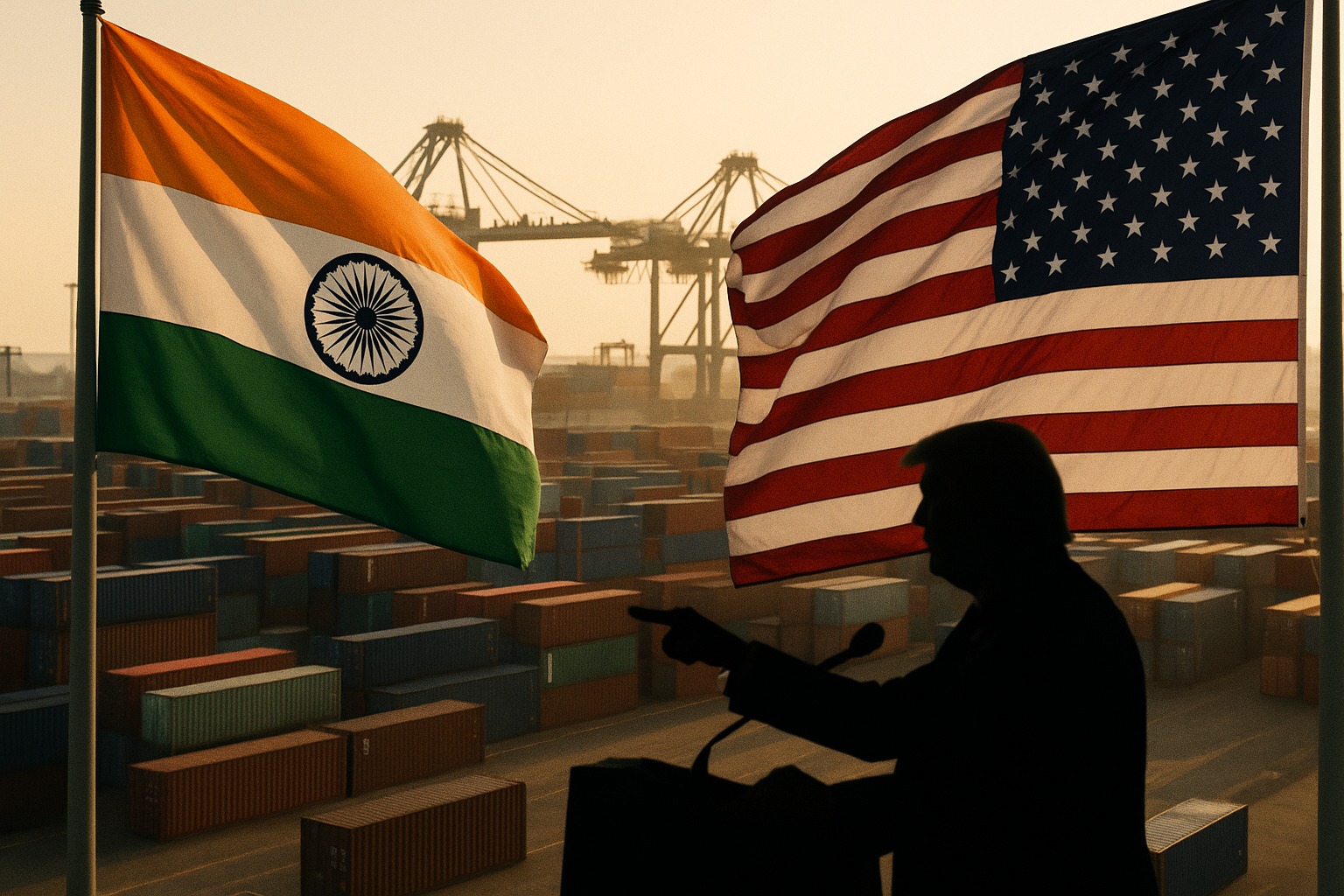
The simmering trade rift between the United States and India has intensified after Donald Trump’s aide, Peter Navarro, doubled down on his “Tariff Maharaja” comment, warning that India’s current stance on import tariffs and trade practices “won’t end well.” The remarks have added fuel to an already complex relationship between Washington and New Delhi, where economic interests increasingly overlap with political calculations.
The Editorial Team of Behind The Headlines breaks down what the remark means, why it matters, and how India may respond as global trade anxieties mount.
The Origins of the ‘Tariff Maharaja’ Remark
Peter Navarro, a key figure in Trump’s trade policy team during his earlier presidency, has often positioned India as a protectionist economy.
- He coined the phrase “Tariff Maharaja” to describe India’s approach to safeguarding domestic industries with high import duties.
- The phrase resurfaced after recent Trump campaign events, where Navarro reiterated that India’s tariffs on products ranging from electronics to agricultural goods are “excessive” and “unfair” to American exporters.
- His latest statement explicitly warned that this approach could backfire, harming India’s global standing and risking retaliatory measures from the US.
Why the Timing Matters
The warning comes at a sensitive moment.
- Trump’s return to political prominence has revived protectionist rhetoric in the US.
- India, under Prime Minister Narendra Modi, has pursued self-reliance policies (Atmanirbhar Bharat), encouraging domestic manufacturing while tightening import dependencies.
- With the US presidential race heating up, India is once again being pulled into America’s larger trade politics.
Navarro’s jab is not just commentary—it is part of Trump’s broader “America First” campaign theme.
India’s Tariff Landscape
India has long been criticized for imposing some of the world’s highest tariffs on certain categories.
- Agricultural imports, particularly dairy and grains, face steep duties.
- Consumer goods like luxury cars, smartphones, and electronics are also heavily taxed.
- Indian policymakers argue that these tariffs protect domestic producers and create space for local manufacturing jobs.
While this approach bolsters national industry, it often draws ire from trade partners, especially the US, which sees its exporters disadvantaged.
How the US Views India’s Strategy
From Washington’s perspective, India is a market too large to ignore—but also too complicated to penetrate without concessions.
- US officials believe India leverages tariffs as a bargaining tool in trade negotiations.
- American companies complain about restricted access to India’s growing middle-class consumer base.
- Navarro’s comment reflects a larger sentiment among US trade hawks: that India is not playing by global free-trade rules.
The language of “Tariff Maharaja” seeks to frame India as both an outlier and an obstacle in global trade reform.
India’s Counterpoint
India has defended its trade policies by pointing to asymmetries in development.
- Indian officials argue that as a developing economy, it cannot be expected to operate under the same tariff regimes as the US or EU.
- Tariffs are seen as essential to nurturing domestic industries, which face global giants with scale advantages.
- Moreover, India highlights its growing contributions in IT, pharmaceuticals, and services as areas where it provides significant value to the global economy.
Thus, while India acknowledges the criticism, it views tariffs as part of a sovereign right to economic self-determination.
Potential Fallout of Navarro’s Warning
Navarro’s sharp tone may not be official policy, but it carries weight.
- If Trump returns to power, harsher trade negotiations with India could be expected.
- US tariffs on Indian goods could follow, sparking a tit-for-tat trade war.
- Such a scenario could disrupt India’s booming exports in textiles, pharmaceuticals, and IT services.
On the flip side, this pressure could also push India to diversify trade partnerships with Europe, Asia, and Africa, reducing dependency on the US market.
Domestic Implications for India
Within India, the “Tariff Maharaja” narrative could fuel domestic political debates.
- Supporters of Modi’s policies may frame the criticism as proof that India is asserting its economic independence.
- Opposition parties may highlight it as evidence that the government’s protectionist approach risks alienating key allies.
- For Indian businesses, uncertainty in US relations could mean higher compliance costs, shifting supply chains, and market recalibration.
The Bigger Picture
At its core, this clash is less about tariffs and more about power.
- The US wants open markets to support its exporters.
- India wants economic sovereignty and a pathway to global leadership.
- Trade tensions between the two democracies highlight the friction between rising economies and established powers in the 21st century.
The phrase “Tariff Maharaja” may be colorful, but it underscores a deeper divide in how both nations view fairness, growth, and responsibility in global trade.
Conclusion
The doubling down of the “Tariff Maharaja” remark marks an escalation in US-India trade rhetoric. While Peter Navarro’s warning may not immediately alter policy, it sets the tone for harder negotiations ahead.
The Editorial Team of Behind The Headlines concludes that India must navigate this challenge carefully: balancing self-reliance with global engagement, defending domestic industries while keeping trade allies close, and ensuring that political rhetoric abroad does not derail economic progress at home.
Related Posts


Stay Informed With the Latest & Most Important News
Previous Post
Next Post
Advertisement