Now Reading: China opposes Trump’s call for NATO sanctions on Russian oil
-
01
China opposes Trump’s call for NATO sanctions on Russian oil


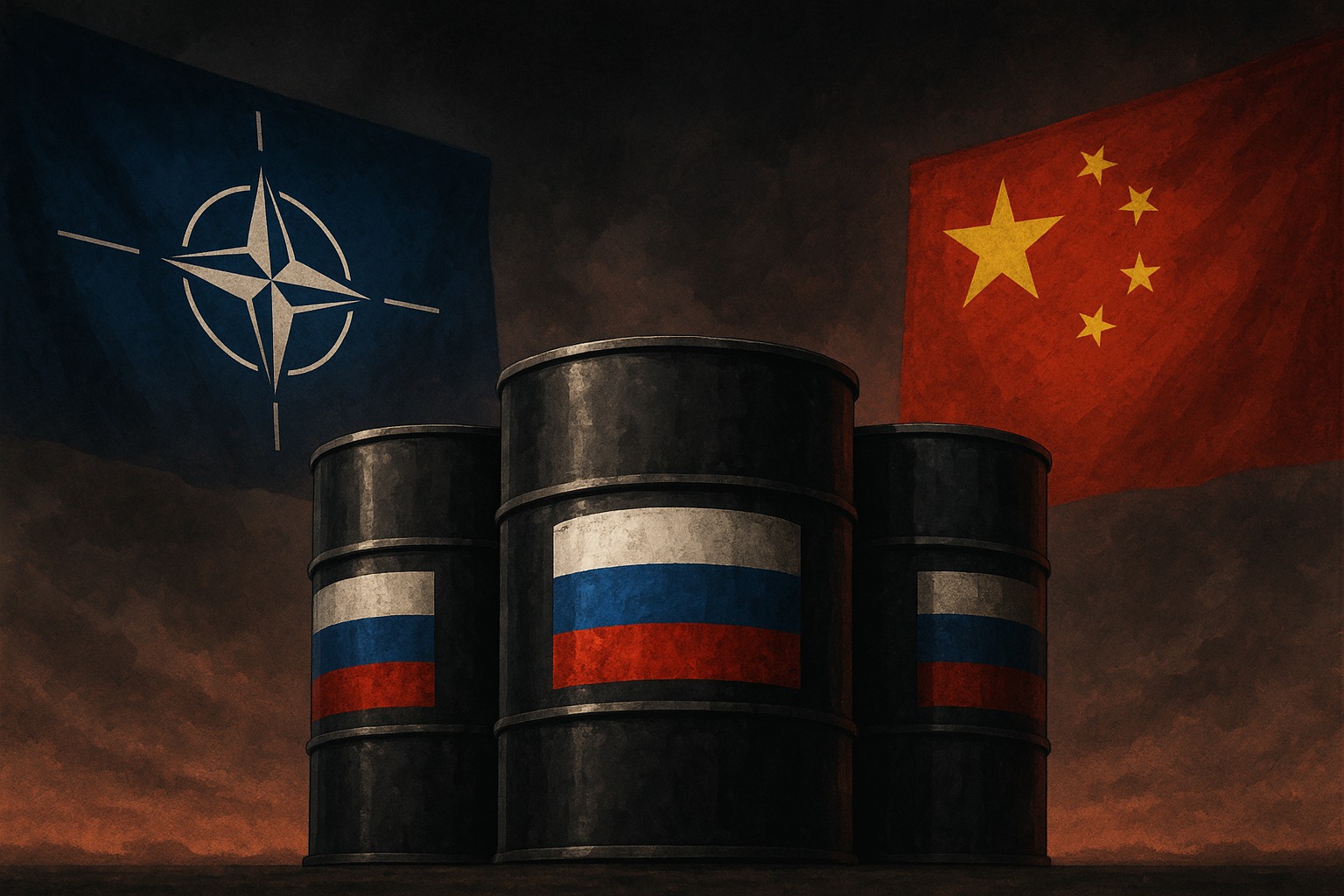
Global geopolitics has once again been shaken by the clash between Western strategy and Eastern defiance. Former US President Donald Trump, pushing for a stronger NATO stance, demanded sanctions on countries that continue to purchase Russian oil. In a swift rebuttal, China declared that sanctions would only “complicate” the world order, making it clear that Beijing has no intention of bowing to Western pressure.
The standoff reflects deeper shifts in global power equations, with oil, security alliances, and strategic rivalries converging at a fragile moment. Behind The Headlines examines what this confrontation means for energy security, NATO’s role, and the evolving balance between the United States, China, and Russia.
Trump’s Call for NATO Action
Donald Trump’s push is rooted in his broader vision of a NATO that is not just a military alliance but also a force shaping global trade and politics. His argument rests on the belief that buying Russian oil indirectly funds Moscow’s war efforts in Ukraine, making sanctions a moral and strategic necessity.
This call comes as European countries themselves are struggling with energy diversification, with several states dependent on Russian supplies despite political commitments to cut ties.
In our earlier coverage on NATO’s shifting role in global conflicts, we explored how energy security is increasingly intertwined with military decisions.
China’s Sharp Response
Beijing’s response was uncompromising: sanctions, it argued, have historically failed to resolve conflicts and instead deepen global instability. China framed Trump’s demand as Western overreach, reiterating its policy of neutrality while maintaining robust trade ties with Russia.
China’s Foreign Ministry highlighted that punitive measures would not only worsen global energy markets but also set a precedent of economic coercion that undermines sovereignty.
Our feature on China’s energy diplomacy explained how Beijing strategically positions itself as a defender of global trade stability while expanding influence.
Why Russian Oil Remains a Flashpoint
Russian oil is more than just a commodity—it is a geopolitical tool. Despite Western sanctions after the Ukraine conflict, Moscow has redirected exports toward Asia, particularly China and India. This shift has enabled Russia to keep revenues flowing while weakening Western leverage.
China and India together account for a major share of Russia’s crude sales, effectively keeping its economy afloat. Trump’s call for NATO to target this trade shows the West’s frustration at its limited reach.
In our report on India balancing oil imports, we examined how New Delhi navigates between Western pressure and economic necessity.
NATO’s Dilemma
NATO faces a difficult choice. Expanding sanctions enforcement beyond its borders risks escalating confrontation with China and India, two major global powers. At the same time, doing nothing undermines its credibility as a guardian of democratic values.
Trump’s proposal also exposes a growing divide between Washington’s aggressive approach and Europe’s pragmatic energy needs. While Eastern Europe supports tougher action, countries like Germany and Italy remain cautious, fearing economic backlash.
Our analysis on Europe’s energy crisis highlighted why NATO members remain split on how far sanctions should go.
The Larger Geopolitical Stakes
The clash over Russian oil reflects more than just economics—it is a battle for narrative control:
- The US and NATO frame sanctions as a moral duty against authoritarian aggression.
- China and Russia present themselves as defenders of multipolarity and sovereignty.
- Emerging economies like India are caught in the middle, leveraging opportunities while avoiding alignment.
This confrontation could shape the next phase of global order, determining whether alliances harden into blocs or whether nations continue to carve out independent, interest-driven policies.
Impact on Global Energy Markets
Markets have already reacted nervously. Crude oil prices have shown volatility amid fears of further restrictions on trade routes. Analysts warn that additional sanctions could push prices upward, straining developing economies still recovering from inflationary shocks.
For China, securing affordable energy remains non-negotiable, making Trump’s push a direct threat to its economic stability. For NATO, the risk lies in being seen as destabilizing markets rather than defending freedoms.
Reactions from Key Players
- Russia: Welcomed China’s support, calling it proof of Western isolation.
- India: Maintained silence, sticking to its position of energy pragmatism.
- Europe: Split, with hawks urging stronger measures and moderates warning of self-harm.
- Global South: Frustrated at being collateral damage in a power struggle that worsens inflation and food security.
The Bigger Picture for India
India finds itself once again at the crossroads. While Trump’s call and China’s rejection dominate headlines, New Delhi’s position will remain decisive. Its balancing act between affordable oil imports and global image as a responsible power will define regional geopolitics.
Our editorial on India’s balancing act between West and East explored why energy security is central to India’s foreign policy strategy.
Conclusion
The dispute over sanctions on Russian oil buyers is not just about energy—it is about who sets the rules of the world order. Trump’s push for NATO action and China’s fierce resistance have deepened divides that are reshaping global politics.
For India and the wider Global South, the challenge is clear: navigate between competing powers without becoming pawns in their rivalry. Behind The Headlines will continue to follow how this energy battle influences the future of diplomacy, trade, and security.
Related Posts


Stay Informed With the Latest & Most Important News
Previous Post
Next Post
Advertisement