

Now Reading: India Faces Trump Advisor’s Criticism on Tariffs and Russian Oil
-
01
India Faces Trump Advisor’s Criticism on Tariffs and Russian Oil


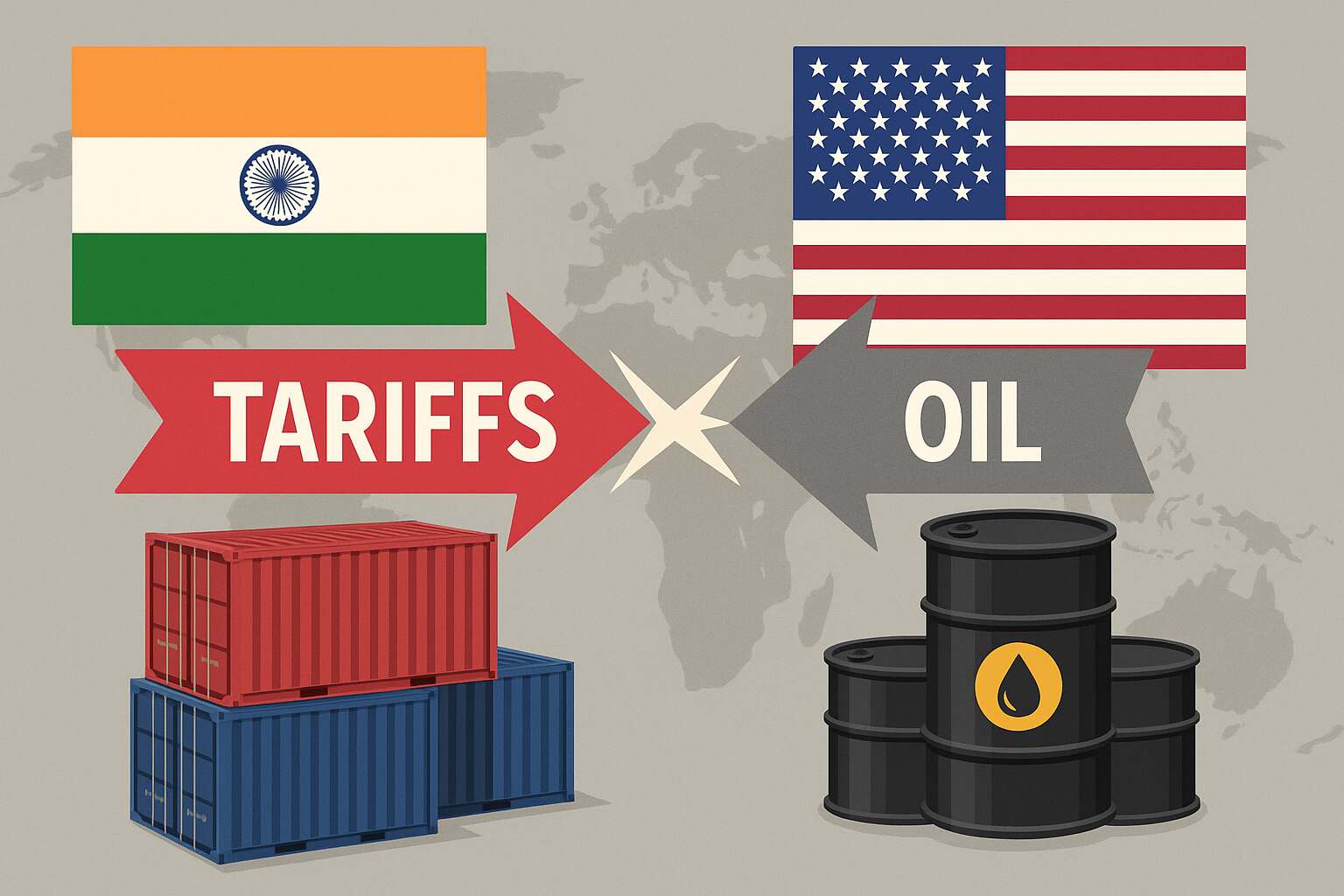
The trade debate between India and the United States has intensified after Trump’s advisor, Peter Navarro, sharpened his criticism of India. Navarro accused India of maintaining some of the highest tariffs in the world while continuing to import Russian oil, a stance that has become a central talking point in U.S. foreign and trade policy. His remarks highlight the geopolitical complexity India faces as it seeks to balance economic priorities, strategic autonomy, and global expectations.
Navarro’s Statement and Key Concerns
Peter Navarro, known for his hardline trade views, said that India would have to “come to the table” on tariffs if it wants to strengthen ties with Washington. He stressed that the U.S. cannot ignore what he termed India’s “protectionist” approach to trade. Alongside this, Navarro raised concerns about India’s continued purchase of discounted Russian crude oil, which has become a contentious issue since sanctions were placed on Moscow by Western allies.
According to Navarro, India’s policy creates a twofold challenge: on one hand, it raises trade barriers for American companies trying to enter the Indian market, and on the other hand, it indirectly supports Russia at a time when the U.S. and its allies are pressuring Moscow diplomatically and economically.
India’s Tariff Policy: A Complex Picture
India has long been criticized by global trade experts for its high import duties on a range of goods. While the government defends these tariffs as necessary to protect domestic industries and encourage self-reliance, critics argue that they discourage foreign investment and complicate bilateral trade negotiations.
In recent years, India has increased tariffs on several sectors, including electronics, automobiles, and agricultural products. These moves align with the “Make in India” initiative, which aims to boost local manufacturing. However, for countries like the U.S., these policies have become a sticking point.
Russian Oil Imports and Strategic Autonomy
India’s stance on Russian oil is equally significant. Since the Russia-Ukraine war began, India has increased purchases of Russian crude at discounted prices. For New Delhi, the priority is ensuring affordable energy supplies for a growing economy. Officials have repeatedly stated that their decisions are based on national interest, not alignment with global blocs.
From Washington’s perspective, however, these imports undermine Western sanctions and complicate efforts to isolate Russia. Navarro’s remarks signal renewed pressure from the Trump camp on India to adjust its position, particularly if Trump regains office.
Impact on Indo-US Trade Relations
India and the U.S. share one of the fastest-growing trade partnerships, with bilateral trade crossing $200 billion recently. However, issues such as tariffs, intellectual property rights, and market access remain unresolved. Navarro’s statement underscores the challenges that may resurface in future trade talks.
Analysts suggest that while India cannot drastically reduce tariffs overnight, there may be scope for sector-specific negotiations, particularly in technology and defense. At the same time, Washington may push for stricter conditions on energy imports, especially from Russia.
Domestic Reactions in India
Navarro’s comments have sparked debate within India. Business groups argue that tariffs are essential to protect small and medium-sized enterprises from being overwhelmed by foreign competition. Economists, however, warn that excessive protectionism may reduce India’s global competitiveness in the long run.
On Russian oil, policymakers maintain that India’s energy security must come first. With rising domestic demand and global oil market volatility, New Delhi sees Russian crude as a practical option. Critics, however, warn that overdependence on discounted supplies may invite political risks.
Global Context and Geopolitical Significance
Navarro’s criticism cannot be viewed in isolation. It reflects broader U.S. concerns about balancing global alliances. While Washington needs India as a strategic partner in countering China, trade frictions and Russia ties complicate the equation.
For India, the challenge lies in balancing its relationships with multiple powers. As a member of both Western-leaning and non-aligned forums, New Delhi often faces the difficult task of reconciling competing expectations.
Bigger Picture: India’s Balancing Act
The situation illustrates India’s broader balancing act in global politics. On one hand, it seeks deeper economic integration with the U.S. and Europe. On the other, it refuses to abandon ties with traditional partners like Russia. This dual approach is likely to remain a cornerstone of India’s foreign policy, regardless of external pressure.
If Trump or his advisors influence future U.S. trade policy, India may face tougher negotiations ahead. Yet, New Delhi is unlikely to compromise on its principles of strategic autonomy. Instead, it may push for trade reforms that balance domestic priorities with international demands.
Conclusion
Navarro’s remarks have reignited the debate on India’s trade policy and Russian oil imports. While his criticism reflects U.S. frustration, India remains committed to safeguarding its economic and strategic interests. The path forward will require careful diplomacy, sector-specific trade adjustments, and a strong emphasis on national priorities.
Internal links
- Bihar Election 2025: EC expenditure rules explained
- India’s energy strategy and Russian oil imports
- US-India trade relations: Key sticking points
Related Posts


Stay Informed With the Latest & Most Important News
Previous Post
Next Post

Advertisement








Advertisement