Now Reading: Trump Meets Shehbaz Sharif, Asim Munir: US-Pakistan Ties in Focus
-
01
Trump Meets Shehbaz Sharif, Asim Munir: US-Pakistan Ties in Focus


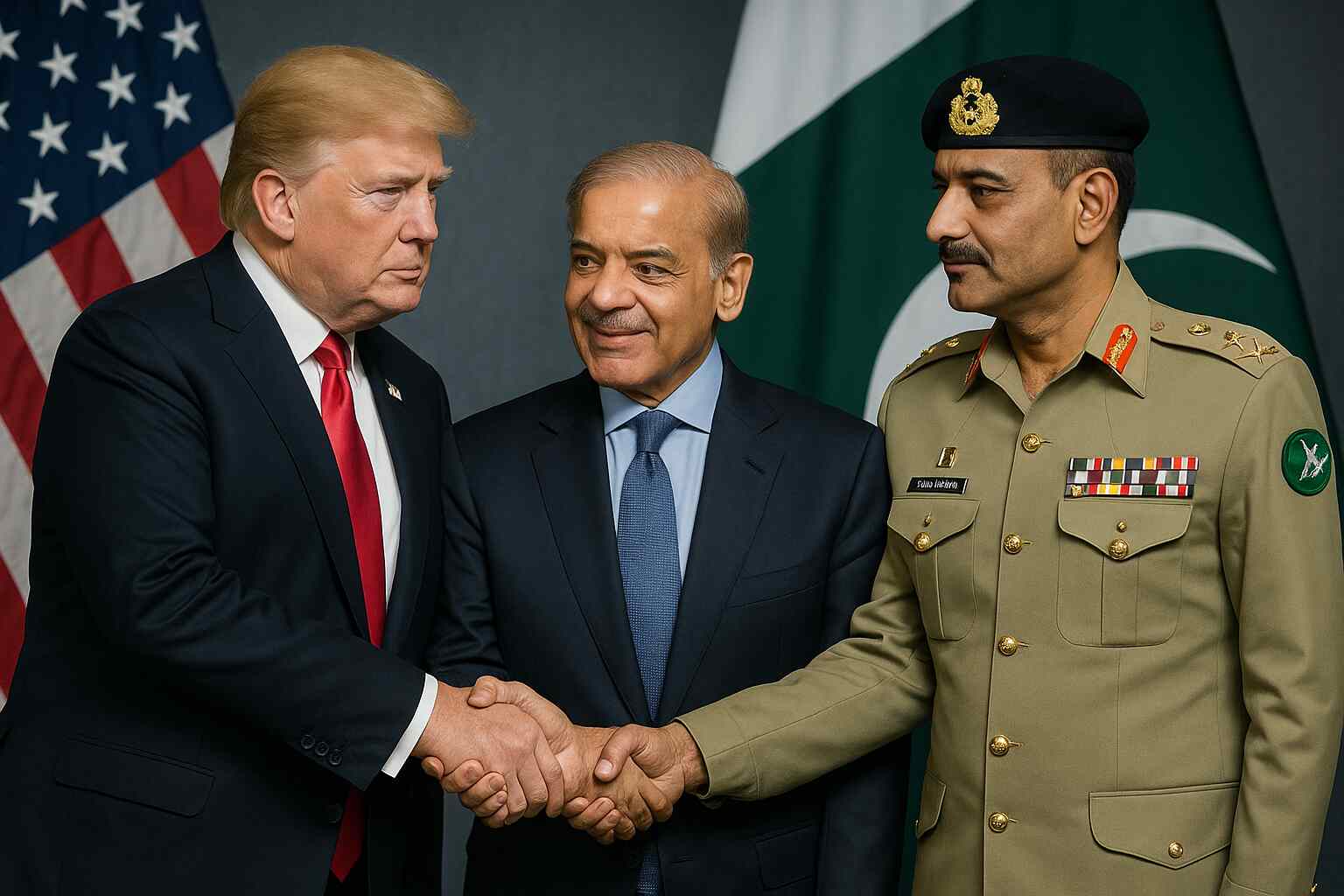
Former US President Donald Trump met Pakistan’s Prime Minister Shehbaz Sharif and Army Chief General Asim Munir in a rare display of engagement that is already making waves in Washington and Islamabad. The meeting, which Trump described as “positive” and “forward-looking,” is being closely interpreted for what it signals about future US-Pakistan relations.
For Pakistan, this interaction is not just symbolic—it reflects the country’s attempt to reset ties with American leadership circles at a time when both geopolitical and domestic pressures are intensifying. For Trump, it underscores his ongoing effort to shape global conversations even outside the Oval Office.
Why the meeting matters now
The meeting comes at a critical time for Pakistan, which continues to navigate an economic crisis, political polarization, and security concerns along its borders. For the US, Pakistan remains strategically significant due to its proximity to Afghanistan, its historical role in counterterrorism operations, and its complex ties with China.
Diplomatic observers see Trump’s engagement as a way to reaffirm personal connections with Pakistani leadership, a style consistent with his past emphasis on leader-to-leader diplomacy.
Who attended and what was discussed
Trump met both Shehbaz Sharif and General Asim Munir, marking a rare moment where Pakistan’s civilian and military leadership were represented together in an external engagement. The discussions reportedly focused on:
- Regional security and stability in South Asia.
- Economic cooperation and investment opportunities.
- The role of Pakistan in counterterrorism and peace-building efforts.
- Future US-Pakistan bilateral ties.
This dual representation is significant because the military plays a central role in Pakistan’s policymaking, particularly in matters of foreign relations and security.
(Read more: India imposes curfew in Ladakh after protests)
Trump’s praise for Pakistani leaders
During the meeting, Trump praised Shehbaz Sharif’s leadership qualities and General Asim Munir’s military professionalism. His remarks, highlighting “capable leadership at a crucial time,” were interpreted as a diplomatic endorsement.
While not an official policy signal, such praise holds symbolic weight, particularly given Trump’s potential return to the political spotlight ahead of the next US presidential election.
Reactions in Pakistan
The meeting has been widely covered in Pakistani media, with many commentators framing it as a success for Islamabad’s diplomatic outreach. Supporters argue that Pakistan has long needed stronger visibility in American political circles. Critics, however, question whether engagement with Trump carries long-term policy significance given his current status outside government.
(Related: Zelenskyy says he will step down after war ends)
Washington’s perspective
In Washington, analysts see Trump’s meeting as part of his broader strategy to remain active on the global stage. While the Biden administration continues to manage official ties with Pakistan, Trump’s outreach could add another layer of complexity to US foreign policy debates.
It is also being closely watched by India, given that US-Pakistan ties inevitably impact the regional balance of power in South Asia.
Bigger geopolitical picture
The engagement comes at a time when Pakistan faces both opportunities and challenges:
- Strengthening its economic recovery with external support.
- Managing its delicate ties with China and the Gulf states.
- Rebuilding credibility with the International Monetary Fund (IMF).
- Addressing domestic political unrest.
For the US, renewed engagement with Pakistan could also be tied to countering China’s growing influence in South Asia, while balancing its strategic partnership with India.
Conclusion
Trump’s meeting with Shehbaz Sharif and General Asim Munir is more than just a diplomatic handshake—it is a signal that Pakistan continues to matter in global strategic calculations. For Islamabad, the engagement represents a chance to project stability and relevance. For Trump, it is an opportunity to showcase his continued influence in international affairs.
The long-term impact will depend on whether these conversations translate into meaningful cooperation or remain symbolic gestures. Either way, the meeting has already revived debates on the future direction of US-Pakistan relations.
Related Posts
Stay Informed With the Latest & Most Important News
Previous Post
Next Post


Advertisement