

Now Reading: Crypto Market Suffers $19 Billion Blow After Trump’s 100% Tariff On Chinese Tech
-
01
Crypto Market Suffers $19 Billion Blow After Trump’s 100% Tariff On Chinese Tech

Crypto Market Suffers $19 Billion Blow After Trump’s 100% Tariff On Chinese Tech

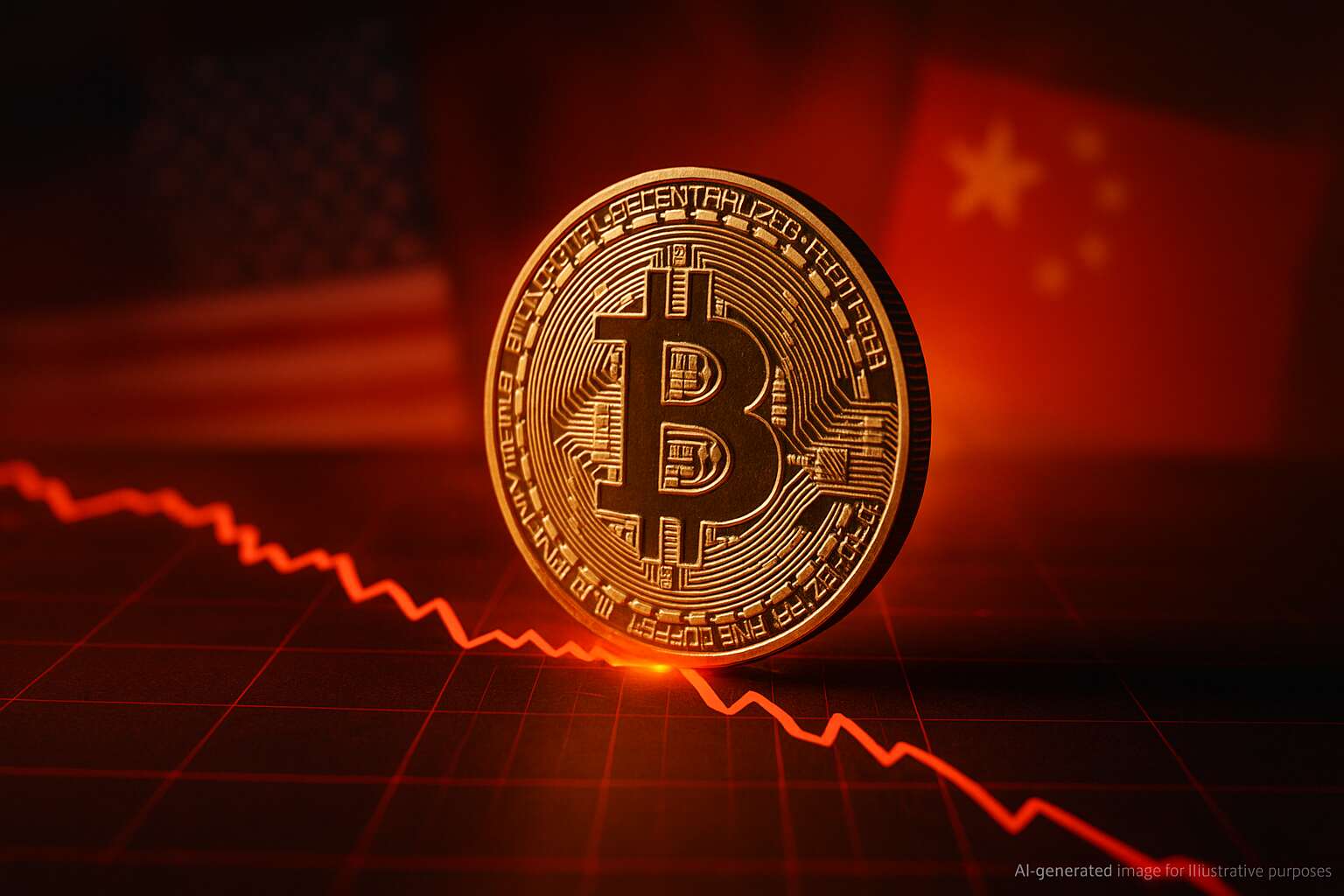
The global cryptocurrency market faced a massive $19 billion wipeout within hours after U.S. President Donald Trump announced a 100% tariff on Chinese technology imports. The shock decision not only rattled traditional markets but also triggered a wave of fear across the digital asset ecosystem.
Bitcoin, Ethereum, and several top cryptocurrencies fell sharply as investors rushed to pull out funds amid growing trade war tensions between the world’s two biggest economies.
Analysts say this sudden correction marks one of the biggest single-day crypto market downturns in recent months, fueled by uncertainty over U.S.-China economic ties and rising global risk aversion.
What Triggered the Sell-Off
The market chaos began minutes after Trump’s announcement imposing 100% tariffs on all Chinese-made tech goods entering the U.S. The move was aimed at protecting American industries but instantly raised fears of retaliatory measures from China.
Crypto, known for its sensitivity to global sentiment, reacted swiftly. Bitcoin prices dipped nearly 4% in early trading, Ethereum fell over 5%, and other major altcoins such as Solana and XRP followed suit.
Experts say the drop wasn’t driven by fundamentals but by investor psychology — traders fleeing risky assets amid the uncertainty of a renewed trade war.
“Whenever the global economy faces tension, investors move away from speculative assets. This time, crypto became collateral damage,” said a digital economist in New York.
To understand how past trade wars have affected digital currencies, read When Global Politics Hit the Crypto Market.
Trump’s Tariff Shockwave
Trump’s move to slap 100% import tariffs on Chinese goods is seen as one of his most aggressive economic decisions since taking office. The order covers major sectors such as semiconductors, batteries, and electronics — all vital components for the tech industry.
The White House claims the decision will “level the playing field” and reduce America’s dependency on Chinese supply chains. However, critics warn it could have global ripple effects, increasing production costs and disrupting technology manufacturing.
The timing of the decision, just as talks for a U.S.-China summit were underway, adds another layer of tension.
Markets worldwide reacted negatively — the Nasdaq dropped over 1.5%, and Asian indices followed with steep declines. Gold prices surged as investors looked for safer assets, and the U.S. dollar strengthened, putting additional pressure on cryptocurrencies.
Why Crypto Is So Sensitive to Global Policy
While crypto markets are often described as independent, they are not immune to macroeconomic shocks. Historically, whenever there is global uncertainty — whether due to inflation, wars, or trade disputes — digital assets see quick sell-offs as investors seek stability.
Bitcoin and other major coins have increasingly been viewed as risk assets rather than safe havens. This makes them behave more like tech stocks than traditional hedges such as gold.
In this case, the tariff escalation reignited global fears of a recession, prompting many to exit high-volatility assets like crypto.
For a related analysis, see Crypto And The Global Economy: How Policy Shapes Prices.
Investor Reactions and Market Outlook
Social media platforms were flooded with investor reactions soon after the announcement. Many traders expressed frustration that political actions are again driving volatility in a market already struggling with regulatory uncertainty.
Crypto exchanges reported a sharp surge in sell orders, particularly from short-term holders. Meanwhile, long-term investors or “HODLers” appeared more composed, suggesting they viewed this dip as a potential buying opportunity.
Analysts say the next few weeks will be crucial. If the U.S.-China trade dispute worsens, digital assets could face further pressure. However, a quick diplomatic resolution could lead to a strong rebound.
Industry experts also note that Trump’s tariffs could push Chinese investors to move more money into crypto as a hedge against yuan volatility, balancing some of the losses elsewhere.
Global Economic Impact
Beyond crypto, Trump’s 100% tariff decision could reshape the world’s trade structure. China has hinted at retaliatory measures, possibly targeting U.S. agricultural and technology exports.
Economists believe the U.S.-China conflict could slow global growth, impact manufacturing costs, and push companies to diversify supply chains — a trend already underway since the pandemic.
The ripple effect of this policy change could extend into commodities, equities, and emerging market currencies, amplifying the uncertainty that continues to drive crypto volatility.
The Bigger Picture
This event is not just about market numbers — it reflects the growing interconnection between politics, economics, and digital finance.
As crypto matures, it is increasingly influenced by geopolitical events. What started as an alternative to traditional finance is now closely tied to global macro trends.
The 2025 crypto wipeout shows how decisions made in Washington and Beijing can instantly move billions of dollars across the blockchain world. It’s a reminder that even decentralized markets can’t escape global politics.
Conclusion
The $19 billion crypto wipeout following Trump’s 100% tariffs on Chinese tech imports underscores the fragile link between economic policy and digital finance.
While the market may stabilize in the coming days, the bigger story lies in how global power struggles now shape even the most decentralized assets.
For investors, the lesson is clear — in a world of political unpredictability, even digital gold isn’t safe from global storms.
Related Posts



Stay Informed With the Latest & Most Important News
Previous Post
Next Post

Advertisement








Advertisement
