

Now Reading: Karan Johar on Giving 50% of His Company: No Regrets
-
01
Karan Johar on Giving 50% of His Company: No Regrets


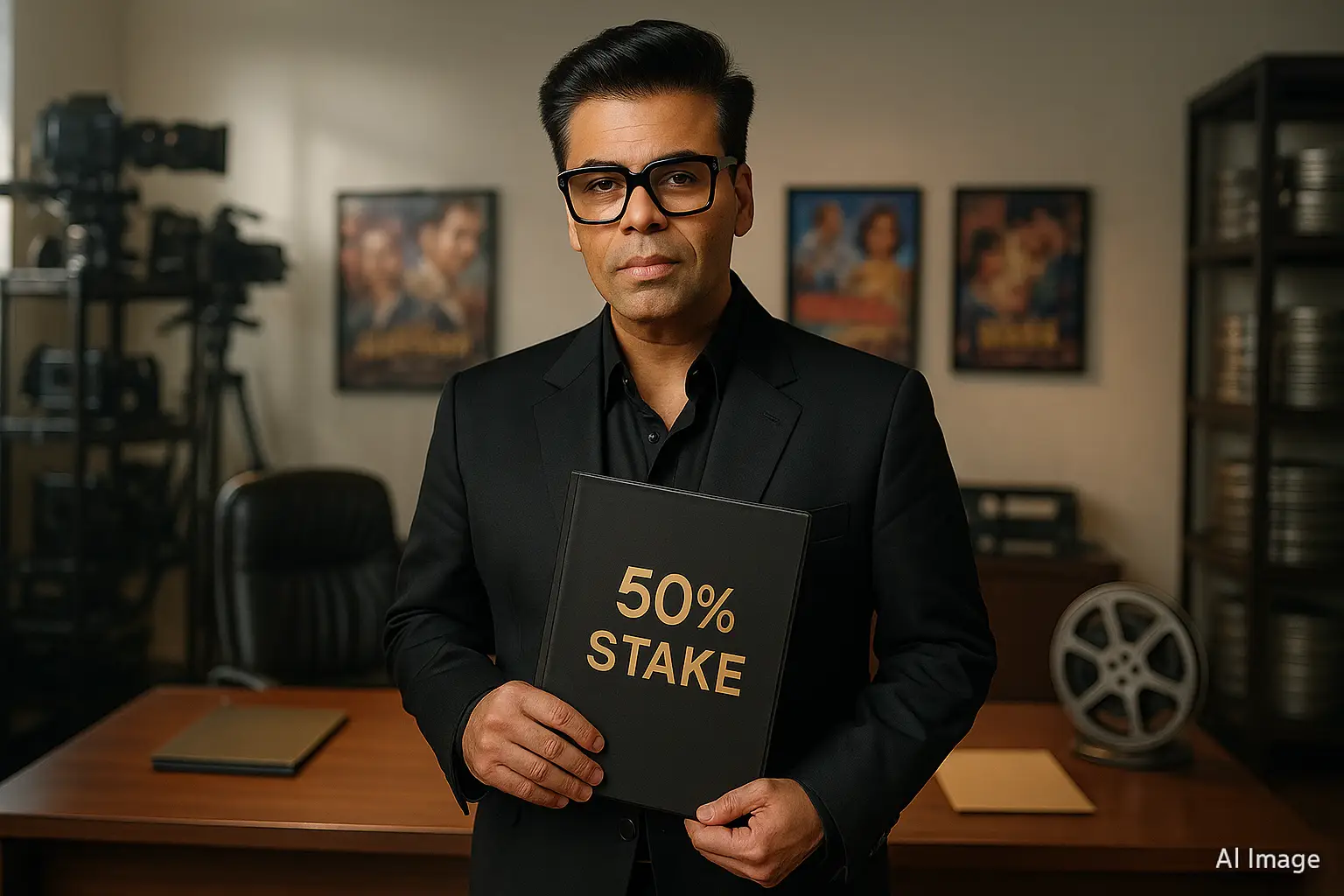
Filmmaker and producer Karan Johar has revealed that he gave up 50 percent ownership of his production house in a deal that surprised the industry. Despite admitting he is “horrible at negotiation,” he says the decision makes sense because he believed a company valued at ₹ 50 crore could grow to ₹ 1,500 crore. The target keyword Karan Johar ownership 50 percent company thus appears naturally in this intro. This article explores the deal, the rationale, reactions in Bollywood and the long-term implications for his business empire.
The Deal: What Happened
In 2024, Karan Johar sold a half stake in his banner — originally founded by his late father Yash Johar — to a business partner for roughly ₹ 1,000 crore. The deal immediately raised eyebrows because Johar had always been seen as the creative face of the company, making script-driven movies and building the brand himself. He acknowledged that while he may not excel at cut-throat dealmaking, he believed the partnership would scale the business significantly.
He said, “I’m the worst in negotiation. I will always give up more and receive less. But this deal was right because my company had runway to grow.” With that mindset, he pointed out that he was confident the company’s value could leap from ₹ 50 crore to ₹ 1,500 crore under shared ownership and fresh capital.
Why Karan Johar Made This Choice
Scaling Ambition and Funding Needs
Karan Johar explained that to grow beyond middle-budget films and expand into streaming, international collaborations, and digital content, his company required more than creative leadership—it needed robust business infrastructure and capital. The partnership gave him the freedom to focus on direction and production while the partner injected resources and business strategy.
Balancing Creative and Commercial Pressures
Johar’s banner has produced several high-budget films but also faced economy tightness in recent times. By sharing ownership, he mitigated risk and positioned the company for larger scale projects.
(Read More: “Bollywood Investment Trends 2025: Why Production Houses Are Seeking Partners”)
How Bollywood and Industry Viewed It
Industry watchers described the move as bold and forward-looking. Some saw it as Johar admitting he needed stronger business backing; others saw it as the next-gen model for production houses—creative leadership + strategic business partner. Johar’s comment on being “horrible at negotiation” humanised his reputation as a glamorous filmmaker and added authenticity to the decision.
Producers in Mumbai now consider whether traditional models—sole control by a star or auteur—are giving way to smart partnerships combining creativity with business muscle.
Business Implications: Ownership, Control and Growth
When a founder gives up a major stake, questions arise around control and creative freedom. Johar addressed this by saying he did not regret the 50 percent sale because he believed the value growth justified it. He also pointed out that ownership is not static—what matters is strategic direction and potential, not just holding onto a large share.
The deal underscores a shift in Bollywood’s financial logic: from risk-heavy independent production to structured growth, often backed by private investment or strategic partnerships.
(Read More: “How Creative Entrepreneurs Are Reshaping Indian Cinema’s Business Models”)
Reactions: From Colleagues to Fans
Peers in the film industry responded with respect and curiosity. Some younger filmmakers pointed out that sharing ownership with experts may become common. On social media, fans debated whether Johar had “sold out” or taken a smart business move. Johar’s candid remark about negotiations was widely shared as a rare moment of frankness in Bollywood.
Veteran actors and producers noted that Johar had repositioned his business by placing trust in someone else’s business acumen while he focused on creative leadership—a balance rarely seen.
The Bigger Picture: What It Signals for Bollywood
Johar’s move signals several larger trends in Indian entertainment:
- Production houses are moving from singular ownership models to partnerships with capital-rich entities.
- Creative companies will increasingly prioritise growth potential, platform scalability and global market thinking.
- Founders recognise that negotiation and business may be outside their core skill set—and that is acceptable when you form the right alliance.
- The value of entertainment businesses is being viewed not just in current film earnings, but in long-term potential—a jump from ₹ 50 crore to ₹ 1,500 crore is about future streams, brand extensions and global rights.
In sum, Johar’s decision may become a blueprint for others in the industry.
Conclusion
Karan Johar’s decision to give up 50 percent of his company, despite self-admitted weaknesses in negotiation, is not a retreat—it’s a strategic stalemate. By trusting capital, scaling ambition and focusing on what he does best, he positioned his business for next-level growth. In the changing landscape of Bollywood, this may prove less about giving up control and more about gaining runway.
For the filmmaker-entrepreneur, the message is clear: creative talent alone is no longer enough—partnerships and business strategy matter. As Indian cinema enters a new era, Johar’s move may well usher in the next wave of growth stories.
Related Posts



Stay Informed With the Latest & Most Important News
Previous Post
Next Post


Advertisement









Advertisement