

Now Reading: PM Modi Says India’s Maritime Sector Sailing Through Historic Growth
-
01
PM Modi Says India’s Maritime Sector Sailing Through Historic Growth


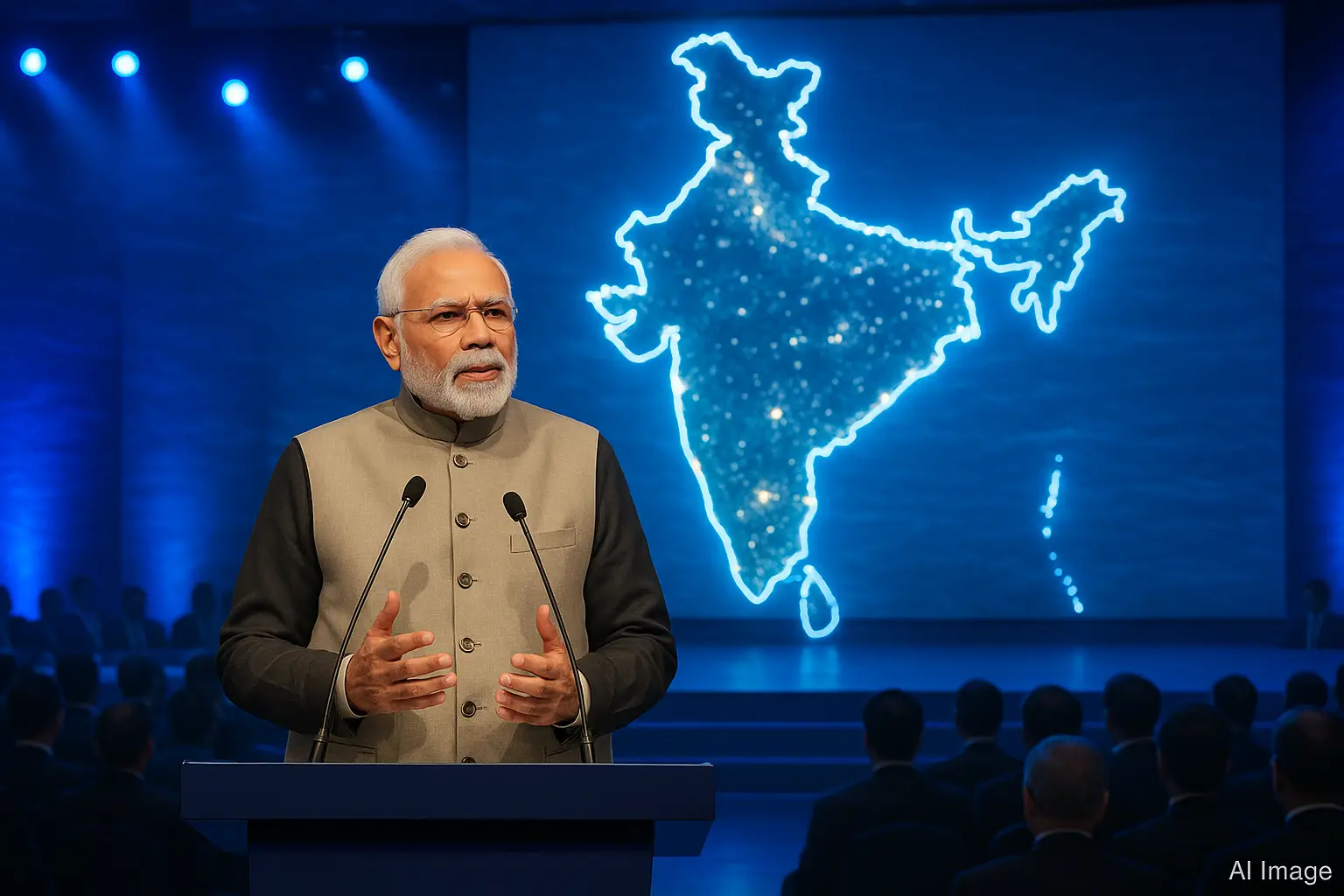
Prime Minister Narendra Modi said India’s maritime industry is undergoing “historic transformation,” with its ports, shipbuilding, and coastal infrastructure making global headlines. Speaking at the Global Maritime Leaders Conclave in New Delhi, Modi emphasised that India’s coastline is no longer just a geographical boundary but a symbol of its economic strength and strategic confidence.
In his address, the Prime Minister compared India’s steady maritime progress to a “lighthouse” guiding global trade, noting that the world often looks to India for stability when “the global seas turn rough.”
Details: From Coastal Corridors to Global Ports
India’s maritime sector, once seen as traditional and underdeveloped, has emerged as a key pillar of national infrastructure. The government’s focus on the “Maritime India Vision 2030” and Sagarmala Programme has attracted massive investments in ports, waterways, and logistics.
Under Sagarmala, over 800 projects worth more than ₹5 lakh crore have been identified for implementation. These projects aim to modernize existing ports, improve coastal connectivity, and create new logistics parks that reduce shipping time and cost.
Modi said, “The world is witnessing India’s rise as a reliable maritime power. From modern ports to digital ship-tracking systems, we are setting new global benchmarks.”
(Internal link: “How Sagarmala Is Transforming India’s Coastal Economy”)
Analysis: Why Maritime Growth Matters for India
Strengthening the Blue Economy
The Prime Minister highlighted how the blue economy — encompassing fisheries, ocean resources, renewable energy, and maritime transport — is emerging as a driver of growth. India’s blue economy contributes nearly 4 percent to the national GDP, and this share is expected to double in the coming decade.
New policies encourage private players to invest in shipyards, cargo handling, and offshore wind energy. The government has also introduced digital initiatives to enhance transparency in port operations and reduce paperwork for exporters.
Boost to Global Trade Routes
India’s ports handle more than 90 percent of its trade by volume, linking the country directly to the Indo-Pacific trade network. Upgraded container terminals and deeper draft ports have improved cargo turnaround time, putting India on par with top maritime economies like Singapore and South Korea.
(Internal link: “India’s Blue Economy: The Next Growth Engine of the 21st Century”)
Reactions: Industry and Global Perspectives
The maritime industry welcomed the Prime Minister’s remarks, calling them a recognition of years of sectoral reforms. Port authorities across Mumbai, Chennai, and Visakhapatnam reported record cargo throughput this quarter.
International observers also praised India’s focus on sustainable port operations. The World Maritime Council noted that India’s push toward clean energy at ports — including shore power systems and LNG bunkering — sets a model for developing economies.
Captain Rajiv Aggarwal, a senior logistics consultant, said, “India’s ports are not just expanding; they are evolving. Automation, green power, and global partnerships are the new anchors of this transformation.”
The Bigger Picture: India as a Global Maritime Power
The government aims to position India as a maritime hub that balances economic ambition with ecological responsibility. Several flagship initiatives are reshaping this vision:
- Maritime India Vision 2030: Targets port capacity expansion to over 3,300 MTPA, focusing on sustainable operations.
- PM Gati Shakti Initiative: Integrates port development with highways, railways, and logistics parks for faster cargo movement.
- International Cooperation: India has strengthened maritime ties with ASEAN, Japan, and Africa to boost regional connectivity.
- Coastal Employment Zones: Creation of job clusters along major ports is expected to generate over 1.5 million jobs by 2030.
(Internal link: “PM Gati Shakti: Connecting India’s Ports to Its Prosperity”)
Security and Strategic Dimensions
Beyond trade, Modi underlined the strategic significance of maritime strength for national security. India’s Navy is being modernised with indigenous ships, submarines, and surveillance systems to safeguard the Indian Ocean Region.
He said, “A strong maritime presence ensures India’s economic stability and protects global trade routes that pass through our waters.”
This message comes amid growing geopolitical competition in the Indo-Pacific. India’s partnerships with countries like the U.S., Japan, and Australia under the Quad alliance reinforce its role as a key player in regional maritime security.
The Human and Environmental Aspect
Modi also emphasised that maritime development must be sustainable and inclusive. The government has launched initiatives to train young professionals through the Maritime Skill Development Council and support coastal communities dependent on fishing and tourism.
Green port projects, mangrove restoration drives, and the shift toward electric port vehicles are part of India’s pledge to achieve net-zero emissions by 2070.
He said, “Our development model is people-first and planet-friendly. Every port we build must create livelihoods and safeguard the ocean ecosystem.”
Conclusion
The Prime Minister’s message at the Global Maritime Conclave underscores how India’s maritime journey mirrors its broader economic rise. From modernization to sustainability, the sector has turned from being an overlooked frontier to a source of national pride.
As global trade currents shift, India’s ports and coastal networks are positioning themselves as anchors of resilience and opportunity. Modi’s vision — of turning India into a maritime powerhouse that shines like a lighthouse amid global turbulence — now moves closer to reality.
Related Posts


Stay Informed With the Latest & Most Important News
Previous Post
Next Post
Advertisement






Advertisement
