

Now Reading: Venu Srinivasan halts new inductions in Sir Ratan Tata Trust
-
01
Venu Srinivasan halts new inductions in Sir Ratan Tata Trust


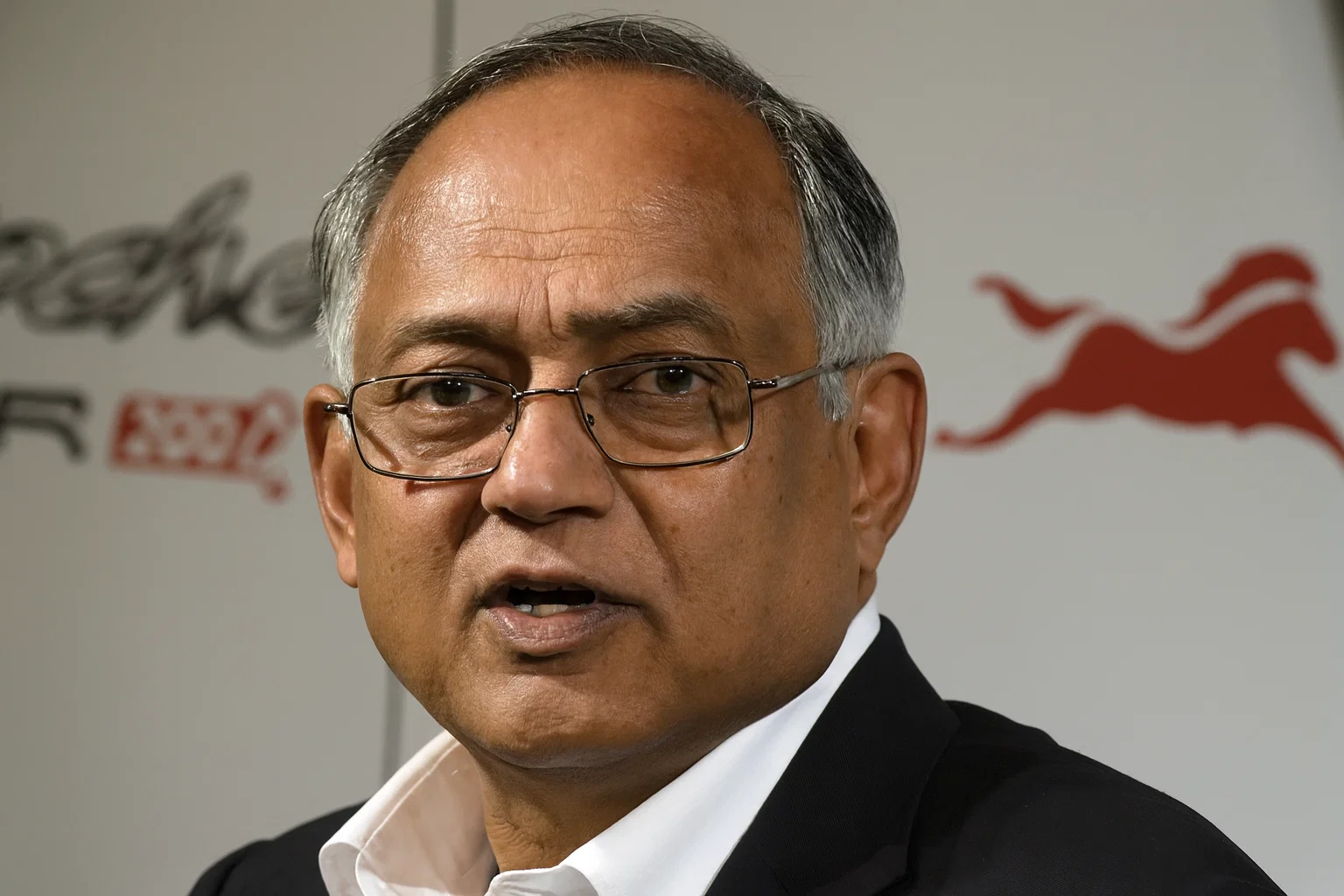
The Editorial Team of Behind The Headlines reports that Tata group veteran and industrialist Venu Srinivasan, vice-chairman of the Tata Trusts, halted fresh inductions to the board of the Sir Ratan Tata Trust (SRTT), even as other Tata Trust entities went ahead with new appointments. According to reports, a proposal to induct new trustees was cleared at the Sir Dorabji Tata Trust (SDTT), but a similar move at SRTT did not go through after Srinivasan raised objections and chose not to support the resolution. This development comes at a time when the powerful Tata Trusts are already under scrutiny for internal differences and governance changes.
Details / Background
The Tata Trusts sit at the apex of the Tata group’s ownership structure. Two key entities – the Sir Dorabji Tata Trust (SDTT) and the Sir Ratan Tata Trust (SRTT) – together hold a controlling stake of around 65–66% in Tata Sons, the holding company of the Tata conglomerate.
In the latest round of board changes, SDTT approved the induction of Neville Tata, son of Tata Trusts chairman Noel Tata, and Bhaskar Bhat, a long-time Tata group executive and former Titan managing director, as trustees for a three-year term. At the same meeting, the board also revised Venu Srinivasan’s earlier “lifetime” trusteeship at SDTT into a three-year term in order to comply with a new Maharashtra government rule that restricts the number of life trustees a public trust can have.
However, reports indicate that when a parallel proposal came up to induct new trustees into the Sir Ratan Tata Trust, Srinivasan opposed or withheld support, using the fact that key decisions at the Tata Trusts are expected to be unanimous. As a result, the move to bring in new trustees at SRTT did not pass.
This episode took place against the backdrop of a broader re-shaping of the Tata Trusts board. Recently, Mehli Mistry, a long-time associate of the Tata family and a trustee, was voted out following internal disagreements, and he has since taken legal steps to challenge his removal.
Srinivasan himself has been a central figure in these developments. A respected industrialist, former chairman of TVS Motor Company and Padma Bhushan awardee, he has served as a trustee and vice-chairman in the Tata Trusts structure, and until very recently was reappointed as a lifetime trustee of SRTT and SDTT before the new state regulations forced a change of terms.
Analysis
The decision to halt new inductions at the Sir Ratan Tata Trust, while allowing them at the Sir Dorabji Tata Trust, is significant for three reasons: governance, balance of power, and signalling.
First, on governance. The Tata Trusts control a large stake in Tata Sons, which in turn sits over a global business empire. Any change in who sits on the key philanthropic trusts has a downstream impact on who ultimately steers the group’s strategic direction. By stopping new trustees from joining SRTT for now, Srinivasan has effectively kept its board composition unchanged at a delicate moment. That means fewer fresh voices and a slower pace of structural change at one of the two flagship trusts.
Second, on balance of power. The induction of Neville Tata and Bhaskar Bhat at SDTT, combined with a revised three-year term for Srinivasan there, subtly shifts the internal balance. At the same time, SRTT’s board does not see new members coming in. Observers note that this asymmetry could affect how coalitions within the trusts align on questions such as further board appointments, representation on Tata Sons, or the handling of legacy shareholders like the Shapoorji Pallonji group.
Third, on signalling. The fact that one senior trustee could block or delay new inductions brings into focus the decision-making norms at Tata Trusts. Historically, important resolutions have been taken with near-unanimity, reflecting a culture of consensus under Ratan Tata’s leadership. The recent disagreements – including the vote on Mehli Mistry’s continuation and now the divergent paths of SDTT and SRTT – suggest that this culture is under stress. Even if formal rules are followed, repeated use of veto-style tactics can be read as a sign of deeper factional tensions.
At the same time, some analysts argue that Srinivasan’s move could be read more charitably as an attempt to “pause and review” SRTT’s governance structure before adding new members. With new state regulations on lifetime trusteeship and with a court challenge from a recently removed trustee, he may believe that rushing into fresh appointments could complicate ongoing legal and regulatory issues.
Reactions / Statements
Officially, the Tata Trusts have focused their written statements on the changes at SDTT, highlighting the induction of Neville Tata and Bhaskar Bhat and the revision of Srinivasan’s term there. Specific public comments on the stalled inductions at Sir Ratan Tata Trust have been limited, and when approached, some reports say Tata Trusts and Srinivasan did not respond to detailed queries on that point.
Corporate watchers and governance experts, however, have been vocal. Many see this as another episode in a series of tense moments since Ratan Tata’s passing and the earlier high-profile leadership dispute around Tata Sons almost a decade ago. Commentators have pointed to three emerging themes:
- A gradual shift from elder-centric informal authority to rule-driven governance under state regulation and charitable law.
- The rise of a new generation of Tata family members – such as Neville Tata – into trustee roles.
- The influence of experienced non-family trustees like Srinivasan, who can tilt key decisions inside the trusts.
Former Tata executives and long-time observers also note that internal disagreements, while not unusual in large family-linked institutions, rarely spill into public view. The recent voting patterns, legal caveats and visible government interest in the stability of Tata Trusts mark a departure from the low-profile style that once defined the group’s philanthropic arm.
Bigger Picture / Future Impact
The governance churn around Venu Srinivasan and the Sir Ratan Tata Trust has implications that go beyond one boardroom.
For the Tata group as a whole, the composition and cohesion of the trust boards influence how big strategic questions are handled – from succession planning at Tata Sons to the management of stakes in key listed companies. If internal rifts deepen or if appointments are repeatedly contested, the group may face more frequent external scrutiny from regulators, investors and courts.
For Indian corporate governance more broadly, the episode highlights the special position of charitable and public trusts that effectively control huge business empires. The Maharashtra Public Trusts (Amendment) Ordinance, which triggered the revision of lifetime trusteeship, is one example of how state rules can intersect with private governance. Lawmakers and regulators will be watching closely to see whether such interventions bring more transparency and accountability or simply trigger new rounds of internal conflict.
There is also a philanthropic dimension. The Tata Trusts are among India’s largest charitable institutions, funding health, education, livelihoods and heritage projects across the country. Changes in trusteeship and internal dynamics may influence grant-making priorities, risk appetite, and partnerships with government or multilateral agencies. Stakeholders in the social sector will be keen to know whether the recent tension is a passing phase or the start of a longer re-alignment in philanthropy strategy.
For Venu Srinivasan personally, the events underline his central role in the trust system. On one hand, his term at SDTT has been regularised to a three-year tenure in line with the new law, and he has been designated vice-chairman there. On the other hand, his decision to halt new inductions at SRTT signals that he is prepared to exercise his influence firmly when he feels the board’s direction needs reconsideration. How he uses that influence in the coming months will shape perceptions of him as either a stabilising force, a gatekeeper, or a power-broker – or some mix of all three.
Finally, the broader question is whether the Tata Trusts can move from a phase of contestation to one of consolidation. With Mehli Mistry’s legal challenge pending, new trustees joining one key board, and appointments paused at another, the trusts face a test of their ability to reach durable consensus. The answer will matter not only to insiders but to the wider ecosystem that relies on the Tata group’s stability and long-term outlook.
Conclusion
The Editorial Team of Behind The Headlines observes that the decision by Venu Srinivasan to halt new inductions at the Sir Ratan Tata Trust, while green-lighting changes at the Sir Dorabji Tata Trust, is more than an isolated boardroom move. It reflects the push and pull between tradition and regulation, continuity and renewal, personal influence and collective governance within one of India’s most important philanthropic and corporate power centres.
As legal, regulatory and internal pressures converge, the Tata Trusts are navigating a sensitive transition from the era of Ratan Tata’s personalised stewardship to a more structured, multi-voice leadership. Whether the current tensions give way to a stable equilibrium – or to further public disputes – will become clear only over time. For now, Srinivasan’s intervention at SRTT is a reminder that in high-stakes trusts, who gets to sit at the table can be as consequential as the decisions that follow.
Internal Links
- Behind The Headlines – “Inside the Tata Trusts: How India’s Most Powerful Charity Governs a Business Empire”
- Behind The Headlines – “When Philanthropy Controls Corporates: The Tata Sons Ownership Puzzle”
Related Posts


Stay Informed With the Latest & Most Important News
Previous Post
Next Post
Advertisement






Advertisement
