Now Reading: Sheikh Hasina death sentence and India’s response
-
01
Sheikh Hasina death sentence and India’s response


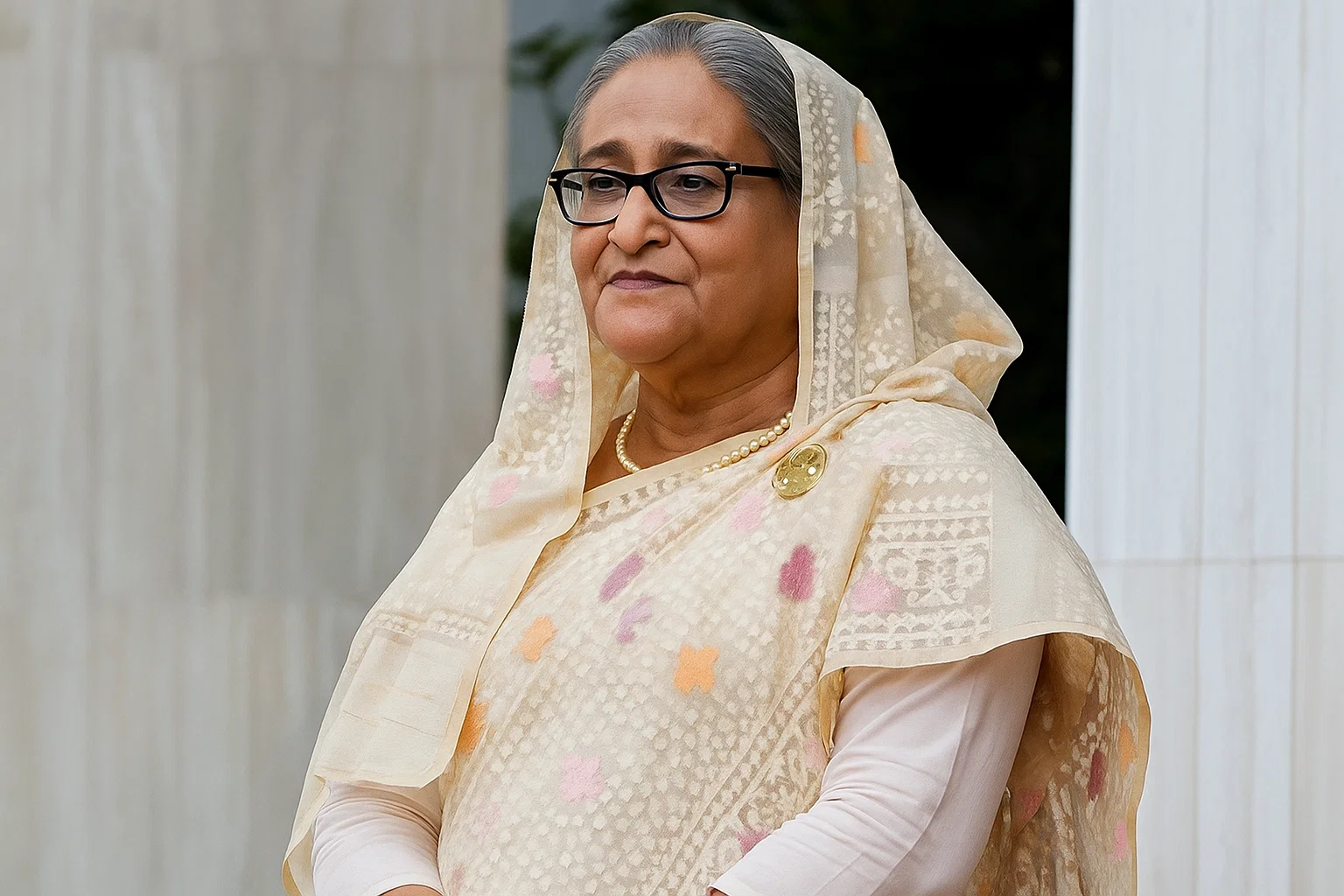
The Editorial Team of Behind The Headlines reports that former Bangladeshi Prime Minister Sheikh Hasina has been sentenced to death by the country’s International Crimes Tribunal in a landmark ruling. The verdict comes after she was tried in absentia for alleged crimes against humanity during a mass student uprising. India has officially stated that it has “noted” the decision and will engage with all stakeholders in Bangladesh, underscoring the diplomatic sensitivity of the case.
Details / Background
The tribunal found Sheikh Hasina guilty on multiple counts linked to the brutal suppression of a student-led protest in July 2024. The charges included incitement of violence, ordering killings and failure to prevent mass atrocities. The court, presided over by Judge Golam Mortuza Mozumder, ruled the sentence after concluding that the former premier could be held accountable even while in exile.
Sheikh Hasina has been living in self-exile in India since the uprising toppled her 15-year rule. She and her aide, former Home Minister Asaduzzaman Khan Kamal, were both sentenced to death in absence. A former police chief, Chowdhury Abdullah Al‑Mamun, who cooperated with authorities, was given a prison term of five years.
Following the verdict, Bangladesh has formally urged the Indian government to extradite Hasina and Khan. Bangladesh’s foreign ministry described refusal as a “grave unfriendly act” and reiterated that India has treaty obligations under the 1974 extradition agreement. The tribunal also triggered asset-seizure processes, declaring that officials would take control of Hasina’s property if she does not voluntarily surrender within 30 days.
Analysis
The death sentence against a former prime minister is a momentous legal and political event—rare in South Asia. It signals that the interim government in Bangladesh intends to assert accountability over high-profile figures. However, trials held in absence raise serious questions about due process, fair trial standards and international human rights norms. Observers note that the tribunal was originally set up to try 1971 war-crimes but was later amended to include current-day political cases, increasing scrutiny of its impartiality.
For India, the verdict creates a diplomatic tightrope. As Bangladesh’s largest neighbour and a major trading partner, India must balance respect for sovereignty with its own interests in regional stability, democratic norms and human-rights commitments. India’s measured public response underscores its intent to engage constructively rather than appear to take sides.
The verdict also raises the risk of domestic unrest in Bangladesh. With the former ruling party’s supporters already agitated, and elections due in early 2026, the possibility of protests, security clamp-downs and regional fallout is high.
Reactions / Statements
- Bangladesh’s interim government, led by Nobel laureate Muhammad Yunus, welcomed the verdict and said it affirmed the principle that no one is above the law. The foreign ministry called on India to cooperate in extradition.
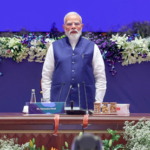
- India’s Ministry of External Affairs stated: “As a close neighbour, India remains committed to the best interests of the people of Bangladesh, including in peace, democracy, inclusion and stability in that country. We will always engage constructively with all stakeholders.”
- Senior Indian Opposition leader Shashi Tharoor described the verdict as a “very troubling development” especially given the use of the death penalty and the in-absentia nature of the trial.
- Human rights bodies such as the United Nations Office of the High Commissioner for Human Rights (OHCHR) expressed cautious support for accountability but reiterated opposition to the death penalty and emphasised due-process norms.
Bigger Picture / Future Impact
This verdict has wide-ranging implications. In Bangladesh, it may reshape the political landscape: the ruling interim government may gain leverage, while the banned political forces aligned with Hasina’s Awami League face intensified pressure. The 2026 elections will be held under this heightened dynamic, and voter behaviour may shift in response to the crackdown on a former leader.
Regionally, the case tests the India-Bangladesh relationship. India will need to manage the extradition request carefully—it cannot ignore Bangladesh’s demands without risking diplomatic platitudes or public backlash. At the same time, heavy handedness could damage India’s global image on human rights and raise concerns among its other neighbours.
For international law and transitional justice, the case highlights the trend of war-crimes or international-crimes tribunals being used domestically to pursue political figures. It poses questions about legitimacy, fairness and consistency of such mechanisms. Larger debates around the death penalty, trial in absentia and judicial independence are thus back in focus.
Lastly, for the global philanthropic and business community, which often watches Bangladesh as a growth market, this verdict signals increased political risk. Investors, corporations and NGOs may reassess exposure, governance expectations and risk-management in the country.
Conclusion
The Editorial Team of Behind The Headlines notes that the death sentence handed to former Prime Minister Sheikh Hasina marks a watershed moment in Bangladesh’s legal and political history. The verdict, India’s cautious response and the looming effects on regional diplomacy, human rights and democratic governance make this a story with deep international dimensions. As India, Bangladesh and the global community absorb the implications, the next steps—especially the extradition question, the 2026 elections and how justice is perceived—will shape stability in one of South Asia’s most strategically important nations.
Related Posts


Stay Informed With the Latest & Most Important News
Previous Post
Next Post


Advertisement