

Now Reading: Amit Shah Reveals: PM Modi Refused Special Privilege in Proposed Bill
-
01
Amit Shah Reveals: PM Modi Refused Special Privilege in Proposed Bill


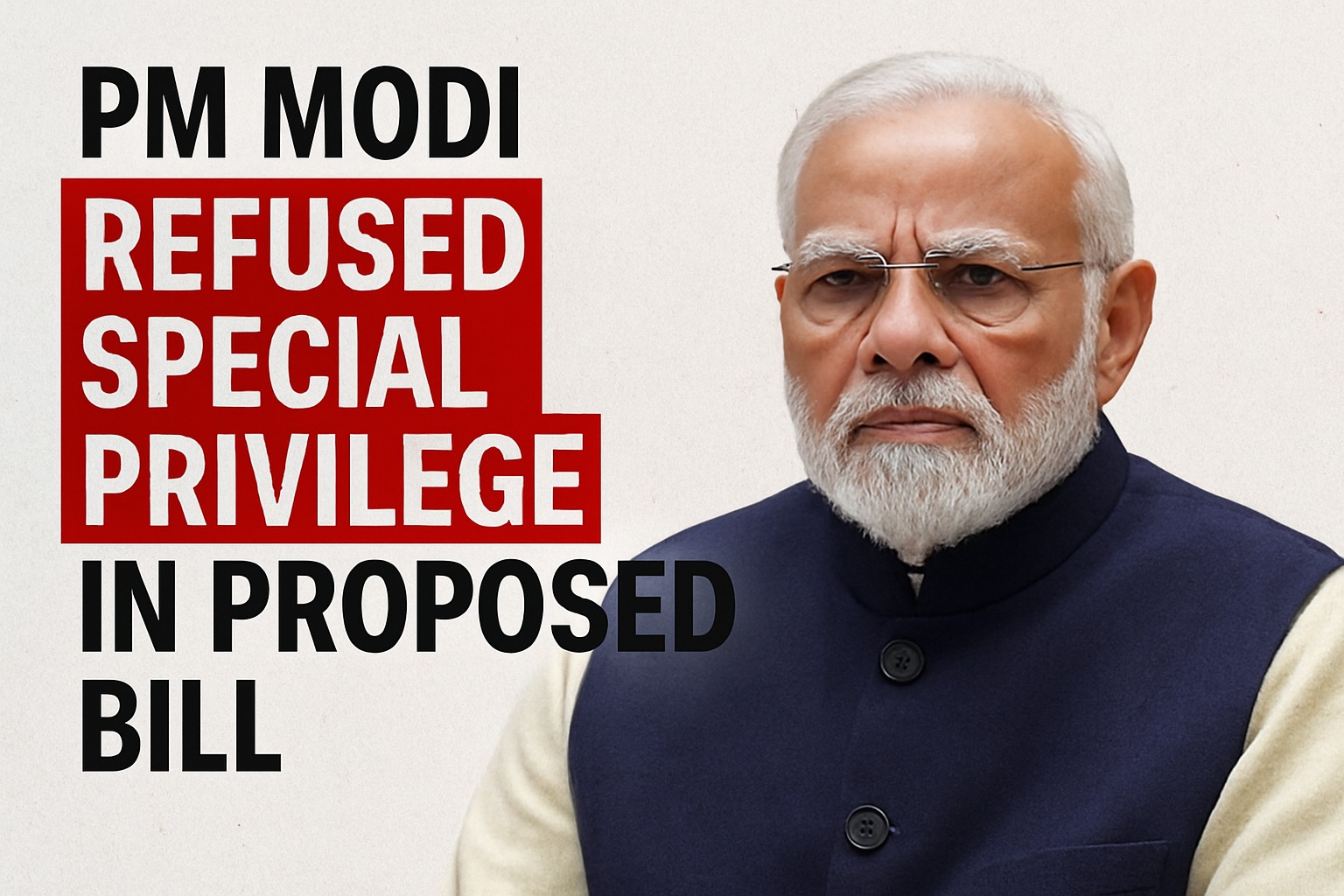
In a bold move that signals a major shift in India’s political culture, Union Home Minister Amit Shah revealed that Prime Minister Narendra Modi has included himself under the ambit of a proposed law that would make it mandatory for any minister — including the Prime Minister — to resign if sent to jail, even for a day.
The announcement, made during a parliamentary debate, has stirred intense discussion across political circles. For some, it is a landmark step towards greater accountability in public life; for others, it is a shrewd political maneuver aimed at reinforcing Modi’s image as a leader of integrity ahead of crucial elections.
What Does the Proposed Law Say?
The draft law is designed to ensure that no minister can continue in office if convicted or incarcerated, irrespective of the circumstances. Unlike past provisions where leaders often clung to office citing appeals or political conspiracies, this law cuts short such arguments by making resignation automatic.
Importantly, Amit Shah emphasized that Prime Minister Modi himself insisted on being covered by the same clause, refusing any exemption. “The Prime Minister said if the law applies to ministers, it must apply to him too. No exceptions,” Shah told lawmakers, underlining Modi’s personal commitment to the principle.
The Significance of Modi’s Inclusion
Traditionally, Indian politics has often seen ministers continue in office despite criminal charges or even jail terms, citing technicalities, pending appeals, or political victimization. By extending this rule to himself, Modi has sent out multiple messages:
- Zero Tolerance for Corruption or Crime – Reinforcing his government’s long-standing narrative of “clean governance.”
- Equality Before Law – Positioning himself as a leader who does not seek special privileges despite holding the highest office.
- Political Optics – Strengthening his image as a reformer who leads by example, especially in the run-up to state and national elections.
This also places moral pressure on other political parties, many of whom have leaders facing criminal cases but who continue to hold prominent posts.
Opposition Reactions
Predictably, opposition parties reacted with a mix of skepticism and criticism. Some leaders argued that the move was more symbolic than practical, suggesting it was designed to deflect attention from the government’s handling of ongoing controversies. Others questioned whether the law would be applied uniformly, especially in cases where charges are politically motivated.
Still, few could deny the symbolic strength of Modi voluntarily placing himself under the same scrutiny as his ministers, something rarely seen in Indian political history.
Public Sentiment and Political Impact
Public reaction has largely been positive. Many citizens see this as a refreshing break from the culture of political immunity, where powerful leaders often shield themselves from laws that apply to ordinary people. Supporters say it shows Modi’s personal confidence in his clean record and his willingness to uphold democratic accountability.
Analysts, however, caution that the real test will come in implementation — whether the law is enforced impartially across party lines, or whether it becomes another political tool wielded selectively.
A Step Towards Political Reform
If passed and implemented fairly, this law could mark a watershed moment in India’s democratic evolution. For decades, civil society groups and legal experts have called for stricter rules preventing those with criminal charges from holding office. Modi’s decision to subject himself to such a law could inspire future governments to embrace greater transparency and accountability.
Conclusion: A Political Gamble With High Stakes
By including himself in the proposed legislation, Prime Minister Modi has not just rewritten the rules for ministers, but also raised the bar for leadership in India. While critics see political calculation behind the move, its potential to reshape expectations of integrity in public life cannot be dismissed.
If fully realized, this law could signal the end of the era where jailed ministers clung to power — and set a precedent for future leaders to follow.
Related Posts


Stay Informed With the Latest & Most Important News
Previous Post
Next Post


Advertisement






Advertisement
