

Now Reading: Anti-Immigration Protests Rock London, March Reaches Westminster
-
01
Anti-Immigration Protests Rock London, March Reaches Westminster


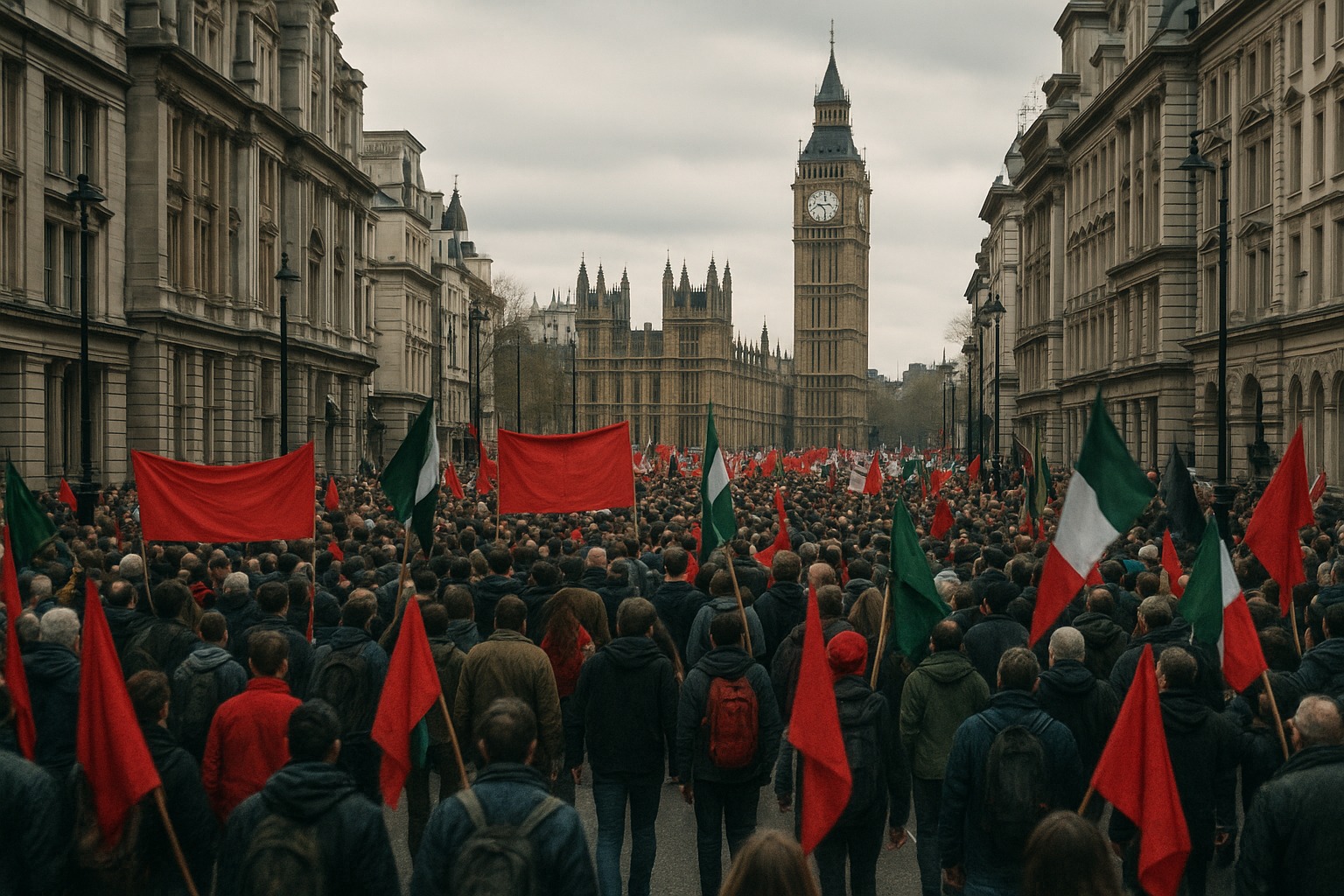
London witnessed major anti-immigration protests as thousands gathered on the streets before heading towards Westminster, the heart of the UK Parliament. The demonstration reflects growing public anger over migration policies, placing Prime Minister Rishi Sunak’s government under pressure at a time when immigration dominates Britain’s political debate.
Earlier, we analysed UK immigration policy debates.
Scale And Nature Of The Protest
The protests began with large gatherings in central London and gained momentum as demonstrators moved towards Westminster. Placards, chants, and slogans highlighted opposition to rising immigration levels, while police monitored the situation closely to prevent clashes.
Organizers described the protest as a “people’s march” demanding stricter immigration controls. Counter-protest groups advocating diversity and inclusivity were also reported in nearby areas, raising concerns of potential confrontation.
Read our coverage of European migration protests.
Political Context – Why Now?
Immigration has become one of the most divisive issues in British politics. With the next general election approaching, the ruling Conservatives face mounting pressure to deliver on promises of curbing illegal migration and controlling asylum inflows.
At the same time, business groups argue that migrant workers are vital to key industries, making immigration both an economic necessity and a political flashpoint.
See our piece on UK politics ahead of elections.
Government’s Stance
The UK government has repeatedly pledged tougher border controls, with Prime Minister Rishi Sunak stressing that “illegal immigration will not be tolerated.” Officials are expected to address Parliament amid calls for urgent action following the protest.
However, critics argue that rhetoric is outpacing results, with migration numbers still high despite policy announcements.
Reactions From Opposition And Public
- Opposition parties accused the government of using immigration as a distraction from economic struggles.
- Rights groups condemned the protests as divisive, warning that such movements fuel xenophobia.
- Public sentiment appeared split, with some hailing the protests as a legitimate expression of frustration and others calling it a dangerous path.
Our earlier analysis explored Britain’s migration and economy link.
Global Implications
London’s protests also carry international weight. With Europe witnessing its own migration-related tensions, Britain’s demonstrations reflect a wider continental trend. The UK’s handling of immigration is being closely watched by allies and critics alike.
Bigger Picture – Migration As A Political Battlefield
The Westminster march underlines how immigration has become a core political battleground in Britain. It is no longer just a question of border security but also one of identity, economy, and social cohesion. The protests may shape campaign narratives as parties head towards election season.
Conclusion
The anti-immigration protests in London mark a critical moment in Britain’s ongoing migration debate. While demonstrators marched towards Parliament demanding tougher controls, the challenge for the UK government lies in balancing security, economy, and social harmony.
Related Posts



Stay Informed With the Latest & Most Important News
Previous Post
Next Post


Advertisement









Advertisement