

Now Reading: BJP Office in Leh Set Ablaze Amid Ladakh Statehood Protests
-
01
BJP Office in Leh Set Ablaze Amid Ladakh Statehood Protests


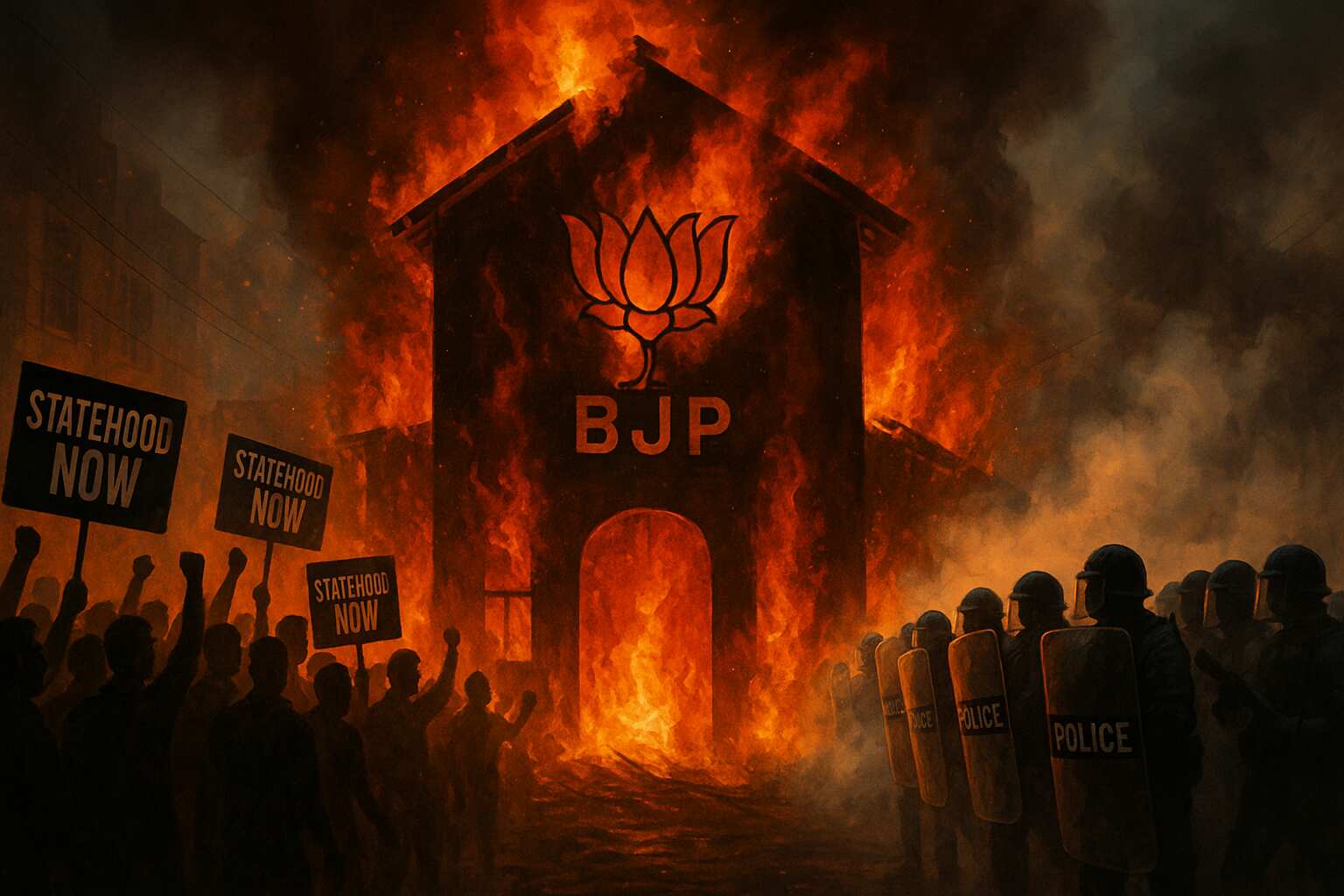
Leh witnessed unprecedented unrest as the BJP office was set on fire during violent protests demanding statehood for Ladakh. The demonstrations, which had been building for weeks, turned explosive when protesters clashed with police, leading to baton charges, teargas shelling, and scenes of chaos across the town.
The demand for full statehood and constitutional safeguards under the Sixth Schedule has been growing louder in Ladakh, with locals feeling ignored since the abrogation of Article 370 in 2019. This violent turn has thrown national attention on the region, raising critical questions about governance, representation, and people’s trust in democratic institutions.
Why Are People Protesting in Ladakh?
The protests are rooted in years of frustration:
- Demand for Statehood: Ladakhis want a separate state, not just Union Territory status.
- Sixth Schedule Protection: To safeguard land, jobs, and cultural identity.
- Perceived Neglect: Many feel the region has been sidelined in policy-making since 2019.
The Incident in Leh
- Protesters gathered in Leh with banners demanding immediate action from Delhi.
- Tensions escalated when a mob attacked and set fire to the BJP office, symbolizing anger at the ruling party’s handling of Ladakh’s demands.
- Police responded with teargas and baton charges, leading to injuries among both protesters and security personnel.
- Videos of the fire and clashes quickly went viral, amplifying the protest on social media.
(Read our detailed explainer on Article 370 and its impact on Ladakh’s political identity.)
Political Reactions
- BJP leaders condemned the violence, calling it “unfortunate” but also reiterated commitment to dialogue.
- Opposition voices blamed the government for ignoring Ladakh’s concerns for too long.
- Local leaders emphasized that the protest is not about one party but about Ladakh’s survival, identity, and representation.
What This Means for the BJP and the Centre
The attack on the BJP office highlights deep resentment in the region. It is a reminder that:
- Symbolic promises won’t work unless backed with real policy changes.
- The BJP risks losing ground in Ladakh if demands are not met.
- National stability narratives face a challenge if Ladakh continues to erupt in protest.
The Bigger Picture: Ladakh at the Crossroads
This violent protest is more than a political showdown; it reflects a community’s cry for recognition. Ladakh stands at the crossroads of:
- National security: With its sensitive borders near China and Pakistan.
- Democratic participation: Locals demand a stronger voice in governance.
- Cultural preservation: Identity, religion, and environment are at the heart of Ladakh’s struggle.
If ignored, these protests could harden into a long-term movement, straining India’s governance in a geopolitically crucial region.
Conclusion
The fire at the BJP office in Leh is a wake-up call. The demand for statehood and Sixth Schedule safeguards cannot be brushed aside as mere politics—it is about identity, dignity, and the democratic rights of Ladakh’s people.
As Delhi evaluates its next move, the world watches how India manages this sensitive balance between governance, security, and democracy in one of its most strategic regions.
Related Posts


Stay Informed With the Latest & Most Important News
Previous Post
Next Post


Advertisement





Advertisement
