

Now Reading: Four new Vande Bharat Express trains launched to strengthen India connectivity
-
01
Four new Vande Bharat Express trains launched to strengthen India connectivity

Four new Vande Bharat Express trains launched to strengthen India connectivity

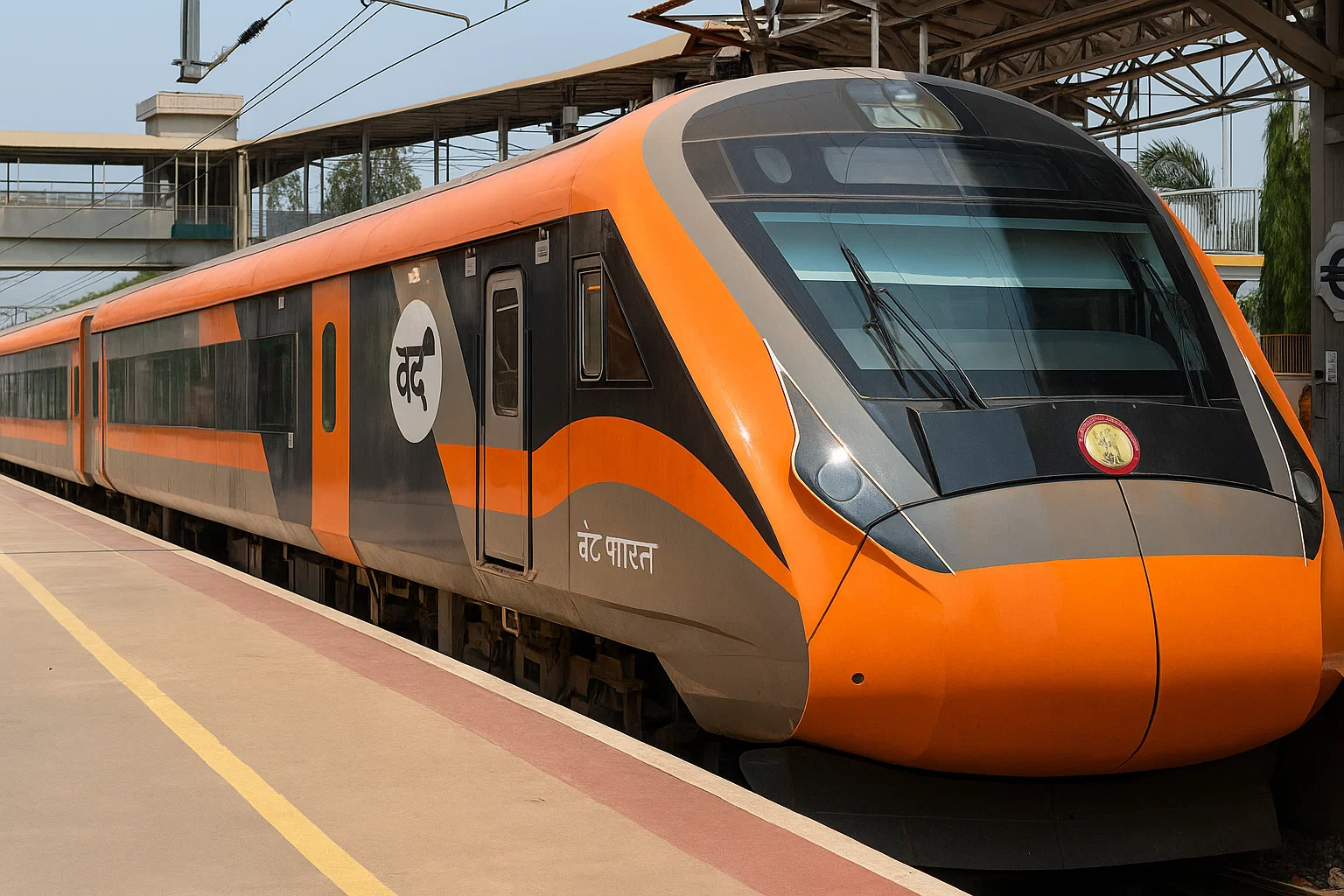
The Editorial Team of Behind The Headlines reports that Prime Minister Narendra Modi on 8 November 2025 officially flagged off four new Vande Bharat Express trains on key routes: Bengaluru to Ernakulam, Varanasi to Khajuraho, Lucknow Junction to Saharanpur and Firozpur Cantt to Delhi. These launches mark a major boost to India’s semi-high-speed rail network as part of efforts to enhance connectivity and travel comfort.
Details / Background
The four newly inaugurated routes span diverse regions of India, improving both inter-state and regional rail links. First, the Bengaluru–Ernakulam corridor connects two major cities in South India’s industrial and IT belt. Second, the Varanasi–Khajuraho link bridges heritage and religious destinations in Uttar Pradesh and Madhya Pradesh. Third, the Lucknow–Saharanpur train strengthens intra-state travel within Uttar Pradesh. Finally, the Firozpur Cantt–Delhi route enhances northern connectivity between Punjab and the national capital.
These trains are part of the broader modernisation drive by Indian Railways, with the Vande Bharat Express fleet becoming the hallmark of faster and more premium train travel. The launches follow earlier roll-outs of Vande Bharat routes across multiple states.
Analysis
Introducing these four new express services brings multiple benefits. First, travel times on these routes are expected to decrease significantly, making rail a more competitive option. For example, linking Varanasi and Khajuraho opens up pilgrimage and heritage tourism with quicker access. Secondly, improved connectivity can stimulate regional economic activity—linking industrial hubs like Bengaluru with Ernakulam and linking Delhi with Firozpur strengthens trade flows. Third, by widening the premium train network, Indian Railways positions itself to cater to evolving passenger expectations for comfort, speed and reliability.
However, successful implementation will depend on operational infrastructure—track upgrades, signalling, maintenance of rolling-stock, and punctuality. Without those, the gains may be less visible to the average traveller.
Reactions / Statements
In his address at the flag-off ceremony, Prime Minister Modi emphasised that the new services reflect the government’s commitment to offering “modern, comfortable and time-saving travel” for all citizens.
Railway officials highlighted that these trains will operate with minimal stops, features like faster acceleration, and enhanced passenger amenities. Local stakeholders in the connected regions welcomed the launches, viewing the services as catalysts for tourism, investment and daily commuting convenience.
Bigger Picture / Future Impact
The expansion of the Vande Bharat Express network signals a shift in how rail travel is perceived in India—from purely conventional trains to faster, premium options across a broad geography. With these four launches, the network extends into regions previously under-served by high-speed or semi-high-speed trains. In the future, we can expect further route roll-outs, upgraded station infrastructure and perhaps linkages to other mobility networks such as regional airports. For passengers, the convenience of reduced travel time, better comfort and more schedule options will become increasingly real.
Additionally, this move aligns with the government’s broader infrastructure goals and ‘Make in India’ focus on manufacturing train sets domestically. Sustained success will depend on maintaining service standards and affordability for a wide range of travellers.
Conclusion
By flagging off four new Vande Bharat Express routes across diverse Indian regions, the government has taken a significant step in upgrading the nation’s rail connectivity. While the promise of faster, comfortable travel is clear, the real test will lie in execution—punctuality, maintenance and passenger experience. As the network expands, travellers stand to benefit from a more modern rail system that better meets the demands of a fast-moving country.
Internal Links
- Behind The Headlines: How Vande Bharat is transforming Indian rail travel
- Behind The Headlines: The rise of premium train services in India
Related Posts


Stay Informed With the Latest & Most Important News
Previous Post
Next Post

Advertisement








Advertisement
