

Now Reading: Gross Savings, Less Taxing: GST Rejig to Revive Consumption Demand, FMCG Prices Set to Drop
-
01
Gross Savings, Less Taxing: GST Rejig to Revive Consumption Demand, FMCG Prices Set to Drop

Gross Savings, Less Taxing: GST Rejig to Revive Consumption Demand, FMCG Prices Set to Drop

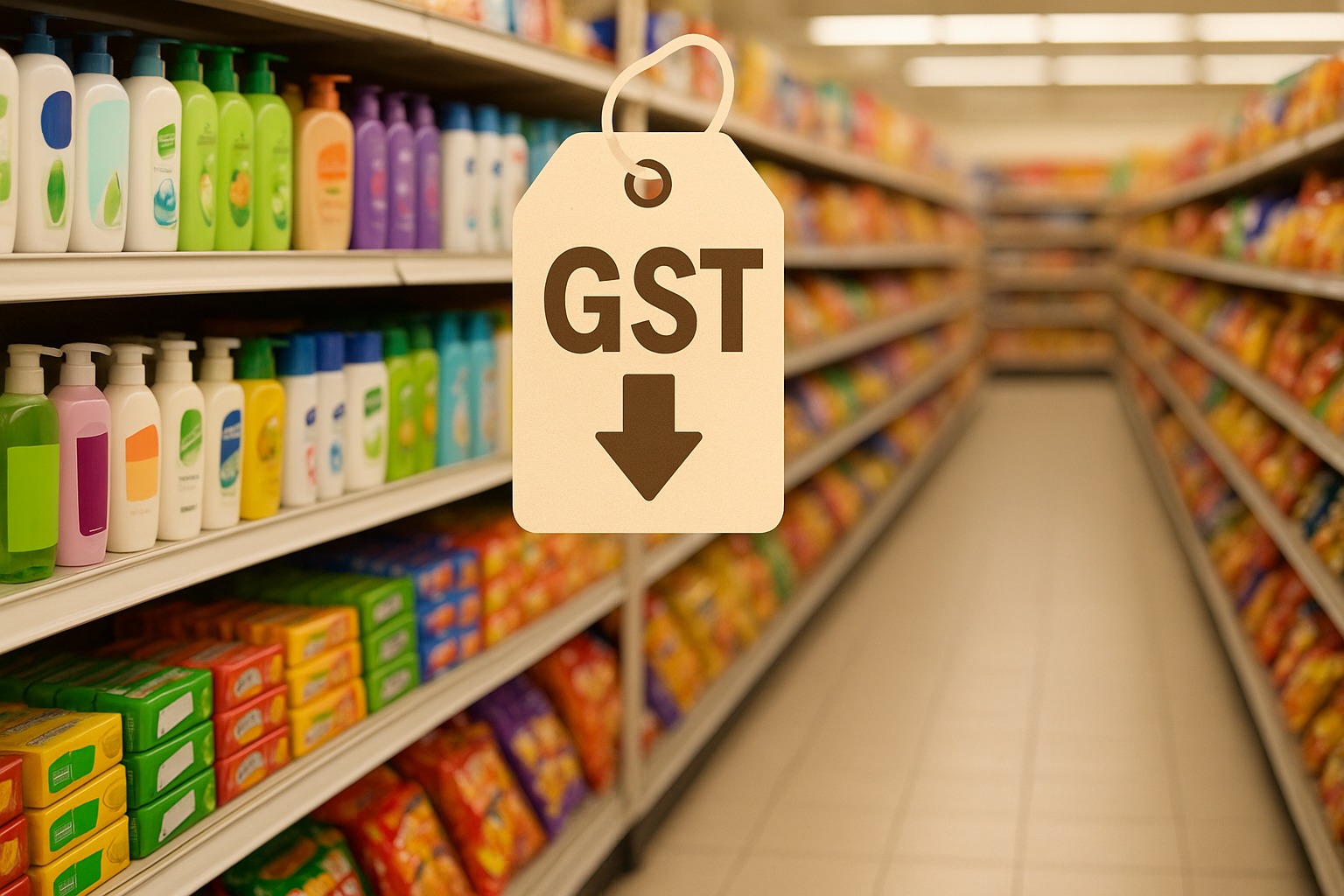
India’s Goods and Services Tax (GST) regime is set for a major realignment that promises relief for households and a boost for the economy. From daily-use shampoos to popular food items like sev, the upcoming GST slab rejig is expected to lower prices of Fast-Moving Consumer Goods (FMCG), reviving consumption demand at a time when inflation has dented spending power.
The Editorial Team of Behind The Headlines has verified insights from the GST Council’s deliberations, industry expectations, and economic forecasts to present a comprehensive picture of how this reform could reshape both consumer behaviour and market dynamics.
Why the GST Rejig Matters Now
The timing of this GST restructuring is crucial. Over the past year, rising inflation has forced many families, especially in rural areas, to cut down on discretionary spending. Sales of FMCG products like packaged food, beverages, personal care items, and household goods have slowed.
By reducing tax slabs on widely consumed products, the government aims to:
- Make daily essentials more affordable.
- Stimulate consumption demand across rural and urban markets.
- Provide relief to manufacturers squeezed by high input costs.
- Reinforce consumer confidence ahead of the upcoming festive season.
What Will Become Cheaper
Reports suggest that the GST Council is likely to shift several FMCG products into lower tax brackets. Items that may see price cuts include:
- Shampoos and hair care products.
- Packaged snacks like sev, namkeen, and bhujia.
- Soaps and detergents.
- Toothpaste and other personal hygiene products.
- Certain packaged food items and beverages.
For consumers, this could mean savings of anywhere between 5% to 10% on monthly household budgets depending on product categories.
Impact on FMCG Companies
The FMCG sector, valued at over $110 billion, is among the largest contributors to India’s economy. Companies in this sector have been under pressure due to slowing rural demand and high raw material prices. A GST cut offers them the opportunity to:
- Reduce prices, making products more attractive to price-sensitive buyers.
- Boost sales volumes, particularly in semi-urban and rural areas.
- Improve market share as lower prices encourage brand loyalty.
- Potentially increase profitability if higher sales volumes offset lower margins.
Big names such as Hindustan Unilever, ITC, Nestlé, Dabur, and Patanjali are expected to pass on the benefits to consumers to maintain competitiveness.
Consumer Behaviour: Likely Shifts
Lower GST rates are likely to change how consumers spend in the short to medium term:
- Urban households may shift back to branded FMCG goods after months of cutting down on premium purchases.
- Rural buyers, who often turn to unbranded or local alternatives during high inflation, could return to branded products.
- Festive season demand may see a sharp jump as families stock up on personal care and packaged foods at reduced rates.
Overall, the move is expected to reignite demand sentiment, which has remained subdued in recent quarters.
Macroeconomic Implications
The GST rejig is not just about cheaper FMCG packs—it has wider economic consequences.
- Boost to Consumption: Since FMCG forms a large share of household spending, higher demand here can stimulate overall economic growth.
- Inflation Moderation: Lower product prices will ease inflationary pressures, helping the Reserve Bank of India manage monetary policy.
- Revenue Balancing: While lower GST rates may reduce government tax collections in the short term, higher sales volumes could offset losses through expanded consumption.
- Support to Rural Economy: Rural households, most affected by inflation, will benefit significantly, strengthening the rural growth engine.
The Tax-Saving Effect: A Household Example
Consider a middle-class family with a monthly FMCG budget of ₹5,000. A 5% reduction in effective GST could save them ₹250 per month, translating to ₹3,000 a year. This additional disposable income, when multiplied across millions of households, injects significant liquidity into the economy.
Industry Voices and Expectations
Industry experts have welcomed the proposal.
- FMCG associations argue that price cuts will help revive sluggish demand.
- Analysts say the move aligns with the government’s focus on boosting consumption-led growth.
- Economists caution that companies must ensure the tax cuts are passed on to consumers rather than absorbed into profits.
The Council has also indicated strict monitoring to ensure compliance with anti-profiteering rules.
Challenges Ahead
While the GST rejig appears promising, certain challenges remain:
- Ensuring uniform compliance by companies across states.
- Balancing government revenues while delivering consumer relief.
- Avoiding confusion among small retailers about revised tax structures.
- Preventing short-term supply chain disruptions as new rates are implemented.
Addressing these issues will be vital to making the reform smooth and effective.
What This Means for the Festive Season
With festivals like Diwali and Dussehra around the corner, the timing of this GST relief could not be better. Lower product prices will likely encourage higher spending on:
- Packaged sweets and savouries.
- Household care products.
- Personal grooming items used in festive celebrations.
Retailers anticipate a double-digit growth surge in FMCG sales if the new rates are implemented quickly.
Comparison with Past GST Cuts
This is not the first time the GST Council has tweaked tax slabs to revive demand. In 2017 and 2018, similar rate cuts on consumer goods had boosted sales temporarily. However, analysts note that the current slowdown is deeper, driven by sustained inflation. As such, the latest rejig is expected to have a more lasting impact on demand revival.
Conclusion
The expected GST rejig, cutting rates on everyday items from shampoo to sev, reflects the government’s strategy to put more money back into consumers’ hands while reviving the FMCG sector. For households, it means tangible savings; for companies, it offers a chance to regain lost volumes; and for the economy, it promises stronger demand-led growth.
The Editorial Team of Behind The Headlines will continue monitoring the GST Council’s decisions, providing fact-verified updates on how these changes reshape India’s consumption story.
Related Posts


Stay Informed With the Latest & Most Important News


Advertisement








Advertisement
