

Now Reading: ‘I am going quiet’: Warren Buffett ends annual-letter tradition
-
01
‘I am going quiet’: Warren Buffett ends annual-letter tradition


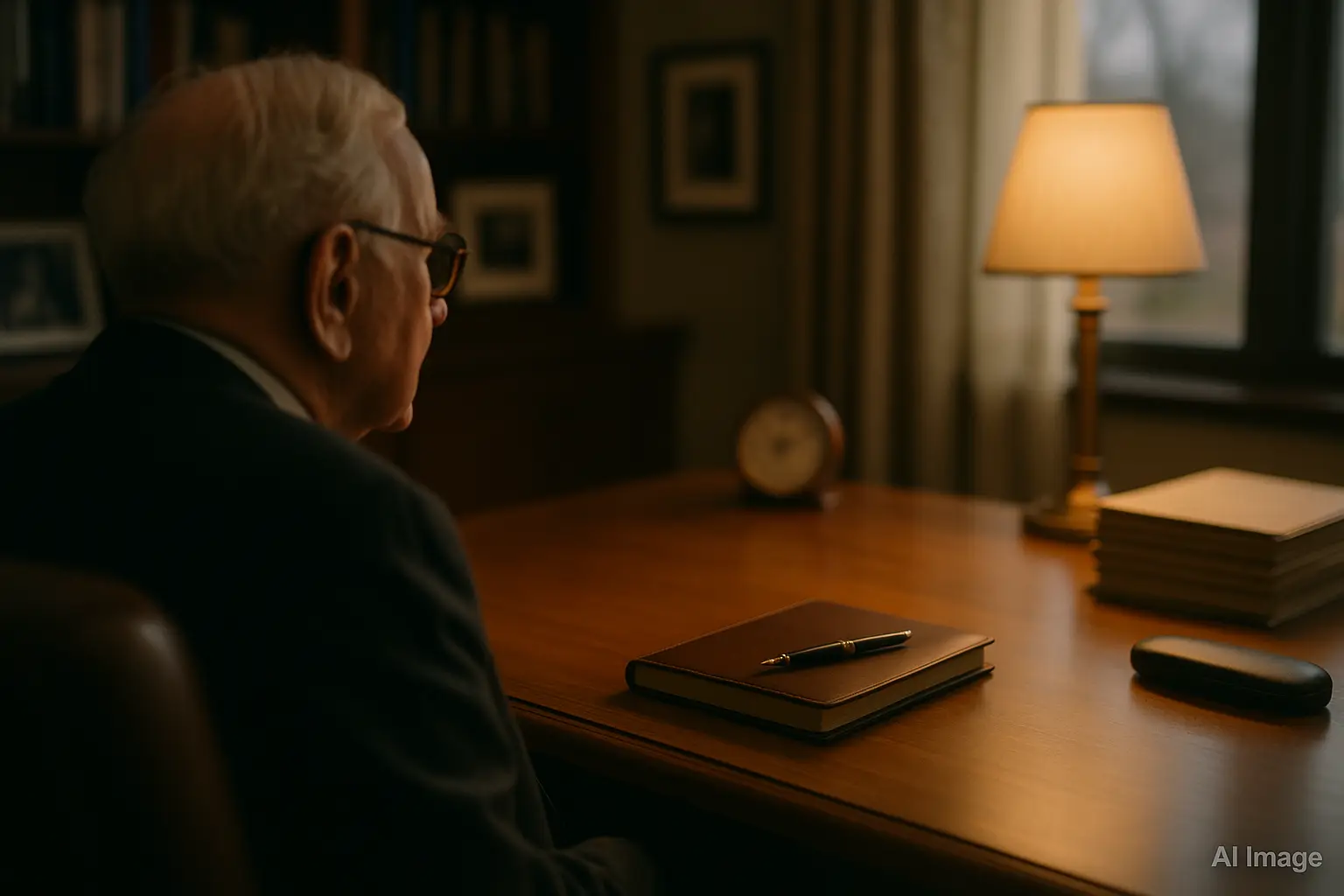
The Editorial Team of Behind The Headlines reports that legendary investor Warren Buffett has announced he will no longer author the annual shareholder letters for Berkshire Hathaway, saying “I’m going quiet.” This marks the end of a near-six-decade ritual that shaped the thinking of investors worldwide. In his reflective note, Buffett confirmed that his successor will take over much of the dialogue while he continues to write a Thanksgiving message each year.
Details / Background
Warren Buffett, aged 95, has led Berkshire Hathaway for decades, turning it from a struggling textile company into one of the world’s largest conglomerates. In his recent letter to shareholders, he stated: “I will no longer be writing Berkshire’s annual report or talking endlessly at the annual meeting. As the British would say, I’m ‘going quiet.’”
He confirmed that his long-designated successor, Greg Abel, will become CEO by year-end and will assume authorship of the annual letter going forward.
Buffett will continue to communicate with shareholders and family through his annual Thanksgiving message, but the detailed annual shareholder letter—long a fixture of corporate finance—will no longer come from him.
In the letter he also offered insights about his health and age, his sense of fortune, and the role of his hometown Omaha in both his life and in Berkshire’s success.
Analysis
The decision by Buffett to step back from the annual letter is significant for several reasons. First, it signals that Buffett sees the transition of leadership as well advanced, giving his successor space to set the tone. Second, it may reflect an awareness of his age and a desire to scale back public commentary while still influencing via other channels. And third, it marks the end of a communication style once unique in corporate America—where the chief executive writes directly in plain-spoken, often folksy, long-form letters to shareholders.
From an investor perspective, the move raises questions: Will the successor maintain the same tone and level of candour? Will shareholders view the change as the end of an era and adjust their expectations accordingly? The absence of Buffett’s annual commentary may create a void that the market notices.
Another dimension: Buffett emphasized his philanthropic intentions and the acceleration of his lifetime giving, tying in his communication decision with broader life-planning matters. That suggests the letter is as much personal as it is professional.
Reactions / Statements
Market commentators described the note as “poignant” and “filled with grace,” citing Buffett’s reflections on luck, mortality, and gratitude. Some investors and analysts noted the emotional tone rather than strategic announcements, drawing attention to the human side of the message.
Others pointed to the smoothness of the transition plan—Greg Abel had been publicly nominated for some time—so the change in communication is more symbolic than sudden. Still, several shareholder-forums observed that the Buffett letter had become a cultural touchstone in investing, and its absence may change how the investor community engages with Berkshire.
Bigger Picture / Future Impact
This shift in communication style may have broader implications. For corporate governance and investor relations, it raises questions about how companies transition iconic leaders and maintain transparency. Buffett’s annual letter was often mined for investment wisdom and corporate guidance; its end may change how shareholders and the market at large seek insights.
For Berkshire Hathaway, it marks a new chapter—with Greg Abel at the helm and Buffett more in the background. The company may evolve its narrative, potentially focusing less on one voice and more on a broader leadership team.
In the investing world, the event underscores the importance of succession planning not just operationally but also in corporate communication and branding. It may also prompt other long-time CEOs and chairpersons to consider how they exit the spotlight.
Finally, for Buffett himself, the note reflects a transition from active public investor-voice to elder statesman and philanthropist. His continued influence remains, but the style and directness are altering.
Conclusion
The Editorial Team of Behind The Headlines observes that Warren Buffett’s announcement that he will stop writing the annual shareholder letter signals the end of a distinctive era in investor communication. While he remains involved and retains influence, the change underscores both the practicalities of age and the planned transition at Berkshire Hathaway. As the baton passes, shareholders and the broader market will watch how the company’s voice and direction evolve under new leadership—and how Buffett’s legacy is preserved and adapted.
Internal Links
- Behind The Headlines – “Succession Planning in Major Corporations: What Every Investor Should Know”
- Behind The Headlines – “Warren Buffett’s Investment Philosophy — A 60-Year Retrospective”
- Behind The Headlines – “How Corporate CEOs Communicate with Shareholders: Trends and Tools”
Related Posts



Stay Informed With the Latest & Most Important News
Previous Post
Next Post


Advertisement







Advertisement
