Now Reading: India and Pakistan Clash at UNGA Over Terrorism and Pahalgam Attack
-
01
India and Pakistan Clash at UNGA Over Terrorism and Pahalgam Attack


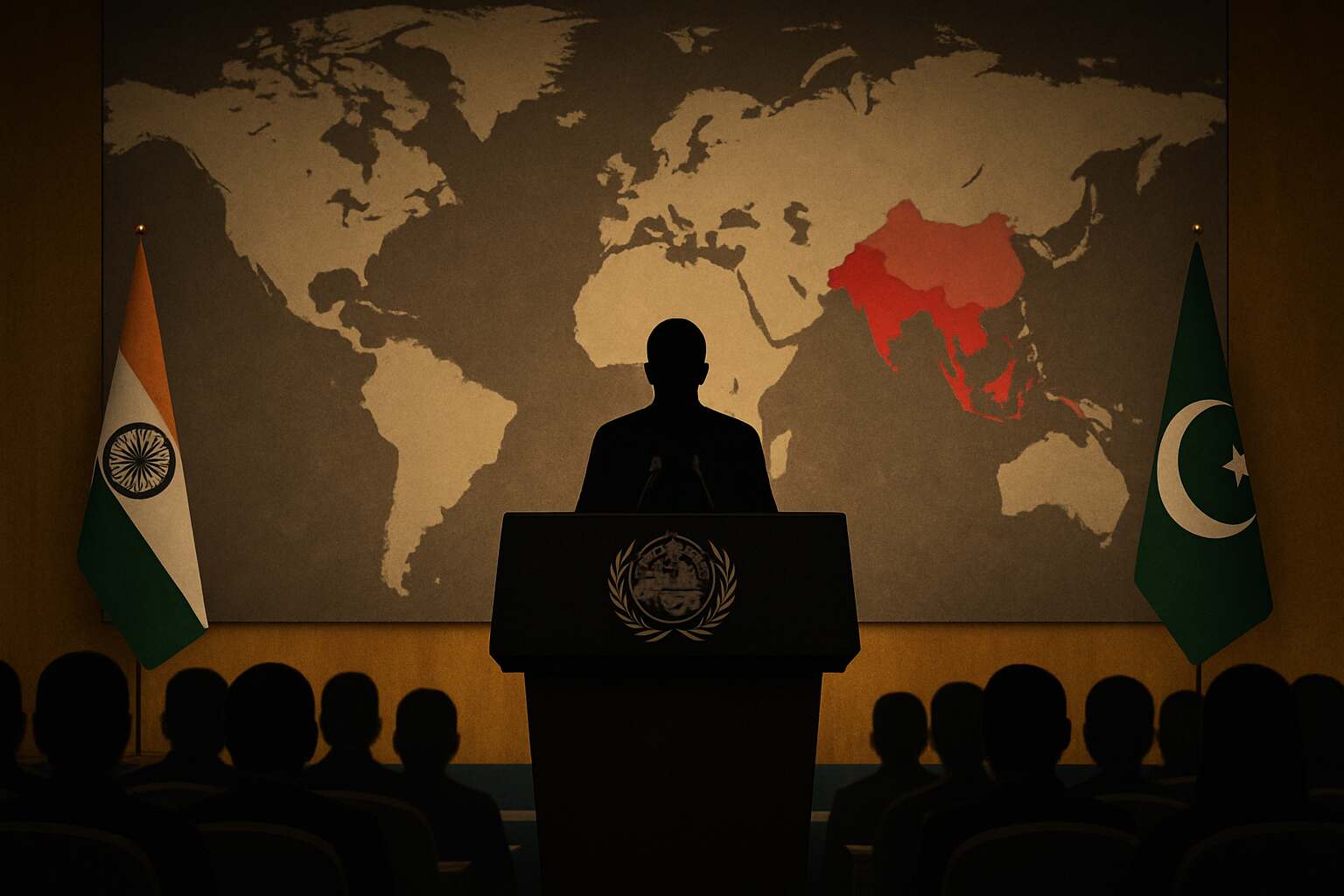
The United Nations General Assembly (UNGA) once again became a stage for India and Pakistan to exchange sharp words, this time over terrorism and the recent Pahalgam attack in Jammu and Kashmir. India accused Pakistan of nurturing terrorism and supporting groups responsible for violence on Indian soil, while Pakistan countered with claims of human rights violations in Kashmir.
The heated exchange reflected the long-standing tensions between the two nations. With elections approaching in both countries and global attention focused on South Asia’s stability, the sparring carried deeper political undertones.
India’s Strong Response at UNGA
India’s representative delivered a direct rebuttal to Pakistan’s statements, emphasizing that the Pahalgam attack, which claimed the lives of security personnel and civilians, was not an isolated incident but part of a broader pattern of cross-border terrorism.
The Indian side accused Pakistan of providing safe havens and financial networks to terror outfits operating in the region. It reiterated that Pakistan had no credibility in speaking on human rights while its own record remained under international scrutiny.
India also used the platform to remind the global community that terrorism is not only a threat to one country but a challenge to global peace, urging nations to act against those who sponsor and harbor terrorists.
Pakistan’s Counterattack
Pakistan’s envoy, in response, accused India of misrepresenting facts and diverting attention from what it called “systematic suppression” in Kashmir. The Pakistani side claimed that incidents like Pahalgam were the result of local resentment and demanded international intervention in Jammu and Kashmir.
Islamabad framed its argument around human rights, attempting to rally sympathy from member states. However, India dismissed these claims as propaganda meant to cover up Pakistan’s role in exporting terrorism.
The Pahalgam Attack and Its Significance
The Pahalgam attack was a turning point in recent months, with militants targeting both security forces and civilians in a tourist area. It not only shocked India but also raised concerns about the return of organized violence in Jammu and Kashmir at a time when the government is trying to project normalcy in the region.
Indian officials stressed that the attack bore hallmarks of Pakistan-backed terror groups, making it central to India’s case at the UNGA. By highlighting the incident on a global stage, New Delhi sought to ensure international pressure remained on Pakistan to dismantle terror networks.
International Reactions
Reactions from member nations were cautious but telling. Several Western countries, while avoiding direct criticism of Pakistan, underlined the need to act against terrorism in all forms. Some nations quietly supported India’s call for accountability, while others urged restraint and dialogue between the neighbors.
Observers noted that while Pakistan’s narrative on Kashmir continues to find limited takers, India’s framing of terrorism as a global issue resonates more strongly. This diplomatic advantage is something India has been building steadily in forums like the UN, G20, and BRICS.
Analysis: Why the Clash Matters Now
The timing of the exchange is critical. India is preparing for major elections in 2025, and the government is keen to project a strong stance on terrorism and national security. For Pakistan, struggling with economic crisis and political instability, raising the Kashmir issue remains a tool to rally domestic support and divert attention from internal problems.
The Pahalgam attack gave India an opportunity to push back strongly against Pakistan and reinforce its narrative internationally. Pakistan’s attempt to spotlight human rights in Kashmir is part of its long-term strategy but faces diminishing returns globally, especially when juxtaposed with its own issues of extremism and governance.
Reactions Within India
In India, the government’s sharp words at the UNGA were welcomed by political leaders across party lines, though opposition parties also urged stronger security measures to prevent attacks like Pahalgam. Media coverage framed the exchange as another example of India exposing Pakistan’s duplicity on the global stage.
Civil society voices, however, stressed that while diplomacy is important, real safety for citizens and security forces on the ground in Kashmir must remain the top priority.
The Bigger Picture: Indo-Pak Relations at a Crossroads
The clash at UNGA is symptomatic of a broader freeze in India-Pakistan relations. Since the revocation of Article 370 in 2019, ties have deteriorated sharply, with little sign of improvement. Terror attacks like Pahalgam only deepen mistrust.
For India, the path forward involves both tightening internal security and leveraging international platforms to isolate Pakistan diplomatically. For Pakistan, the challenge lies in managing its domestic crises while maintaining Kashmir as a central foreign policy theme. The danger, however, is that continued hostility benefits neither side and risks further instability in South Asia.
Conclusion
The verbal duel between India and Pakistan at the United Nations General Assembly highlighted familiar positions but also revealed the stakes attached to the Pahalgam attack. For India, it was an opportunity to strengthen its diplomatic offensive against terrorism. For Pakistan, it was another attempt to revive global focus on Kashmir.
As both nations continue to clash in global forums, the real challenge remains unaddressed—building a future where terrorism does not dictate regional politics and where ordinary citizens are not caught in cycles of violence. Until then, forums like the UNGA will remain stages for rhetorical battles rather than platforms for solutions.
Internal Links
Related Posts


Stay Informed With the Latest & Most Important News
Previous Post
Next Post


Advertisement