

Now Reading: India Gig Workers Strike Over Pay & Conditions 2025
-
01
India Gig Workers Strike Over Pay & Conditions 2025


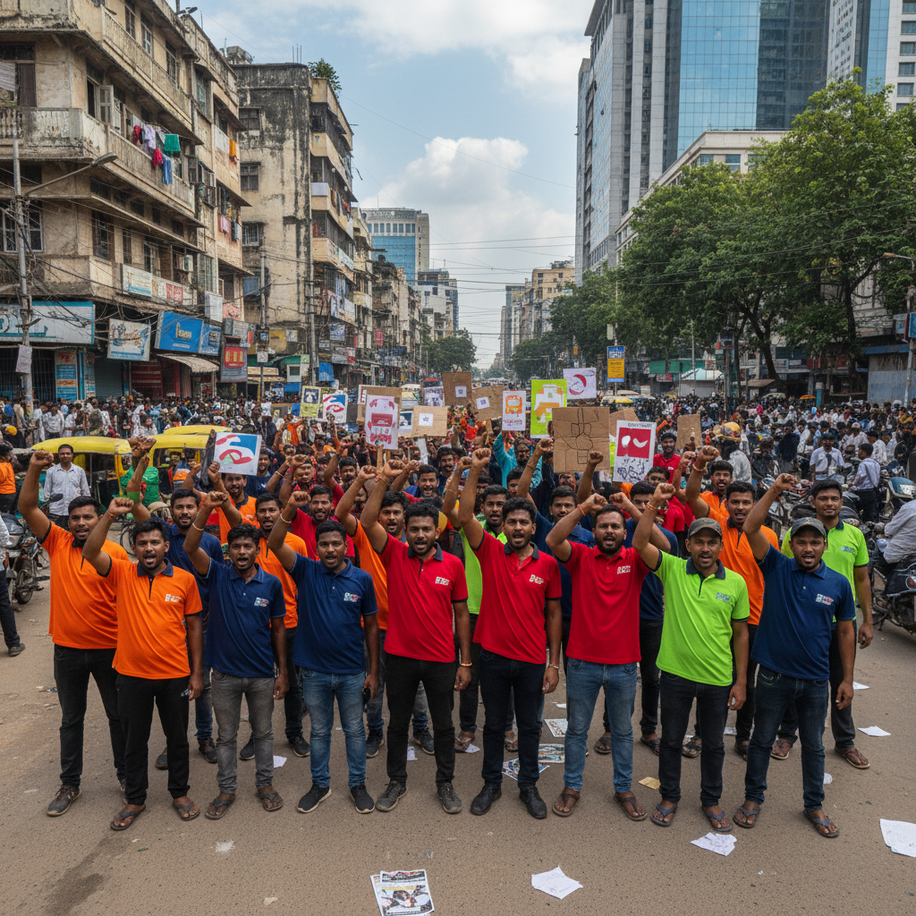
The Editorial Team of Behind The Headlines reports that India is currently witnessing nationwide strikes by gig economy delivery workers across major platforms such as Swiggy, Zomato, Zepto, Blinkit, Amazon, and Flipkart. These significant industrial actions, scheduled for December 25 and December 31, 2025, are a direct protest against perceived inadequate pay, precarious working conditions, excessively long hours, arbitrary account deactivations, and a critical absence of social security benefits. This movement by India’s gig workers highlights growing discontent within a rapidly expanding sector crucial to the nation’s digital economy.
Details and Background
The current nationwide strikes involve delivery personnel engaged with several prominent Indian gig platforms. These include major food delivery services like Swiggy and Zomato, quick commerce providers such as Zepto and Blinkit, and e-commerce giants Amazon and Flipkart. The protests are spearheaded by various worker unions, notably the Telangana Gig and Platform Workers Union and the Indian Federation of App-Based Transport Workers. Their core demands revolve around improved compensation structures, the implementation of safer working environments, reasonable working hours, transparency in platform operations concerning account management, and access to essential social security provisions that are often lacking for gig workers.
The timing of these strikes is highly strategic, deliberately coinciding with the peak holiday periods of Christmas and New Year’s Eve. This period typically sees a substantial surge in demand for food delivery, quick commerce, and general e-commerce services. By choosing these dates, the unions aim to maximize the impact of their protest, drawing significant attention to their grievances and exerting pressure on the platforms to address their long-standing demands. The strike actions are expected to cause considerable disruption in major metropolitan areas and numerous tier-2 cities across India, affecting millions of consumers who rely on these services.
Analysis
The ongoing India gig worker strike represents a critical juncture for the country’s burgeoning gig economy. This sector has seen explosive growth, becoming an integral part of urban life and a significant source of employment. However, the business model, often characterized by flexible work and independent contractor status, has faced increasing scrutiny over worker rights and welfare. The strikes underscore a fundamental tension between the convenience and cost-efficiency offered by these platforms and the labor conditions of those who power them.
For the affected companies, the strikes pose immediate operational challenges, including potential delays and cancellations, which could impact customer satisfaction and revenue during a crucial sales period. In the long term, these protests could force platforms to re-evaluate their operational strategies, potentially leading to increased labor costs or modifications to their contractor models. This situation also reflects a broader global trend where gig workers are increasingly organizing and demanding better treatment, challenging the traditional definitions of employment.
Reactions and Official Statements
The unions leading the India gig worker strike, including the Telangana Gig and Platform Workers Union and the Indian Federation of App-Based Transport Workers, have unequivocally stated their commitment to continuing the protests until their demands for better pay, improved safety standards, and social security are met. They emphasize the unsustainable nature of current remuneration models and the lack of basic protections for workers who are often on the front lines of urban delivery services.
While specific official statements from the involved platforms like Swiggy, Zomato, Amazon, and Flipkart were not immediately available, it is anticipated that they will closely monitor the situation. Historically, such platforms often highlight the flexibility and earning opportunities their models provide. The industry is likely to engage in discussions or review mechanisms to address the concerns raised, though the path to a resolution that satisfies all parties may involve complex negotiations given the economic models at play.
The Bigger Picture and Future Implications
The India gig worker strike carries significant implications for the future of labor relations and policy within the country’s digital economy. These protests could serve as a catalyst for legislative changes aimed at providing greater protections and benefits for gig workers, potentially redefining their employment status. The Indian government has previously expressed interest in enhancing social security for gig workers, and these strikes may accelerate such policy initiatives.
Furthermore, the outcome of these protests could influence investment in the gig sector and shape how technology companies operate in India. A shift towards more worker-friendly policies, while beneficial for labor, might also lead to adjustments in pricing or operational efficiency for platforms. This situation underscores the evolving nature of work in the digital age and the increasing demand for fair labor practices within innovative economic models. The resolution, or lack thereof, will set a precedent for future labor movements in the rapidly expanding gig sector.
Conclusion
The nationwide strike by India’s gig workers represents a pivotal moment in the ongoing discourse surrounding fair labor practices in the digital economy. The protests, driven by fundamental demands for improved compensation, safer conditions, and essential social security, highlight the critical challenges faced by a workforce indispensable to modern urban life.
The Editorial Team of Behind The Headlines will continue to closely monitor developments, including any responses from the affected platforms and potential government interventions, as this situation unfolds. The resolution of this industrial action will undoubtedly have lasting repercussions for both the gig workers and the operational landscape of India’s fast-growing e-commerce and delivery sectors.
Related Posts


Stay Informed With the Latest & Most Important News
Previous Post
Next Post


Advertisement








Advertisement
