Now Reading: Manchester Synagogue Rampage Declared Terrorist Attack: UK Police Confirm
-
01
Manchester Synagogue Rampage Declared Terrorist Attack: UK Police Confirm


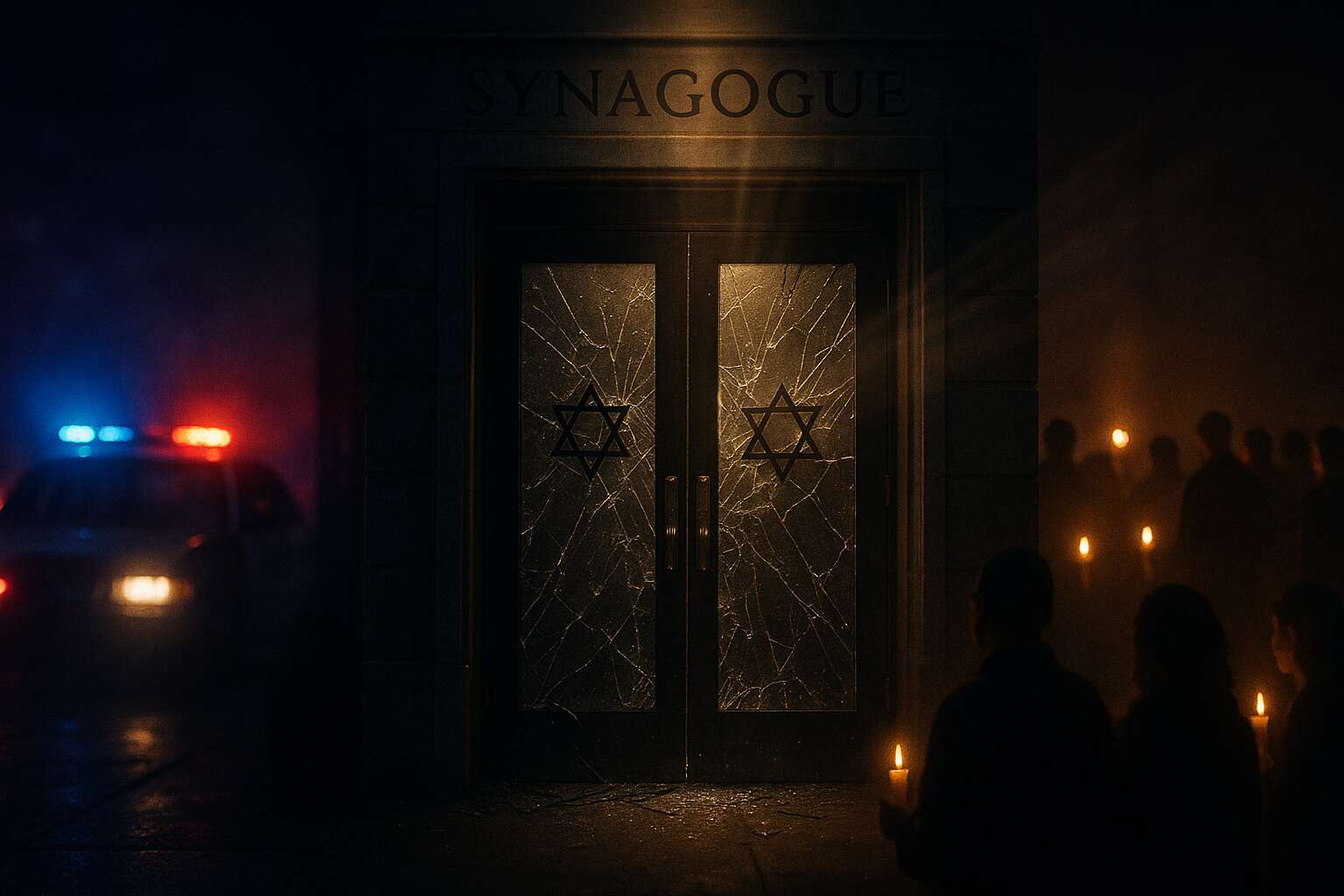
In a deeply disturbing incident that has shaken the United Kingdom, police have officially declared the deadly rampage at a Manchester synagogue as a terrorist attack. The shocking violence, which left multiple victims injured and created a wave of fear within the Jewish community, is now being treated as a case of terrorism. Authorities believe the attack was motivated by extremist ideology, raising urgent concerns about religious safety and the growing threat of hate crimes in Britain.
This declaration underscores a turning point not only for Manchester but also for the broader debate on community security, counter-terrorism preparedness, and the rising tide of extremist violence in Europe.
What Happened in Manchester?
On the evening of the attack, worshippers had gathered for regular prayers at a synagogue in north Manchester when an assailant stormed inside with a weapon. Eyewitnesses described the scene as “chaotic and horrifying,” with congregants scrambling to safety. Several people sustained injuries before security personnel and law enforcement intervened.
Initial confusion led some to believe it was a targeted hate crime. However, following investigations, Greater Manchester Police declared the assault a terrorist act, citing evidence of premeditation and extremist motivation.
Why Police Labeled It a Terrorist Attack
Authorities outlined three key reasons behind the classification:
- Ideological Motive – Investigators found materials linking the attacker to extremist groups known for spreading anti-Semitic propaganda.
- Premeditation – Surveillance and digital records indicated that the assailant had surveilled the synagogue for weeks.
- Community Impact – The deliberate targeting of a religious institution amplifies the psychological effect, a hallmark of terrorism.
By labeling the attack as terrorism, UK authorities send a strong message that such violence is not just a criminal act but an assault on democratic values and religious freedom.
Growing Concerns for the Jewish Community
The UK’s Jewish population, one of the largest in Europe, has repeatedly voiced concerns over rising anti-Semitism. In recent years, reports of harassment, vandalism of synagogues, and hate speech online have increased significantly.
Community leaders fear the Manchester rampage could embolden copycat attacks. Organizations like the Community Security Trust (CST) have already urged the government to increase protective measures around synagogues, schools, and Jewish cultural centers.
Political and Government Reactions
The incident has sparked political reactions across party lines:
- Prime Minister’s Statement: The UK Prime Minister condemned the violence, calling it “a cowardly act of terror” and vowed stricter anti-terror laws.
- Home Office Response: Officials promised a review of synagogue security nationwide.
- Opposition Leaders: Opposition parties demanded a parliamentary debate on tackling hate crimes.
Beyond immediate politics, this attack has reignited conversations about whether existing counter-terror frameworks are robust enough to counter threats against minority communities.
International Response
The Manchester synagogue rampage drew reactions far beyond Britain’s borders:
- Israel strongly condemned the attack and offered security collaboration with the UK.
- United States and European Union leaders issued solidarity messages, framing the attack as part of a broader fight against extremist hate.
- Human Rights Groups called for balancing enhanced security with civil liberties, emphasizing that surveillance measures should not compromise personal freedoms.
Impact on UK Counter-Terror Strategy
The attack has brought the UK’s counter-terror strategy under scrutiny:
- MI5 and local police are now investigating whether the attacker acted alone or as part of a larger network.
- Deradicalization Programs are under review, particularly regarding online extremist influence.
- Policy Changes may soon include harsher penalties for extremist hate crimes and faster response protocols.
Human Angle: Trauma and Resilience
Beyond policies and politics lies the human toll. Survivors have described the night as “a nightmare come true.” Families of the injured continue to grapple with trauma, while the broader community has responded with resilience—organizing interfaith vigils and solidarity marches.
The attack, though devastating, has also united Manchester’s diverse communities in a collective rejection of hate.
Bigger Picture: Terrorism and Faith in Europe
The Manchester synagogue rampage highlights a troubling trend: places of worship across Europe are increasingly being targeted. From attacks on churches in France to mosques in Germany, extremist violence aims to fracture multicultural societies.
For the UK, this attack is a reminder that terrorism today is not limited to political or nationalist agendas; it is also deeply rooted in hate against faith and identity.
Conclusion
The deadly Manchester synagogue attack, now declared an act of terrorism, marks a grim chapter in Britain’s struggle against extremist violence. More than just a security issue, it is a test of the nation’s commitment to protecting its diverse communities and ensuring that faith remains a space of peace, not fear.
As investigations continue, the UK must balance security with inclusivity—ensuring that while terror is met with strength, democracy remains grounded in compassion and unity.
Related Posts


Stay Informed With the Latest & Most Important News
Previous Post
Next Post


Advertisement