

Now Reading: PM Modi urges elders to remind youth of “JUNGLE RAJ”
-
01
PM Modi urges elders to remind youth of “JUNGLE RAJ”


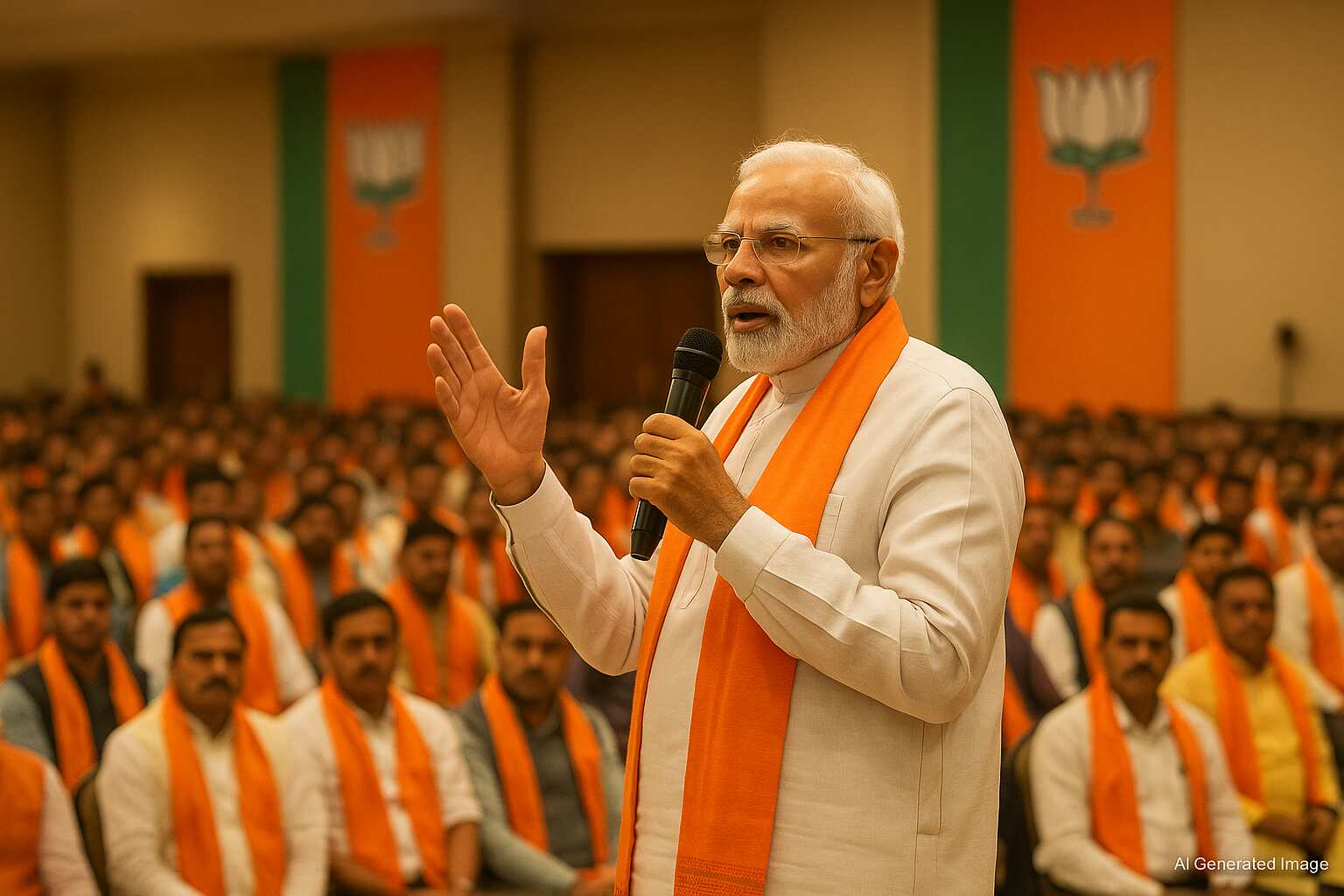
The upcoming 2025 Bihar Legislative Assembly election has entered a crucial phase as Narendra Modi addressed party workers, urging elders to remind young voters of the “jungle raj” era in Bihar. This move underscores the high-stakes battle between the ruling Bharatiya Janata Party-led coalition and the opposition bloc, with historic grievances brought to the fore. In his appeal, Modi invoked the memories of past lawlessness to mobilise young voters through the lived experience of older generations.
Election context: Bihar 2025 and what’s on the line
The 2025 Bihar polls (two phases on November 6 & 11, counting on November 14) cover 243 assembly seats. The ruling coalition led by the BJP and its allies is seeking re-election while the opposition INDIA bloc aims to challenge the status quo. Internal seat-sharing among allies and clear messaging are now in focus.
The Prime Minister’s call for elders to recount “jungle raj” reflects a strategic push to frame the election as a choice between stability and perceived past chaos—a framing meant to tip the youth’s balance via the narratives of past generations.
—
Modi’s message and its implications
At a virtual interaction with BJP workers in Bihar, PM Modi described the election as “an election to write a new chapter of Bihar’s prosperity”. He said young people in the state are already saying, “Raftaar pakad chuka Bihar, phir se NDA sarkar.” He then asked the party cadre to ensure that the older generation tells the youth about the era of alleged misgovernance, lawlessness and “jungle raj”.
This message serves several functions:
- It links the current ruling coalition with governance and progress.
- It uses emotional and narrative-based campaigning to mobilise voters who lived through earlier regimes.
- It calls upon bulk mobilization of youth influenced by older family members—a long-term tactic in Indian elections.
In other words, Modi is not just sending a message—he is asking for a campaign strategy: elders telling youth their story of the past to shape their vote.
—
Analysis: Why invoke “jungle raj” now?
Memory politics in Bihar
Invoking “jungle raj” is more than rhetoric—it taps into memory politics in Bihar. For decades, accusations of lawlessness, kidnappings and ransom claims have haunted certain former administrations. Suddenly bringing these memories into the campaign serves to revive older grievances and link them with present choices.
Youth as the decisive block
The youth vote is crucial. The slogan to have elders educate the youth shows that the BJP grasped that first-time or younger voters often rely on narratives from family and community. By aligning youth sentiments with the elder generation’s memories, the BJP hopes to boost turnout among its base and influence young minds early.
Strategic shift in messaging
Instead of only focusing on development or schemes, the BJP is doubling down on contrasting the present with the past. With stability and growth as the positive side, past alleged misgovernance becomes the negative. This message can steer undecided voters who may have nostalgia for change but also fear regression.
—
Reactions and partisan responses
The ruling coalition welcomed Modi’s campaign direction, using it to rally party workers and field staff. Senior leaders emphasised that the “make sure elders remind youth” line was meant to keep the memory of misgovernance alive in public discourse.
On the other side, opposition parties have attempted to neutralise the message by questioning the accuracy of the “jungle raj” tag and pointing to current issues such as unemployment, migration and incomplete reforms. They argue that focusing on past grievances diverts attention from present governance concerns.
—
Broader Picture: What this means for Bihar politics
Messaging and mobilisation tactics
The election is becoming as much about narrative and psychology as about seat lists and manifestos. The inter-generational transfer of memory—older to younger—is being used as a campaign device. It underscores how powerfully stories of past rule can influence modern electoral behaviour in India.
Potential ripple effects
If successful, this tactic could change how political campaigns in Bihar and similar states operate: younger voters being reached not just by digital campaigns but by older family-members as messengers. The mobilisation method becomes more personal and relational.
Risks and opportunities
For the BJP-led coalition, the opportunity is to solidify a multi-generation vote bank anchored in a shared narrative. But risk remains if the youth dismiss the “past era” framing and focus instead on current issues like jobs, inflation and migration. The opposition can still shift the narrative if they pivot effectively.
—
Conclusion
In the run-up to the 2025 Bihar elections, Prime Minister Narendra Modi’s directive to ensure that elders remind youth of the “jungle raj” era signals a shift in campaigning strategy. By leveraging inter-generational memory, the BJP is attempting to shape the minds of younger voters through the lived experience of older generations. Whether this approach succeeds or fails will influence not just seat counts in Bihar but future campaign playbooks in India’s regional politics.
Related Posts


Stay Informed With the Latest & Most Important News
Previous Post
Next Post

Advertisement







Advertisement
