Now Reading: PM Modi Visits Manipur, Meets Violence-Hit Families in Imphal
-
01
PM Modi Visits Manipur, Meets Violence-Hit Families in Imphal


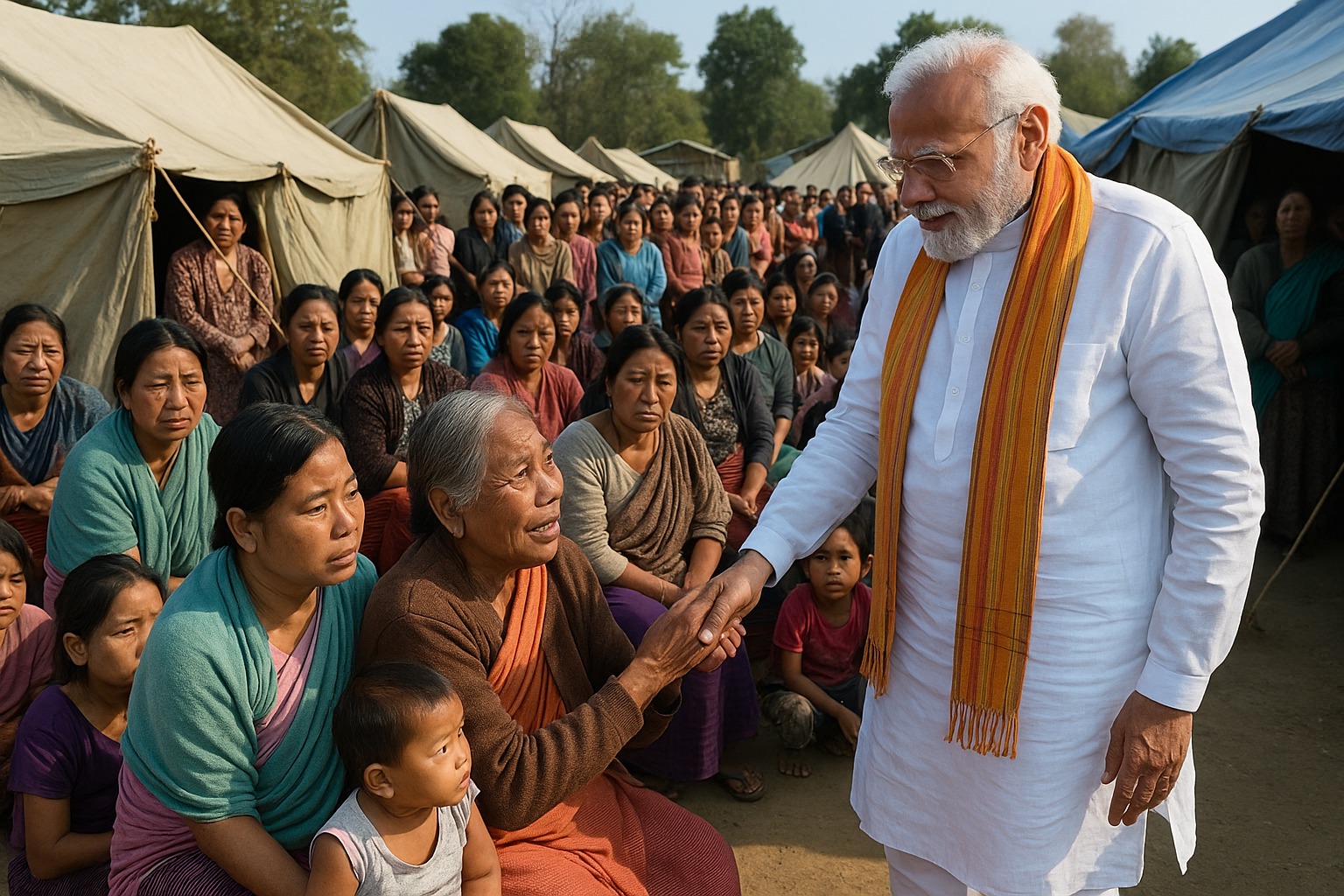
Prime Minister Narendra Modi’s visit to Manipur marks one of the most closely watched developments in the state’s ongoing ethnic crisis. Months after violence between Kuki and Meitei communities displaced thousands and left scars on Manipur’s social fabric, the Prime Minister chose to interact directly with families in Imphal’s relief camps.
This visit, following his stop in Churachandpur earlier, carries layers of political, humanitarian, and electoral significance. At its core, it raises key questions: Will the outreach heal wounds, or is it a strategic move ahead of crucial state and national elections?
Manipur’s Crisis: A Recap
The conflict that erupted in May 2023 between the Kuki and Meitei communities has displaced over 60,000 people, with entire villages destroyed and communities torn apart. The violence not only deepened ethnic divides but also exposed gaps in governance, law enforcement, and reconciliation mechanisms.
Relief camps across the state continue to house thousands, and despite security reinforcements, mistrust remains high.
Our previous analysis on how the Northeast’s ethnic conflicts affect India’s political roadmap explored the roots of such unrest.
Modi’s Visit: Symbolism and Strategy
PM Modi’s stop in Churachandpur had already been seen as an attempt to reach out to the Kuki-majority areas. His interaction in Imphal—dominated by Meiteis—was equally symbolic. It sent a message of balance, signaling that the government recognizes the pain of both sides.
Key takeaways from his visit include:
- Personal interaction with displaced families.
- Assurances of long-term rehabilitation and security.
- Signaling the Centre’s continued involvement in resolving the crisis.
In our coverage of PM Modi’s visits to conflict zones, we highlighted how symbolism often drives narratives as much as policy.
Reactions Across Communities
The reactions in Manipur were mixed:
- Meitei community: Welcomed the gesture but stressed that security and justice must be ensured.
- Kuki community: Remained cautious, with some leaders demanding stronger safeguards for their people.
- Civil society groups: Called the visit “long overdue,” questioning why it took months for the Prime Minister to engage directly.
Political Implications Ahead of Elections
With the Bihar Election 2025 dominating headlines and the Lok Sabha elections drawing closer, PM Modi’s visit also has an electoral dimension. The BJP has faced criticism for its handling of Manipur’s crisis, and the outreach can be read as an attempt to blunt opposition attacks.
In our special report on Bihar Election 2025 campaign dynamics, we noted how national narratives often intersect with state-level unrest.
The Bigger Picture: Northeast in National Politics
The Northeast has often been treated as a political afterthought, but its role in India’s security, connectivity, and electoral calculations cannot be ignored. Modi’s Manipur visit underscores:
- The urgency of addressing ethnic strife before it destabilizes the wider region.
- The need to balance development promises with genuine reconciliation.
- The growing importance of Northeast seats in shaping national power.
Our earlier story on India’s Act East policy and its domestic challenges detailed how internal unrest weakens external ambitions.
Analysis: Will This Visit Heal or Polarize?
Critics argue that political visits cannot substitute for sustained dialogue, justice delivery, and equitable rehabilitation. Supporters see the Prime Minister’s presence as morale-boosting for victims and as a signal of accountability.
Ultimately, the effectiveness of this outreach will depend on:
- Implementation of promised relief measures.
- Fair handling of ethnic grievances.
- Preventing further violence and ensuring justice for victims.
Conclusion
PM Modi’s visit to Manipur is a moment charged with symbolism and stakes. For displaced families, it offered direct acknowledgment from the country’s highest office. For political observers, it raised questions about timing and intent.
Whether this visit turns into a turning point—or remains another symbolic gesture—will be judged by how swiftly and fairly the government addresses the root causes of Manipur’s unrest.
Related Posts
Stay Informed With the Latest & Most Important News
Previous Post
Next Post

Advertisement