Now Reading: Prashant Kishor Bihar Results 2025: Jan Suraaj Trails
-
01
Prashant Kishor Bihar Results 2025: Jan Suraaj Trails


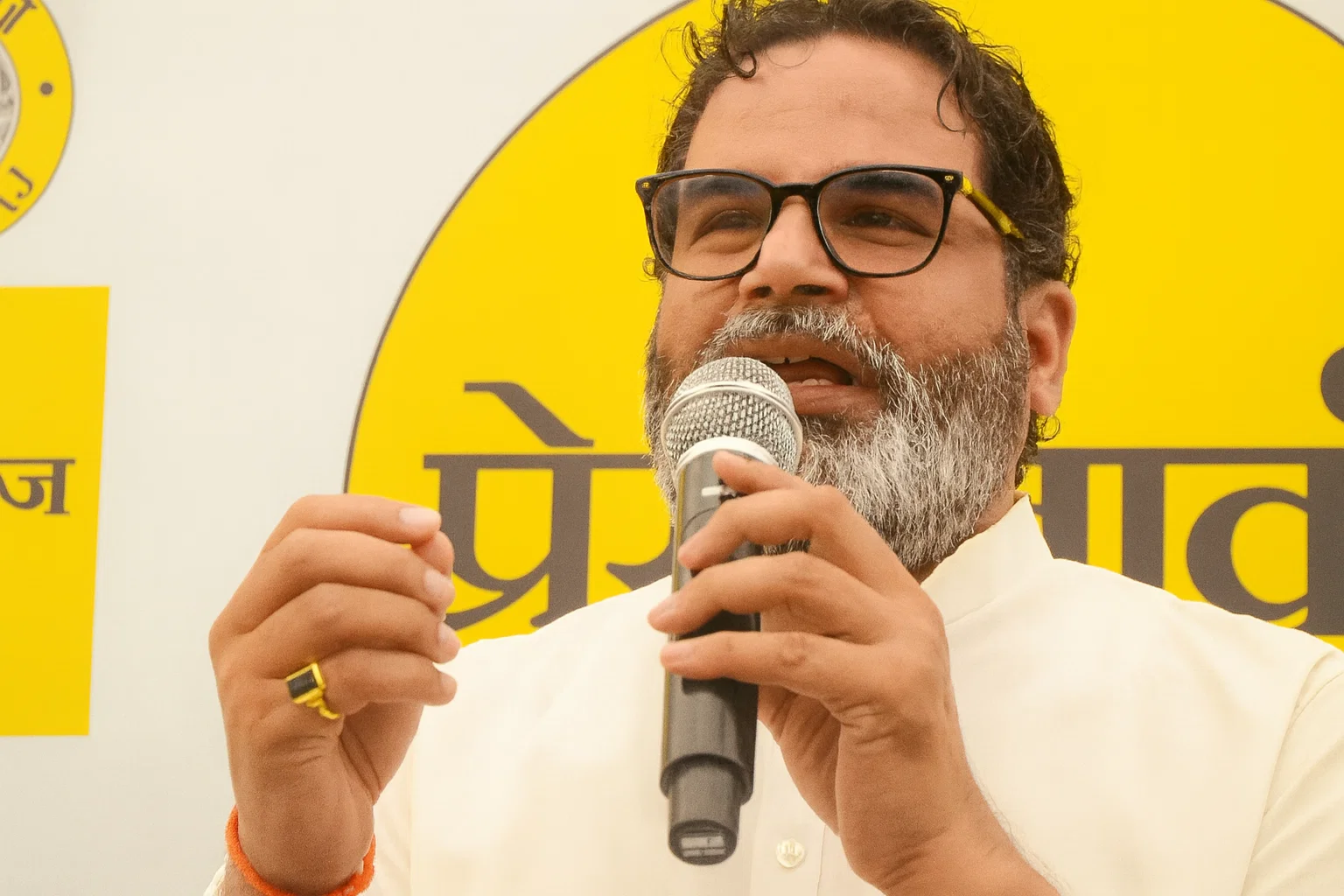
The Bihar Election Results 2025 have begun unfolding, and early Election Commission trends show Prashant Kishor’s Jan Suraaj drawing a complete blank across the state. Despite months of padyatras, outreach campaigns, and significant pre-election visibility, the party has not secured a lead in any constituency so far. The Editorial Team of Behind The Headlines reports that the early trends from the Bihar election results 2025 signal a tough beginning for Jan Suraaj, which aimed to position itself as a credible third force beyond the NDA and Mahagathbandhan. As counting continues, the party’s performance will be closely watched.
Details / Background
Prashant Kishor, known nationally as a political strategist, entered the electoral fray in 2025 with his grassroots-based Jan Suraaj movement. After walking thousands of kilometres across Bihar, Kishor attempted to convert his mass engagement into electoral strength.
The Jan Suraaj campaign highlighted governance reforms, education, health services, and transparent administration. It positioned itself as a transformative alternative to Bihar’s long-standing political structures dominated by the NDA, JD(U), RJD, Congress, and Left alliances.
However, according to early counting data from the Election Commission, Jan Suraaj has not gained traction in any of the 243 Assembly seats. While vote shares may vary across districts, no seat has shown a clear lead for the party.
Political observers note that new parties face substantial challenges in Bihar, a state where political loyalties often follow deep-rooted caste identities, long-term party networks, and established leadership figures.
Analysis
Jan Suraaj’s struggle to break through in early trends offers insight into the challenges of converting mass outreach into electoral wins.
1. Strong Ground Presence ≠ Electoral Machinery
While Prashant Kishor’s padyatra drew public attention, translating crowds into votes requires booth-level organisation, local leadership, and years of political groundwork.
2. Bihar’s Bipolar Structure
For decades, Bihar’s elections have largely been shaped by two dominant sides — the NDA (BJP/JD(U)) and the Mahagathbandhan (RJD/Congress/Left).
In such a polarised landscape, third fronts often struggle to gain space.
3. Candidate Limitations
Local credibility plays a decisive role in Bihar. Many Jan Suraaj candidates were first-timers without political lineage or prior public office experience.
4. Messaging vs. Mobilisation
While Jan Suraaj had a strong reform-based message, mobilising voters requires deep networks of panchayat workers, booth agents and micro-level influencers — areas where established parties have major advantages.
5. Overlap of Voter Base
Jan Suraaj’s target constituency — aspirational youth, reform-oriented voters, and neutral citizens — may have split between the NDA and Mahagathbandhan instead of shifting to a new player.
Political analysts caution that early trends may shift marginally as rural ballots and late-round votes come in, but a substantial swing appears unlikely.
Reactions / Statements
Public reactions reflect mixed emotions around Jan Suraaj’s initial performance.
Supporters on social media expressed disappointment but encouraged patience, noting that “this is just the start of a long political journey.”
Opposition and ruling party leaders responded cautiously. While NDA representatives said the results show that “ground realities matter more than rallies,” some Mahagathbandhan leaders added that new parties need “multiple cycles to find their footing.”
Prashant Kishor has not yet issued a public statement on the trends, though Jan Suraaj volunteers have said they “respect the mandate” and will continue organisational work regardless of results.
Officials from the Election Commission reminded the public that trends will evolve as counting progresses, especially in closely contested seats.
Bigger Picture / Future Impact
The 2025 results may shape the long-term trajectory of Jan Suraaj and its leader Prashant Kishor.
1. Testing Phase for a New Party
Early results highlight the difficulty of entering Bihar’s electoral arena, where even well-established national parties face stiff competition.
2. Foundation for 2030
Many analysts believe that Kishor’s objective may extend beyond 2025, towards building a durable base for future Assembly and Lok Sabha elections.
3. Pressure to Rethink Strategy
The party may need to strengthen booth-level work, cultivate local leaders, and focus on districts where padyatras created deeper impressions.
4. Rise of New Politics?
Even without immediate wins, Jan Suraaj’s campaign raised conversations about governance reforms and accountability, which may push traditional parties to revise their own strategies.
5. National Implications
Political strategists across India will closely study whether Prashant Kishor remains an active politician or returns to professional consulting roles after these results.
While early trends show a blank slate for Jan Suraaj, the movement’s long-term future will depend on organisational discipline, sustained work, and grassroots patience.
Conclusion
As early ECI trends show Jan Suraaj drawing a blank in the Bihar Election Results 2025, the outcome marks a challenging debut for Prashant Kishor’s political experiment. The party set out to disrupt Bihar’s two-front electoral structure but struggled to translate mass engagement into leads. The Editorial Team of Behind The Headlines will continue tracking seat-by-seat trends, candidate performance, and shifts in vote share as counting reaches later rounds.
While today’s results may not reflect Jan Suraaj’s aspirations, they may still serve as the foundation for the long-term political journey that Prashant Kishor has promised.
Internal Links (2–3)
• Behind The Headlines Insight: Why Bihar’s Third Fronts Struggle To Convert Votes
• Behind The Headlines Political Desk: Bihar Election Results 2025 – NDA Surges Past 190 Seats
• Behind The Headlines Explainer: How Booth-Level Strategy Shapes Bihar Elections
Related Posts



Stay Informed With the Latest & Most Important News
Previous Post
Next Post


Advertisement