

Now Reading: RBI Cautions Against Crypto Rules That Could Risk Legitimizing Sector
-
01
RBI Cautions Against Crypto Rules That Could Risk Legitimizing Sector


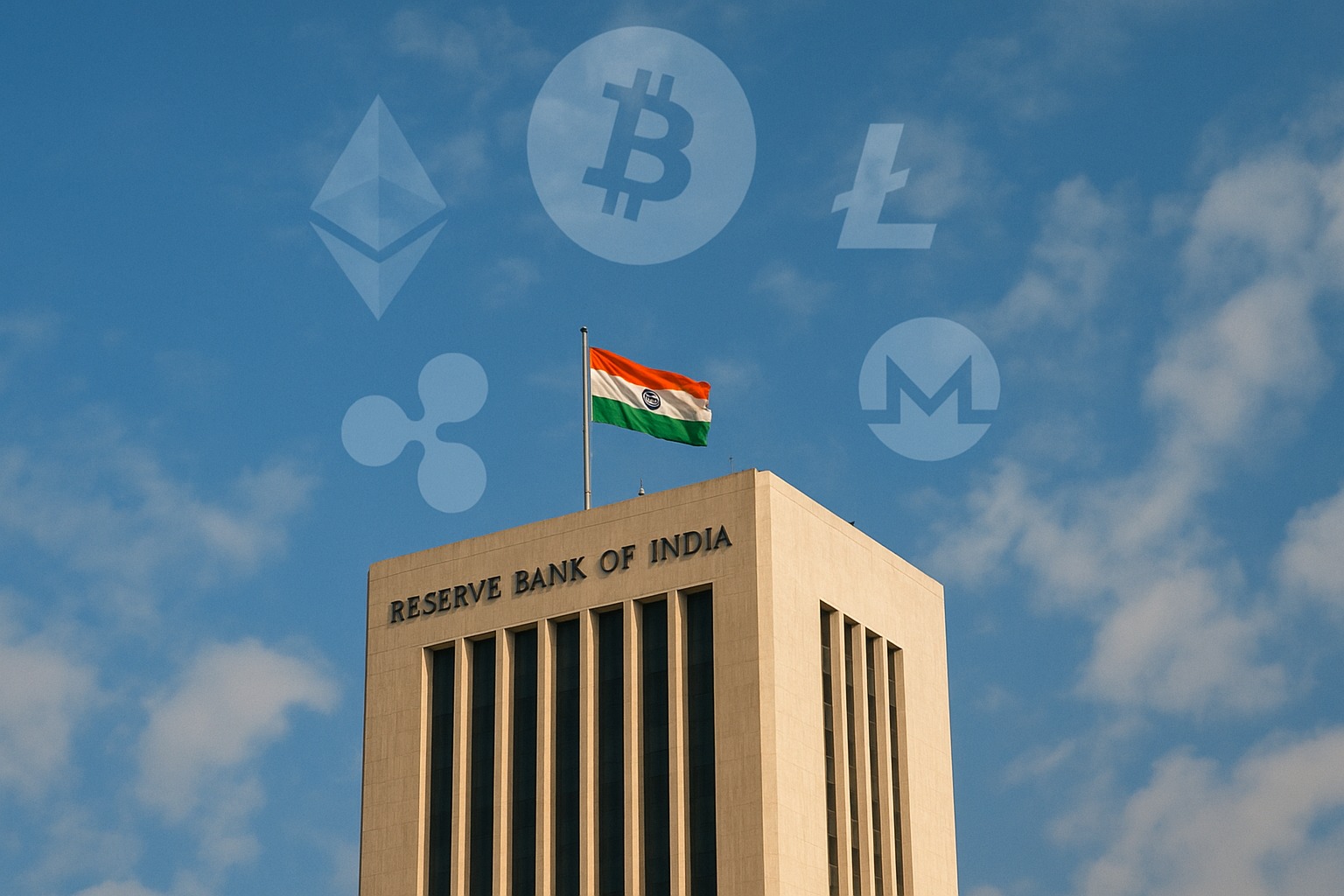
India’s central bank has once again signaled its deep caution on cryptocurrencies, warning that any premature regulatory framework could end up lending legitimacy to a sector it views as fraught with systemic risks. The Reserve Bank of India (RBI), in its latest stance, emphasized that while regulation may be necessary to address emerging challenges, blanket recognition of cryptocurrencies could undermine monetary stability, create avenues for financial crime, and threaten consumer protection.
This perspective reflects the RBI’s consistent skepticism toward digital currencies, a debate that continues to shape India’s financial policy. For investors, tech entrepreneurs, and policymakers, the question remains: should India regulate crypto, ban it outright, or continue its current wait-and-watch approach?
RBI’s Position: Balancing Risk and Responsibility
For years, the RBI has raised red flags about cryptocurrencies, describing them as a threat to macroeconomic stability. The bank argues that:
- Digital assets are speculative in nature, prone to wild price swings.
- Unchecked adoption could weaken the rupee’s dominance and compromise monetary policy.
- Crypto’s anonymity risks misuse for money laundering, terror financing, and tax evasion.
Unlike other jurisdictions that have introduced comprehensive laws, India has refrained from creating a full-fledged regulatory framework. The RBI suggests that rushing into regulation may inadvertently convey official acceptance, thereby encouraging more participation in a market still considered opaque and volatile.
(Earlier, Behind The Headlines analyzed the RBI’s stance during debates on digital rupee introduction.)
Why RBI Prefers Global Consensus
The RBI is not alone in its caution. Central banks worldwide, including the U.S. Federal Reserve and the European Central Bank, have called for coordinated approaches to crypto regulation.
For India, aligning with global consensus is particularly critical because:
- Crypto transactions often transcend borders, making unilateral regulation less effective.
- India is part of G20 discussions where a global template on crypto oversight is being explored.
- Without harmonization, arbitrage opportunities may push Indian investors to unregulated offshore markets.
This preference for global frameworks signals that New Delhi is unlikely to make drastic domestic moves until consensus is reached at international platforms.
The Dilemma: Innovation vs. Security
India’s stance also reflects a deeper dilemma — how to balance technological innovation with systemic risk.
- Innovation: Blockchain technology offers transformative potential in supply chains, financial inclusion, and digital identity. Startups in India are already building solutions powered by distributed ledger technology.
- Security: At the same time, unrestricted crypto adoption could destabilize financial systems, dilute RBI’s monetary control, and expose consumers to scams.
The RBI fears that legitimizing crypto through regulations might lead to a situation where risks outweigh benefits.
Impact on Startups and Investors
The uncertainty has significant consequences for India’s startup ecosystem:
- Funding Challenges: Crypto-focused startups face hurdles in attracting investment due to unclear legal frameworks.
- Exchange Operations: Indian exchanges struggle with limited banking support and compliance uncertainty.
- Investor Sentiment: Retail investors remain wary, often seeking offshore platforms despite associated risks.
Yet, the RBI’s position is not to shut the door entirely. Instead, it prefers controlled experiments, such as the ongoing pilot of the Central Bank Digital Currency (CBDC).
(For context, see our coverage of India’s CBDC pilot.)
Reactions from Industry and Policy Circles
- Crypto Industry: Exchanges and startups argue that regulation is necessary to protect consumers and create a level playing field. They believe that delaying regulation only pushes activity underground.
- Policy Experts: Economists are divided — some advocate for sandbox-style regulations to test controlled adoption, while others warn that legitimization could create bubbles.
- Global Investors: International players are watching India closely, as its decisions could influence emerging market trends in crypto adoption.
Bigger Picture: What Lies Ahead for India
The larger debate is no longer about whether crypto should be regulated but how and when.
- Short Term: The RBI will likely continue its cautious approach, preferring strict monitoring rather than blanket regulation.
- Medium Term: India may align with G20 or FATF standards to avoid isolation in global financial markets.
- Long Term: A possible framework may emerge that distinguishes between blockchain-based innovations and speculative cryptocurrencies.
The immediate message, however, is clear: legitimizing crypto too soon could be dangerous.
Conclusion
The RBI’s latest remarks underline a consistent policy direction — caution, not rejection, but also not recognition. As crypto investors and startups wait for clarity, India’s approach will likely hinge on global consensus and domestic readiness. For now, the central bank has drawn a clear line: regulation without legitimacy.
Related Posts


Stay Informed With the Latest & Most Important News
Previous Post
Next Post


Advertisement









Advertisement
