

Now Reading: Rising Threat: CDC Warns of Drug-Resistant ‘Nightmare Bacteria’ in the U.S.
-
01
Rising Threat: CDC Warns of Drug-Resistant ‘Nightmare Bacteria’ in the U.S.

Rising Threat: CDC Warns of Drug-Resistant ‘Nightmare Bacteria’ in the U.S.

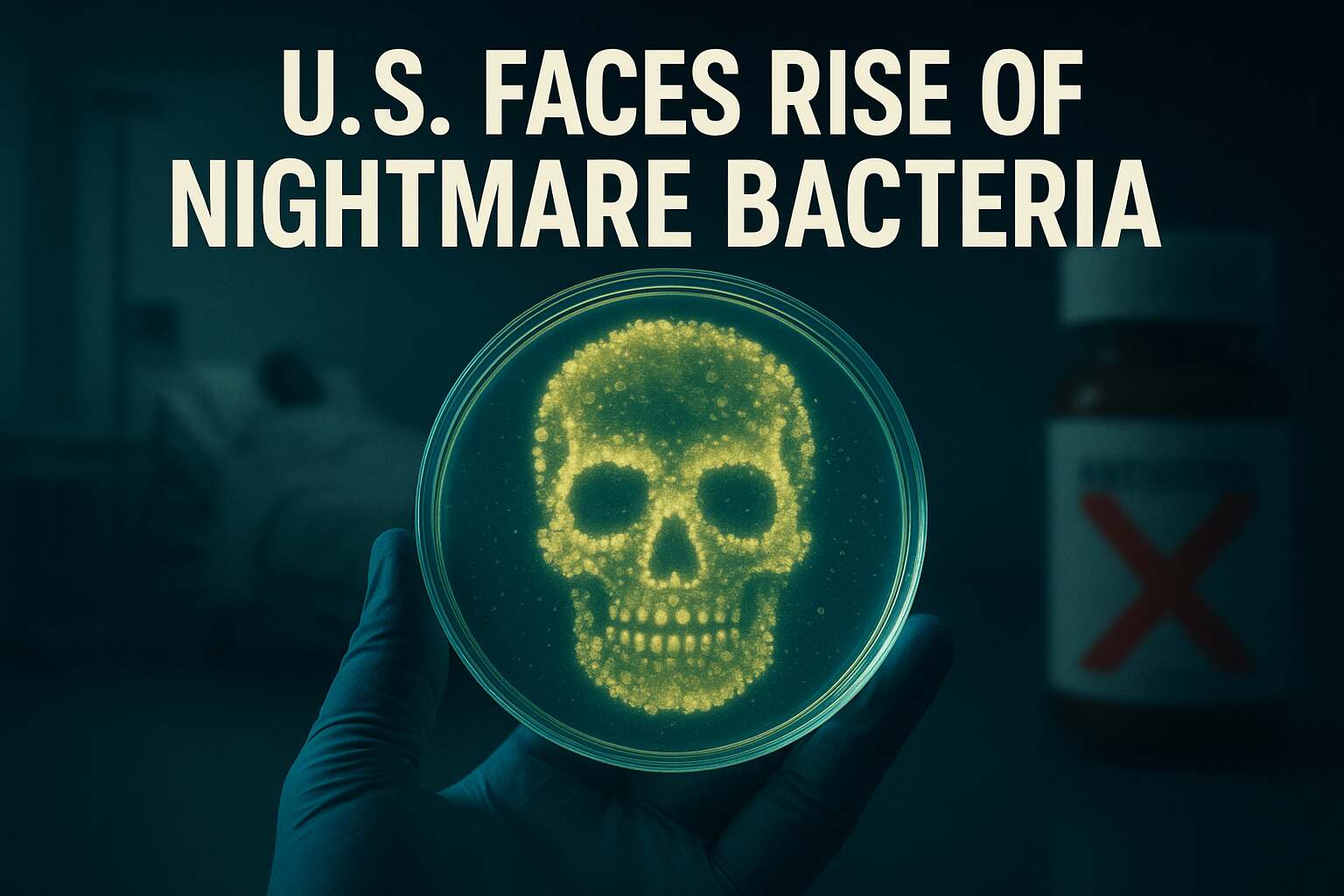
The United States is facing an alarming surge in cases of drug-resistant infections, commonly called “nightmare bacteria.” According to CDC researchers, these superbugs are proving resistant to even the most powerful antibiotics, sparking urgent public health concerns.
Unlike ordinary bacterial infections, these pathogens cannot be treated with standard medications. As cases grow, experts warn of severe risks to hospital patients, the elderly, and those with weakened immune systems. Beyond numbers, this crisis highlights a larger battle: modern medicine’s struggle against antibiotic resistance.
What Are ‘Nightmare Bacteria’?
“Nightmare bacteria” refers to strains of bacteria resistant to nearly all available antibiotics, including last-resort treatments. The CDC particularly flags carbapenem-resistant Enterobacteriaceae (CRE) as one of the deadliest threats.
These bacteria are dangerous because:
- They spread silently in healthcare settings.
- Standard antibiotics have little to no effect.
- Infections often lead to prolonged illness and higher mortality rates.
(Learn how antibiotic misuse worsens resistance.)
The Rising Numbers: CDC’s Findings
According to the latest CDC data:
- Drug-resistant bacteria cases have significantly increased in hospitals and long-term care centers.
- Infections often spread among patients using ventilators, catheters, or intravenous lines.
- Mortality rates for CRE infections can reach up to 50%, making prevention critical.
This rising trend has pushed the CDC to issue stronger surveillance alerts and recommend immediate containment strategies.
Why Antibiotic Resistance Is Growing
Several factors fuel this rise:
- Overuse of antibiotics in humans and livestock.
- Incomplete treatments, where patients stop medications midway.
- Hospital-acquired infections, where bacteria adapt quickly in vulnerable populations.
- Global travel, which allows resistant strains to spread across borders.
These factors combined create a perfect storm for superbugs to thrive, posing a challenge for even advanced healthcare systems.
Who Is Most at Risk?
While anyone can be affected, certain groups face higher risks:
- Patients in intensive care units (ICUs).
- People undergoing organ transplants.
- Elderly individuals in nursing homes.
- Patients with weakened immune systems due to chronic illnesses.
For these groups, even a minor infection could spiral into a life-threatening condition.
Reactions From the Medical Community
Doctors and scientists are calling the surge “a silent pandemic.” While COVID-19 dominated headlines, drug-resistant infections have continued to grow in the background. Public health experts argue that:
- Immediate investments are needed in new antibiotic research.
- Hospitals must strengthen infection-control measures.
- Awareness campaigns should discourage unnecessary antibiotic prescriptions.
(Read how global health systems fight pandemics beyond COVID-19.)
Global Impact of Superbugs
This crisis is not limited to the U.S. The World Health Organization (WHO) has consistently listed antibiotic resistance as one of the top 10 global health threats. If left unchecked:
- Routine surgeries may become too risky.
- Cancer patients relying on antibiotics during chemotherapy may face higher mortality.
- Simple infections could return to being deadly, much like in the pre-antibiotic era.
The Bigger Picture: A Healthcare Wake-Up Call
The rise of “nightmare bacteria” is more than a medical problem — it reflects humanity’s over-reliance on antibiotics without preparing for resistance. Unless urgent steps are taken, the world risks entering a “post-antibiotic era” where common illnesses once again become fatal.
For the U.S., this is a moment of reckoning. The CDC’s warning is not just a statistic; it is a call for coordinated action from policymakers, hospitals, pharmaceutical companies, and citizens.
Conclusion
The growing cases of drug-resistant “nightmare bacteria” mark a critical turning point in public health. While medical science has made extraordinary progress, bacteria continue to evolve. To win this fight, a mix of awareness, responsible antibiotic use, stronger hospital protocols, and global cooperation is essential.
The battle against superbugs is not a distant threat — it is already here.
Related Posts


Stay Informed With the Latest & Most Important News
Previous Post
Next Post


Advertisement









Advertisement
