

Now Reading: Shoe hurled at Chief Justice amid religious controversy
-
01
Shoe hurled at Chief Justice amid religious controversy


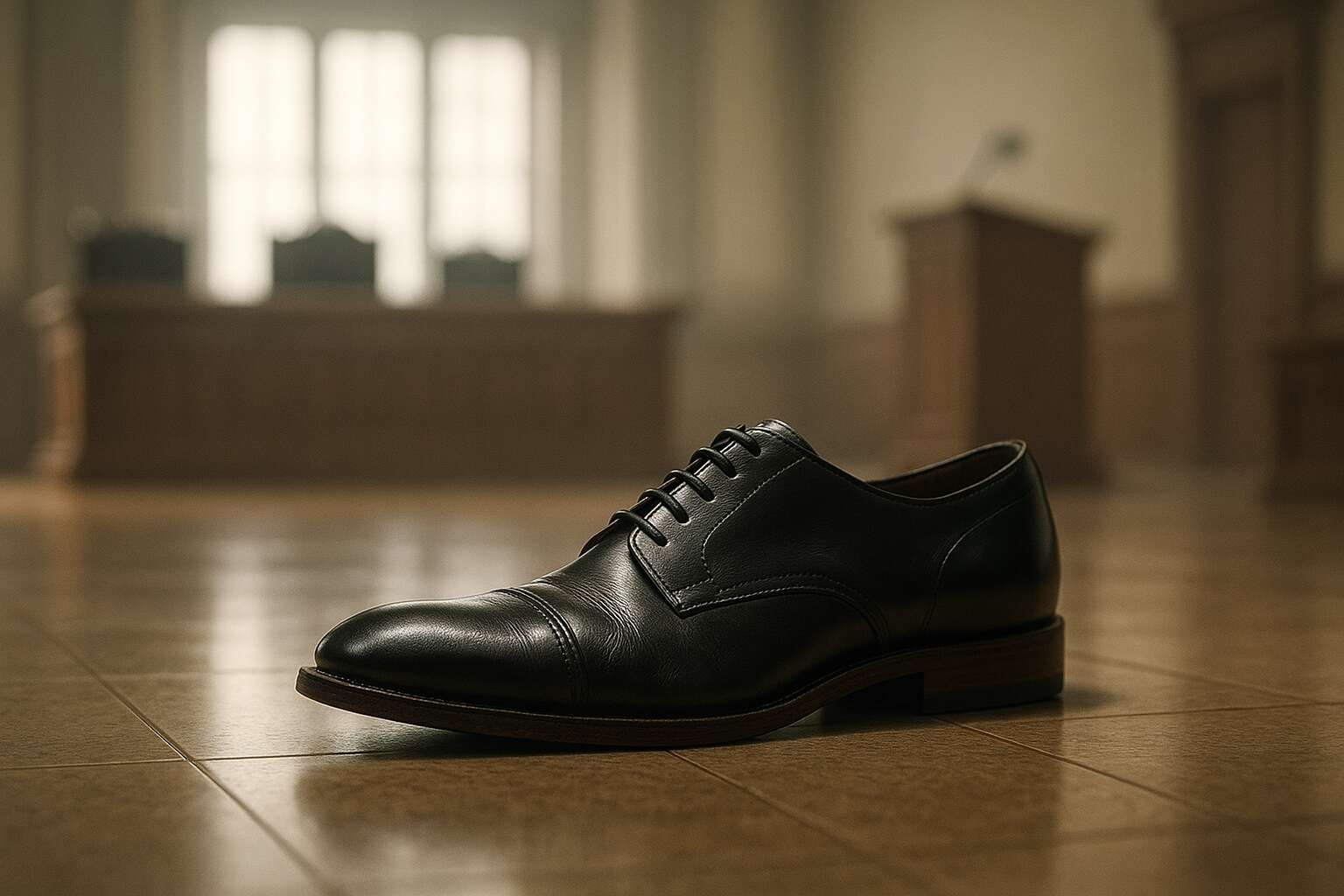
A dramatic scene unfolded today in India’s Supreme Court when a lawyer, protesting remarks about Lord Vishnu, attempted to throw his shoe at the Chief Justice. The shoe thrown at India’s top judge in the middle of court proceedings has triggered debate over judicial security, freedom of expression, and religious sensitivity. This detailed report by The Editorial Team of Behind The Headlines examines how the incident occurred, its legal and symbolic stakes, responses from the judiciary and public, and what this might mean for India’s courts going forward.
How it happened
During a court session where cases were being mentioned before the Chief Justice, a lawyer rushed to the dais, removed his footwear, and tried to fling it at the judge. Security personnel intervened swiftly and escorted the individual away, preventing physical contact. Amid the commotion, the lawyer shouted slogans suggesting his act was in protest of what he believed was disrespect to Sanatan (Hindu tradition).
The Chief Justice, reportedly unfazed, addressed the courtroom calmly: “These things do not affect me. Let the hearing continue,” he told counsel present. The court proceedings resumed shortly.
The lawyer has been identified in media reports as Rakesh Kishore. A security inquiry has been launched to determine motive, procedural lapses, and whether the act was premeditated.
Legal, symbolic and institutional analysis
Security and decorum at the apex court
Any attack (or attempted attack) on the Chief Justice is a grave breach of judicial dignity. The incident underlines vulnerabilities in courtroom security protocols, especially in public access zones. Institutional introspection is likely on emergency routes, screening, barrier structures, and courtroom layout.
Judges, staff, and litigants may raise concerns about personal safety, especially when high-voltage religious or identity issues are under dispute.
Freedom of expression vs contempt or assault
Protest against judicial remarks is within democratic space, but the boundary between speech and assault is legally defined. Hurling a shoe could trigger charges of contempt, criminal assault, or breach of court discipline depending on intent and precedents.
The courts will need to balance ensuring respect for judicial authority while preserving legitimate dissent and religious sentiment.
Religious sensitivity and judicial commentary
The act is linked to prior remarks by the Chief Justice concerning a plea on restoring a Vishnu idol in a temple complex. In that context, he had asked petitioners to “pray and meditate” rather than demand judicial action. Those remarks drew sharp criticism from Hindu groups who felt their beliefs were treated dismissively.
Because India’s judiciary often handles highly sensitive religious cases, judges must exercise care in language and tone. What may appear as candid judicial commentary can inflame public sentiment or provoke backlash.
Precedent and deterrence
The court must respond firmly to deter copycat incidents without turning the incident into a political spectacle. Leaders in other democracies have faced similar threats; institutional response often includes not only punishment of the perpetrator, but stricter courtroom security protocols.
This incident could become a touchstone precedent in India for how courts treat symbolic attacks and speech-provoking behavior near judges.
Reactions across institutions and public
Judiciary and legal fraternity
Many in the legal community expressed shock and solidarity with the Chief Justice. Bar associations and senior counsel emphasized that while dissent is valid, attacking the court’s dignity is impermissible.
Some judges are reportedly petitioning for revised security norms, including screening measures, restricted access zones, and emergency intervention protocols.
Political and social responses
Across political and religious groups, responses have varied. Some viewed the act as a provoked reaction to perceived disrespect; others condemned it as an unacceptable assault on judicial sanctity.
Religious organizations issued statements stressing the need for respectful discourse, warning that personal beliefs should not be weaponized in courtrooms.
Media commentary is wide-ranging: some commentators argue that the incident exposes chasms in public trust toward institutions; others see it as symptomatic of heightened religious polarization and rash public expression.
Public sentiment
Public reactions on social media reflect deep divide. Some support the lawyer’s claimed emotional impulse; many others deplore the act as crossing a red line.
In minority, voices caution that normalizing aggressive protest sets dangerous precedents near institutions of law.
Bigger picture: tensions at the intersection of religion, law, and speech
This episode spotlights larger tensions between India’s plural religious identity and its secular legal architecture. As courts increasingly adjudicate religious, temple, and idol rights issues, judicial remarks may be scrutinized intensely.
For the judiciary, maintaining both public faith and internal dignity is a delicate balancing act. Judges operate under public gaze, yet must retain institutional neutrality, circumspect speech, and procedural restraint.
The incident also underscores the risks when legal institutions touch religious sensibilities—with social currents, identity narratives, and political mobilization all ready to mobilize.
Evolving norms around protest, courtroom behavior and symbolic acts (like shoe-throwing) will be part of India’s legal evolution in coming years.
What to watch going forward
- What formal reprimand, legal charges or disciplinary actions the court takes regarding the lawyer
- Security audit results and revised court protocols across Supreme Court and High Courts
- Whether the Chief Justice or court issues clarificatory remarks on previous statements
- Bar associations’ responses: motions, resolutions, best practice proposals
- Social, political or protest developments tied to religious groups or activist groups
- Any judicial pronouncements on symbolic acts (shoe-throwing, gestures) in contempt or assault cases
Conclusion
The shoe thrown at India’s Chief Justice amid a religious row is not merely a startling courtroom spectacle — it is a signal moment in the interplay of religion, speech, and judicial authority. How the court handles this incident will shape institutional norms, security protocols, and the boundary between protest and dissent in judiciary spaces.
The Editorial Team of Behind The Headlines will continue to cover this story, tracking court orders, legal outcomes, and how this event influences public trust in justice institutions.
Related Posts


Stay Informed With the Latest & Most Important News
Previous Post
Next Post


Advertisement









Advertisement