

Now Reading: Shubman Gill Takes Charge: Why BCCI Chose Merit Over Legacy in India’s ODI Leadership Shift
-
01
Shubman Gill Takes Charge: Why BCCI Chose Merit Over Legacy in India’s ODI Leadership Shift

Shubman Gill Takes Charge: Why BCCI Chose Merit Over Legacy in India’s ODI Leadership Shift

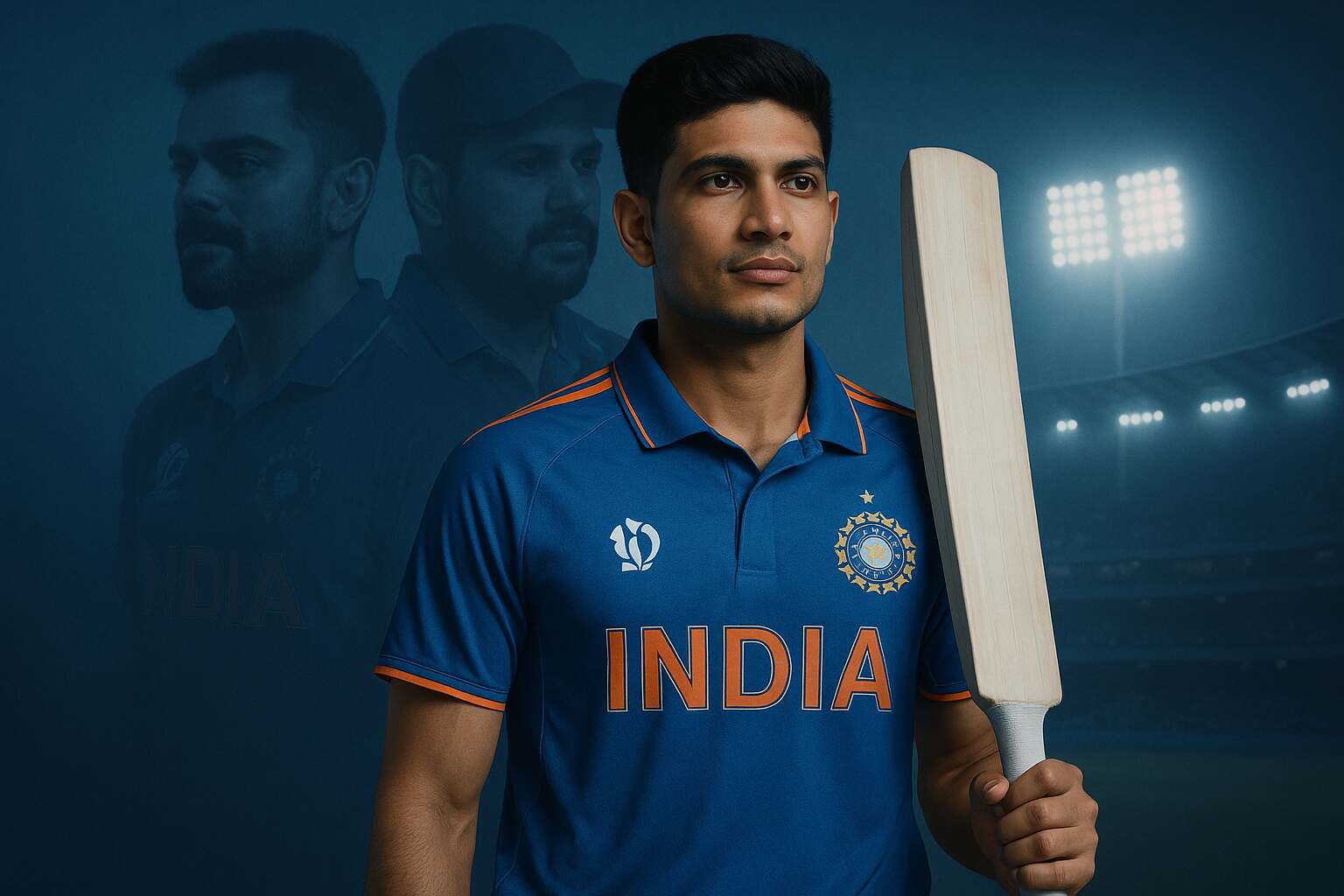
A New Chapter in Indian Cricket
The Indian cricket team has entered a new phase — one that balances respect for legends with the urgency of progress. With Shubman Gill appointed as India’s new ODI captain, the Board of Control for Cricket in India (BCCI) has made its message loud and clear: no seat is permanent, not even for the greats.
This decision comes after years of dominance by Rohit Sharma and Virat Kohli, two of the finest cricketers of their generation. Both icons have carried the team through transitions, titles, and triumphs. But as the game evolves — faster schedules, new talents, and changing formats — India’s selectors seem determined to refresh their leadership formula.
The Shift: From Icons to Intention
According to insiders, the new approach is “merit over memory.” For years, Indian cricket has revolved around star names, often prioritizing experience over present form. The 2025 ODI captaincy decision marks a symbolic break from that legacy.
BCCI sources reportedly confirmed that Rohit Sharma and Virat Kohli will now be selected strictly on merit and form, not seniority. This signals a clear structural shift — the leadership is now built on current performance, adaptability, and future potential rather than reputation.
Selectors emphasized that the decision wasn’t about sidelining senior players but about preparing for the next World Cup cycle (2027) with a consistent, youthful core.
Why Shubman Gill? The Case for a Modern Captain
At 26, Shubman Gill represents India’s future vision — calm, composed, and consistent. His meteoric rise since debuting in 2019 has been built on technical mastery and mental discipline.
In the past two years, Gill has shown why he’s more than just a “next-generation” player.
- Top run-getter in ODIs during 2024 with an average above 58.
- Multiple centuries against top-tier nations.
- A natural communicator, admired by teammates for his tactical calmness.
Gill’s captaincy isn’t a gamble — it’s a projection. The selectors see in him what they saw in a young Kohli a decade ago — ambition paired with structure, and aggression without ego.
(Backlink suggestion: Inside India’s next-gen leadership roadmap)
The Merit Policy Explained
For the first time in years, India’s selection strategy is publicly leaning on data-backed meritocracy. A BCCI committee insider reportedly stated that future call-ups — including for Rohit and Kohli — will depend purely on performance analytics, fitness parameters, and consistency across formats.
This decision aligns with the broader global cricket trend — teams like England, Australia, and even Pakistan are building modular squads for specific formats. India’s move could ensure long-term stability and readiness for the 2027 ODI World Cup.
The new system means senior players are not being replaced — they are being re-evaluated.
If Rohit Sharma continues to perform, he will remain a vital part of the team. However, captaincy — a role that demands future thinking — now belongs to a player aligned with the next decade’s roadmap.
Selectors’ Dilemma: The Cost of Transition
This decision wasn’t easy. Inside the BCCI selection meetings, discussions reportedly stretched late into the night. Replacing a captain like Rohit Sharma, who guided India through the World Test Championship final, Asia Cup triumph, and a near-perfect World Cup 2023 run, was not taken lightly.
However, multiple factors tipped the balance:
- Workload management: Rohit and Kohli’s combined international workload exceeds 15 years each.
- Format fatigue: With continuous tournaments, giving leadership to a younger player helps distribute pressure.
- Future focus: Shubman Gill will lead a new core group — featuring Ruturaj Gaikwad, Yashasvi Jaiswal, and Kuldeep Yadav — aimed at creating stability for the next five years.
The move is not an end, but an evolution.
(Backlink suggestion: BCCI’s roadmap for India’s 2027 World Cup mission)
Inside the Dressing Room: Reactions and Reality
Reactions within the Indian camp have reportedly been measured and mature. Rohit Sharma, who has always backed Gill’s growth, is said to have personally congratulated him. Kohli too, sources suggest, appreciated the transparency of the decision.
A senior player told Behind The Headlines under condition of anonymity:
“This was expected. Rohit and Virat have done everything for Indian cricket. But the system needs to keep evolving. Gill’s calmness and modern mindset make him a natural leader.”
The key difference between the 2023 and 2025 teams is tone — less about aggression, more about adaptability.
Gill’s Vision: Calm Over Chaos
Shubman Gill’s early leadership interviews highlight a pattern — focus on data-driven strategies and mental freshness.
He reportedly believes in:
- Allowing players “space to fail.”
- Encouraging younger bowlers to take control of field settings.
- Keeping communication direct but non-confrontational.
His approach mirrors the leadership style of global contemporaries like Pat Cummins and Jos Buttler, who lead with calm precision rather than overt aggression.
Gill’s cricketing brain, often praised by analysts, comes from his methodical preparation — from tracking bowlers’ heat maps to understanding opponents’ strike zones. His leadership debut series will likely test whether theory matches field reality.
The Fan Divide: Emotion vs. Evolution
No decision in Indian cricket comes without debate. Fans on social media are already divided.
- Rohit and Kohli loyalists call the move “premature”.
- Younger fans welcome it as “the dawn of a new era.”
One trend that emerged on X (formerly Twitter):
#GillEraBegins trended with over 300,000 mentions within six hours of the BCCI announcement.
The emotional attachment to Rohit and Kohli is deep — both are modern icons who carried the team after Dhoni’s era. But as one cricket analyst put it:
“Indian cricket must be run like an institution, not a museum. Legacy matters, but progress is non-negotiable.”
Strategic Implications for India’s Future
Beyond sentiment, this captaincy shift could impact team balance, selection philosophy, and even sponsorship dynamics.
- Format-specific captains: BCCI may now prefer different leaders for ODIs, T20Is, and Tests — mirroring England’s model.
- Team structure: Expect more all-rounders and flexible middle-order options to adapt to global conditions.
- Brand focus: Gill’s youth appeal makes him ideal for India’s rebranding in global cricket — a face that bridges traditional loyalty with Gen-Z enthusiasm.
(Backlink suggestion: How Indian cricket is branding its Gen-Z future)
Beyond the Field: Market and Media Reactions
The shift also has commercial undertones. Shubman Gill, already among the most endorsed young athletes in India, is now positioned as the new commercial anchor for Indian cricket.
- His partnerships with sportswear brands and fintech firms are expected to rise by 35–40% in valuation.
- Sports marketers believe Gill’s calm demeanor and English fluency make him more appealing to global markets.
- Digital engagement with younger audiences, particularly on YouTube and Instagram Reels, is projected to spike.
The “Gill Era,” therefore, isn’t just about runs — it’s about rebranding Indian cricket for the next generation.
Rohit and Kohli: Still Pillars of Indian Cricket
Despite the shift in leadership, the importance of Rohit Sharma and Virat Kohli cannot be overstated. Both are likely to play key roles as mentors and senior players, ensuring stability during the transition.
Selectors clarified that there is no retirement talk yet — rather, a redistribution of responsibility.
Kohli’s batting remains world-class, especially in Tests, and Rohit’s tactical acumen remains unmatched in pressure games.
Gill himself acknowledged this legacy, stating:
“I’ve learned everything by watching Rohit bhai and Virat bhai. They are my idols and my biggest supporters.”
This mutual respect might be the glue that keeps Indian cricket unified in transition.
The Bigger Picture: India’s 2027 World Cup Plan
With the 2027 ODI World Cup in South Africa and Zimbabwe on the horizon, India’s preparation starts now. The roadmap includes:
- Building a stable top-order around Gill, Jaiswal, and Gaikwad.
- Grooming new finishers like Tilak Varma.
- Maintaining a rotation plan to avoid burnout.
The idea is to have a settled squad by 2026, led by Gill and guided by veterans in key roles. If executed right, this could be one of the smoothest leadership transitions in modern Indian cricket.
Conclusion: Leadership Beyond Names
India’s cricketing history has always revolved around transitions — from Gavaskar to Kapil, Ganguly to Dhoni, and Dhoni to Kohli. Now, it’s Gill’s turn to lead India’s narrative into the future.
The merit-first approach may feel uncomfortable at first, but it’s essential for long-term competitiveness.
As India builds toward its next World Cup, the question isn’t whether Gill can replace Rohit or Kohli — it’s whether he can redefine leadership in a way that sustains both performance and purpose.
Behind The Headlines believes this is not the end of an era, but the start of an evolution.
Related Posts


Stay Informed With the Latest & Most Important News
Previous Post
Next Post


Advertisement





Advertisement
