Now Reading: Tariffs to Break Russia: Why the U.S. Put India in the Crosshairs
-
01
Tariffs to Break Russia: Why the U.S. Put India in the Crosshairs


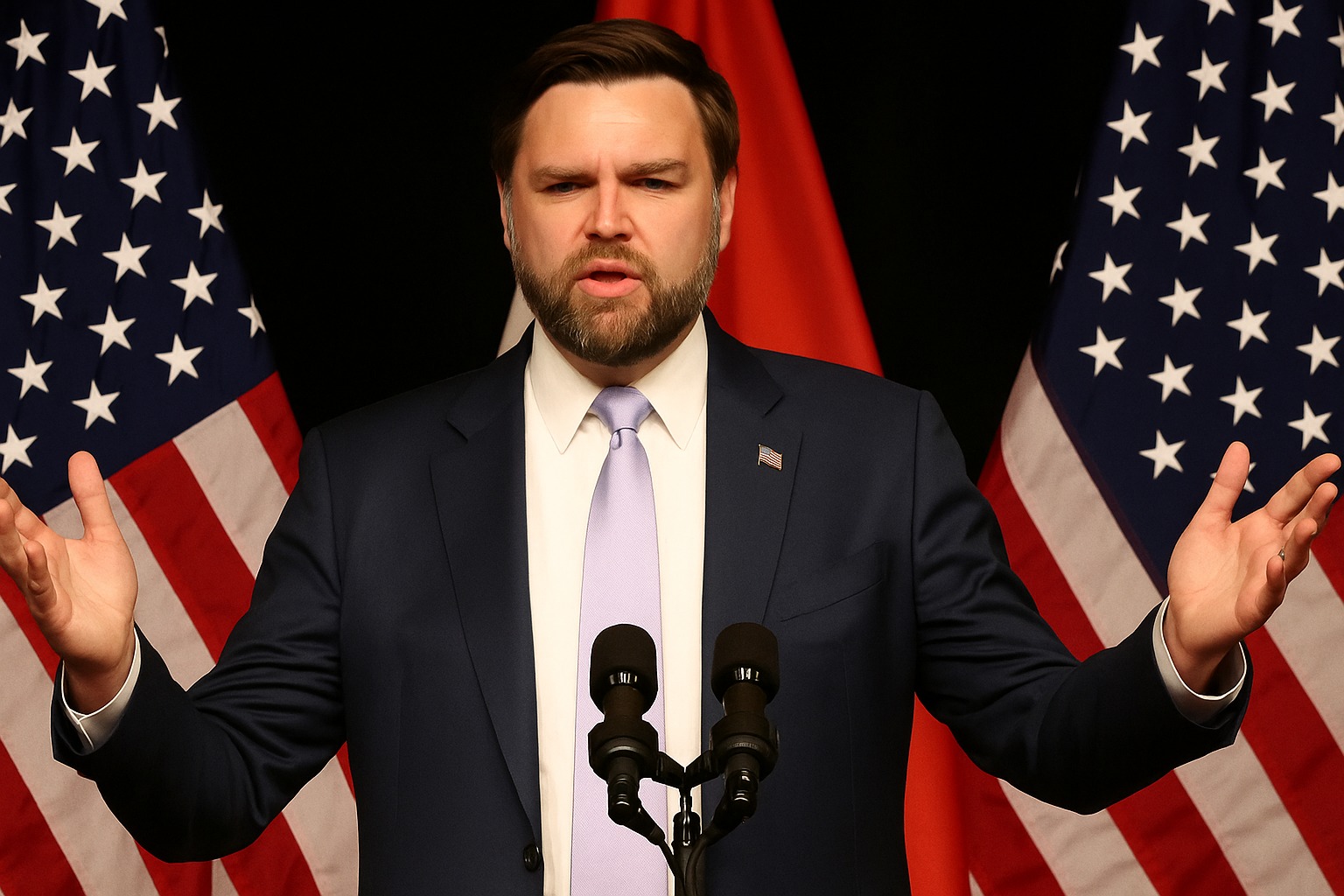
The already fragile balance of global geopolitics was jolted further when U.S. Vice President J.D. Vance confirmed that the Trump administration’s recent decision to impose steep tariffs on Indian goods was not primarily about trade disputes, but rather a calculated effort to force Russia into ending its war in Ukraine.
Speaking in clear terms, Vance described the tariffs as “aggressive economic leverage”, meant to choke Moscow’s revenue streams by indirectly targeting nations that continue to engage in robust commerce with Russia. Among those nations, India stands at the center — due to its heavy reliance on discounted Russian crude oil and continued strategic ties with Moscow.
The Tariffs: Numbers and Impact
The United States announced tariffs of up to 50 percent on a range of Indian imports, a staggering figure that analysts say could disrupt billions of dollars in bilateral trade. For India, the move is not only an economic setback but also a political test of its ability to maintain strategic autonomy amid growing global pressure.
The tariffs specifically affect sectors like steel, textiles, pharmaceuticals, and auto components, which form a significant chunk of India’s exports to the U.S. Businesses fear rising costs will hurt competitiveness, while Indian policymakers have denounced the move as unfair and disproportionate.
Why Target India?
At first glance, the decision to penalize India appears puzzling, given the close ties between New Delhi and Washington in recent years. But Vance’s statement clarifies the intent:
- By imposing tariffs on India, the U.S. aims to raise the cost of importing Russian oil, thereby reducing Moscow’s cash flow from one of its largest buyers.
- India has emerged as a top purchaser of discounted Russian crude, refining and then exporting some of it to global markets. Washington sees this as a loophole that indirectly strengthens Russia’s economy despite Western sanctions.
- By pressuring India, the Trump administration hopes to squeeze Russia’s war chest and accelerate the push toward a ceasefire or negotiations.
India’s Response: Strategic Autonomy First
New Delhi has reacted sharply to the U.S. tariffs, reiterating its commitment to an independent foreign policy. Officials argue that India’s imports of Russian oil are driven by economic necessity, ensuring affordable energy for its vast population and fast-growing economy.
Senior leaders have also stressed that India cannot be forced into choosing sides in a conflict where its primary interest lies in peace and stability, not alignment. While willing to engage in dialogue with Washington, India has made it clear that it will not abandon energy security or long-standing defense ties with Russia under external pressure.
Global Repercussions of Vance’s Statement
The Vice President’s candid acknowledgment of the U.S. strategy has triggered wide-ranging implications:
- For Russia: It reinforces Moscow’s claim that Western sanctions are less about principles and more about geopolitics. Russia is expected to deepen its ties with both India and China to offset U.S. pressure.
- For India-U.S. Relations: The move has cast a shadow over what was once seen as a blossoming strategic partnership. Trade talks are on shaky ground, and trust between the two democracies is being tested.
- For Global Alliances: Countries across Asia, Africa, and Latin America — many of which also import Russian energy — are watching closely. The tariffs could push more nations toward a multi-aligned strategy, balancing between great powers rather than aligning fully with one.
The Domestic Angle in the U.S.
Domestically, the tariffs highlight the Trump administration’s MAGA-first worldview: transactional, protectionist, and unapologetically blunt. By framing the tariffs as a weapon against Russia, Vance has given the administration a narrative that appeals to both national security hawks and blue-collar workers worried about global competition.
However, critics in the U.S. warn that such measures could alienate allies like India, weakening long-term coalitions against authoritarian powers. Democrats have accused the administration of reckless diplomacy, while Republican loyalists hail it as “tough leadership.”
Where Does This Leave India?
For India, the challenge lies in balancing its economic and security imperatives. The country cannot afford to lose access to discounted Russian crude, nor can it jeopardize its growing ties with the United States, particularly in defense and technology.
Experts suggest that India may pursue a dual-track approach:
- Negotiating with Washington to ease tariffs on certain sectors.
- Simultaneously deepening diversification of energy imports and strengthening trade links with alternative markets.
At the same time, New Delhi will likely emphasize its role as a voice of peace, continuing to call for dialogue and de-escalation in Ukraine, while avoiding being dragged into bloc politics.
Conclusion: A World at Crossroads
Vice President Vance’s statement has laid bare the stark realities of today’s geopolitics. Tariffs are no longer just economic instruments — they are weapons in global power struggles. By targeting India, the United States has signaled that no partner is beyond pressure when it comes to isolating Russia.
For India, this is both a test and an opportunity: a test of its resolve to uphold strategic autonomy, and an opportunity to emerge as a balancing power in a fractured world order.
As the dust settles, one truth is evident: the road ahead for U.S.–India relations will be shaped not just by economics, but by the shifting tides of war, diplomacy, and national interest.
Related Posts
Stay Informed With the Latest & Most Important News
Previous Post
Next Post






Advertisement