

Now Reading: Terrorism ‘Persistent Threat’ To Development, Says EAM Jaishankar At G20
-
01
Terrorism ‘Persistent Threat’ To Development, Says EAM Jaishankar At G20

Terrorism ‘Persistent Threat’ To Development, Says EAM Jaishankar At G20

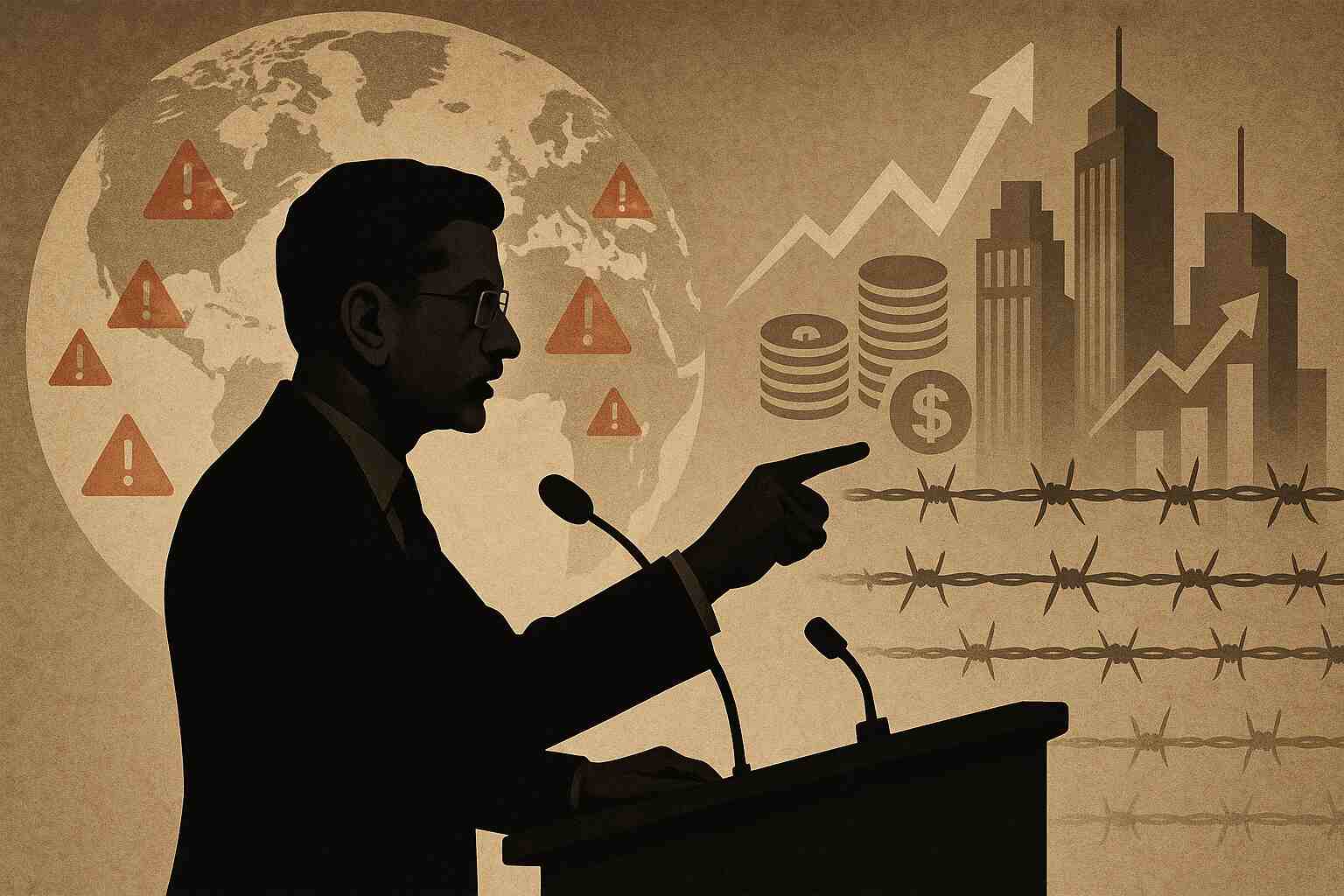
At the G20 Foreign Ministers’ Meeting, External Affairs Minister S. Jaishankar delivered a pointed message: terrorism is not just a security challenge but also a persistent obstacle to global development and progress. His remarks highlighted India’s long-standing position that no nation can achieve true growth and prosperity while violent extremism continues to destabilize societies, economies, and governance structures.
By bringing this message to the G20, Jaishankar reinforced India’s leadership role in framing terrorism as a development issue that affects not only security but also the world’s economic future.
Terrorism beyond borders: A developmental roadblock
Terrorism has long been debated in international forums as a matter of geopolitics, but Jaishankar’s framing elevates it into the domain of economics and social progress. Development projects, investments, and infrastructure growth in terrorism-affected areas face continuous risks, leaving communities vulnerable.
According to analysts, countries in South Asia, Africa, and the Middle East bear the greatest brunt, where militant activity derails education, healthcare, and job creation. India’s statement at the G20 thus ties national security concerns with global developmental priorities.
(Read also: Ayushman Bharat effected revolution in healthcare)
India’s position on zero tolerance
India has consistently emphasized zero tolerance toward terrorism, urging global cooperation to dismantle networks that fund and promote extremism. At the G20 meet, Jaishankar reiterated that terrorism undermines trust between nations, hampers foreign investment, and directly obstructs the United Nations’ Sustainable Development Goals (SDGs).
His address pressed the need for shared intelligence, cross-border accountability, and stronger multilateral mechanisms to deal with the menace.
Terrorism’s economic cost on nations
The economic toll of terrorism is staggering. Studies suggest that countries facing persistent terror threats lose between 1–2% of GDP annually due to damaged infrastructure, loss of productivity, and capital flight. Tourism and small-scale businesses are among the worst hit sectors, as fear discourages both domestic and international engagement.
India’s call at the G20 sought to underline how tackling terrorism is essential for ensuring a predictable economic environment for both developed and developing countries.
G20 as a platform for global consensus
The G20, representing the world’s largest economies, provides an ideal platform for building consensus on linking counter-terrorism to development agendas. Jaishankar’s remarks aimed to push member nations toward considering anti-terrorism strategies not as isolated security initiatives but as integral components of economic growth policies.
This shift in narrative is expected to encourage stronger cooperation in areas such as financial tracking, digital surveillance of extremist propaganda, and cyber countermeasures.
Reactions from the international community
Several G20 members echoed India’s concerns, acknowledging that terrorism undermines stability and inclusive growth. Diplomatic observers noted that by framing terrorism as a developmental challenge, India has successfully widened the debate beyond conventional security-centric narratives.
However, some nations remain cautious, wary of political sensitivities in linking terrorism directly to specific regions or state actors. India’s strategy, therefore, is to focus on universal principles of cooperation rather than direct accusations.
(Related: Cliffhanger in Bihar survey shows NDA edge)
Terrorism and sustainable development goals
Jaishankar’s emphasis comes at a time when global economies are working toward achieving the 2030 Sustainable Development Goals (SDGs). Persistent violence and extremism risk derailing progress on poverty reduction, education, healthcare, and infrastructure.
For India, which has made substantial progress in areas such as digital inclusion and healthcare access, terrorism threatens to undo gains by draining public resources into prolonged security measures.
Bigger picture: India’s global diplomatic messaging
By tying terrorism to development, India positions itself as a voice of stability and responsibility on the world stage. This aligns with its broader foreign policy approach of being a bridge between developed and developing countries.
The speech also strengthens India’s argument for reforming global governance institutions to reflect contemporary security and developmental challenges rather than Cold War legacies.
Conclusion: Linking security with prosperity
EAM Jaishankar’s strong remarks at the G20 make it clear: terrorism is not only a threat to peace but also to prosperity. Unless the international community recognizes this connection and acts decisively, sustainable development will remain out of reach.
India’s call for collective action underscores a crucial truth — that growth and security are inseparable. The message is both a warning and a roadmap, pushing world leaders to treat terrorism not just as a political problem but as an economic imperative.
Related Posts

Stay Informed With the Latest & Most Important News
Previous Post
Next Post

Advertisement








Advertisement