

Now Reading: Torrential Rains Disrupt Life in Warangal & Hanamkonda, 1,200 Evacuated
-
01
Torrential Rains Disrupt Life in Warangal & Hanamkonda, 1,200 Evacuated


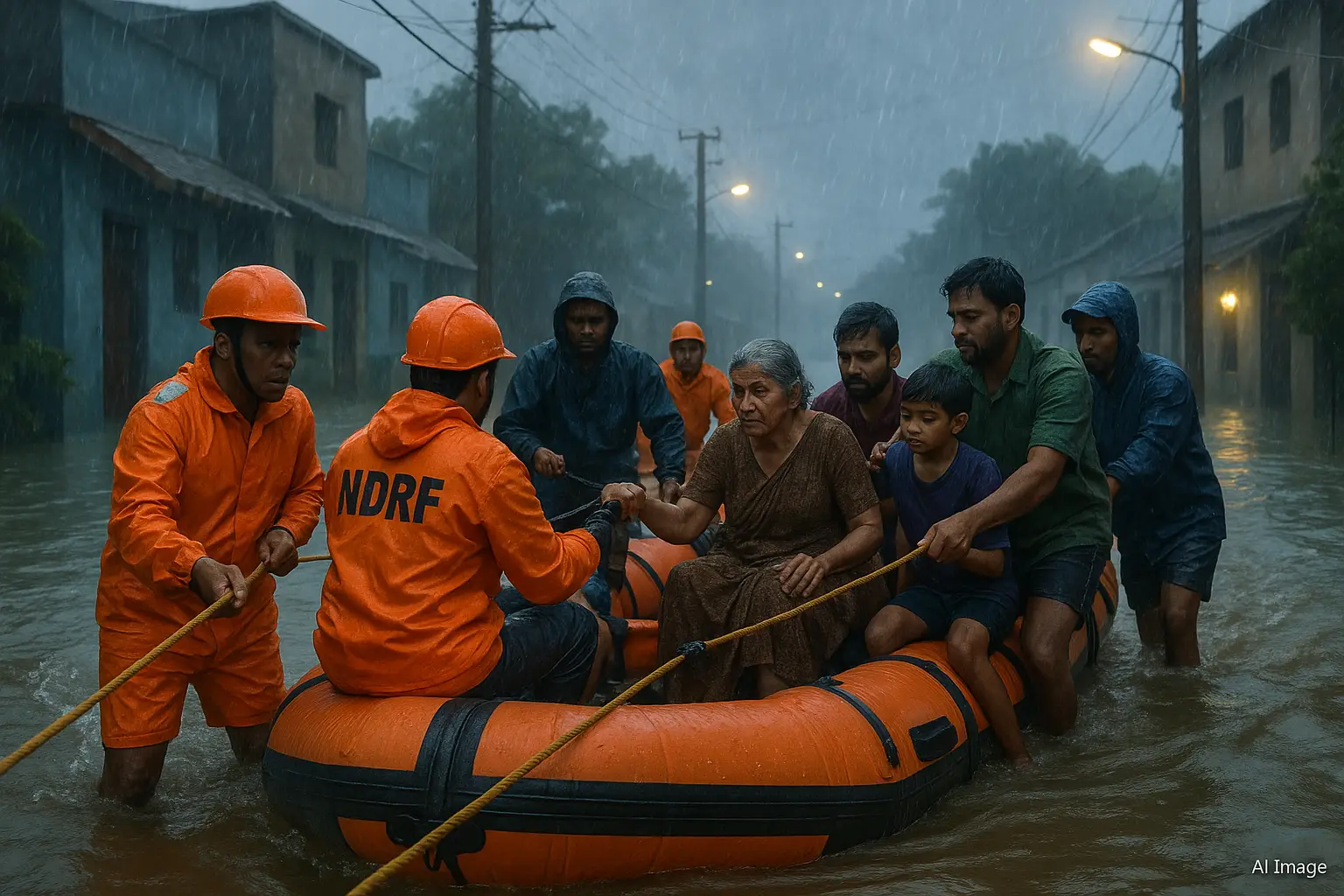
In Telangana, incessant rains over the last 48 hours have thrown life out of gear in Warangal and Hanamkonda districts. Authorities have evacuated nearly 1,200 residents from low-lying areas as heavy downpour caused flash floods, damaged homes, and disrupted electricity and road networks. The keyword Warangal torrential rains evacuation appears naturally in this opening section. The downpour, among the heaviest in recent months, led to overflowing streams and severe waterlogging in urban pockets, forcing the state disaster teams to conduct overnight rescue operations.
Details: The Scale of Flooding and Rescue Operations
Continuous rainfall since Thursday evening flooded residential colonies like Kazipet, Hanamkonda Chowrasta, and Nakkalagutta. Overflowing drains inundated major roads, bringing traffic to a halt. Disaster Response Force teams were deployed with boats and emergency vehicles to relocate stranded families. Schools and colleges were ordered shut until further notice.
District Collector P. Praveenya confirmed that around 1,200 people had been safely moved to temporary shelters in government schools and community halls. Relief materials including food, blankets, and medical kits have been distributed. Officials also urged residents living near water bodies to move to higher ground until rainfall eases.
(Read More: “How Telangana Cities Cope With Urban Flooding Each Monsoon”)
Analysis: Why Warangal Faces Repeated Flooding
Experts point to rapid urbanisation, blocked drainage, and unplanned construction as key reasons behind repeated flooding in Warangal and Hanamkonda. In the last five years, both districts have witnessed increased concrete coverage, which prevents natural water absorption. The local stormwater network, built decades ago, is unable to handle current rainfall intensity.
Meteorologists also noted that the rainfall pattern over Telangana has become more erratic due to climate change, with short bursts of intense rain replacing steady monsoon drizzles. This has left cities vulnerable to flash floods and infrastructure damage.
(Read More: “Why Climate Change Is Intensifying Flash Floods Across South India”)
Reactions: Government & Citizen Response
Telangana Chief Minister A. Revanth Reddy reviewed the situation via video conference, directing district officials to prioritise rescue and relief efforts. The National Disaster Response Force (NDRF) teams from Hyderabad were kept on standby for deployment if the rain continues.
Citizens took to social media to share visuals of inundated roads, stranded buses and power outages. Many residents praised local police and municipal workers for their swift response in clearing debris and relocating senior citizens from affected neighbourhoods.
Local NGOs such as Helping Hands Foundation joined rescue volunteers in distributing essentials. However, complaints of delayed civic response in interior colonies of Hanamkonda surfaced, prompting officials to send additional staff for on-ground coordination.
Bigger Picture: Monsoon Preparedness and Urban Challenge
This latest flooding has once again highlighted Telangana’s fragile urban infrastructure. Despite annual assurances, stormwater drain cleaning and early-warning systems remain inconsistent across smaller cities. Experts argue that a long-term solution lies in better urban planning, integrating green spaces, and upgrading the drainage grid instead of relying solely on crisis management.
The state government has already begun assessing financial losses caused by the rains, which may cross several crores due to property damage, crop loss and halted commerce.
As India’s urban centres grow denser, incidents like these serve as reminders that resilient infrastructure is not optional — it is essential to protecting lives and livelihoods.
Conclusion
The torrential rains in Warangal and Hanamkonda once again underscore how climate volatility and poor urban drainage combine to paralyse cities overnight. With nearly 1,200 people displaced, civic agencies face the challenge of not just managing the crisis but building systems to prevent the next one.
For Telangana, the focus must now shift from reactive measures to proactive planning — because with each passing monsoon, the cost of inaction only grows heavier.
Related Posts

Stay Informed With the Latest & Most Important News
Previous Post
Next Post


Advertisement








Advertisement
