Now Reading: Trump Questions Obama’s Nobel Peace Prize, Says He “Got It For Nothing”
-
01
Trump Questions Obama’s Nobel Peace Prize, Says He “Got It For Nothing”


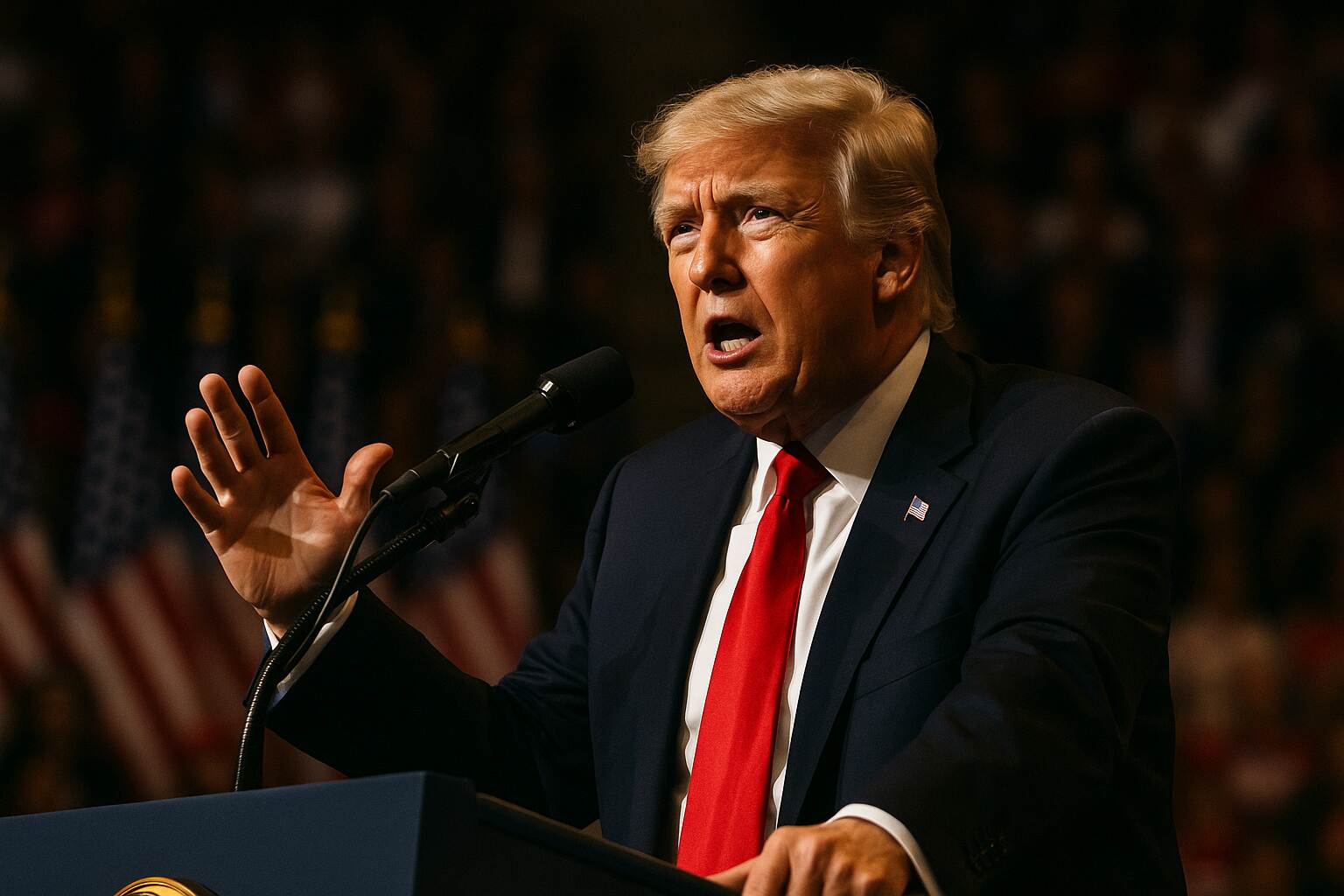
Former US President Donald Trump has once again taken aim at his predecessor Barack Obama, this time for his 2009 Nobel Peace Prize. Calling it “a prize he got for nothing,” Trump reignited an old debate about whether political awards, including the Nobel Prize, are influenced more by optics than genuine accomplishment.
The remarks, made during a campaign event, came as part of Trump’s ongoing effort to contrast his leadership style with Obama’s. He questioned why the Nobel Committee had honored Obama early in his first term, claiming the award “was given before he did anything.”
The Context Behind Trump’s Remarks
Trump’s comments were made during a campaign speech where he discussed what he described as “unfair recognition” in world politics. He suggested that the Nobel Peace Prize, traditionally seen as the world’s most respected honor, had been “politicized.”
Obama’s Nobel win in 2009 had indeed sparked global debate. Awarded just months into his presidency, the Nobel Committee cited his “extraordinary efforts to strengthen international diplomacy and cooperation between peoples.” But even at that time, critics argued that the recognition was premature.
Trump, during his address, recalled how he himself was “nominated multiple times” for the same award — citing his role in facilitating diplomatic dialogues in the Middle East and the Korean Peninsula — but claimed the Nobel Committee overlooked his achievements due to “political bias.”
Revisiting the 2009 Nobel Peace Prize Debate
When Barack Obama was announced as the Nobel Peace Prize laureate in October 2009, it surprised many, including the winner himself. Obama had just completed his first year in office, and while his vision for diplomacy inspired global optimism, concrete outcomes were yet to materialize.
Even within the United States, reactions were mixed. Some hailed the award as a recognition of America’s return to diplomacy after years of global tension. Others, however, criticized it as symbolic and premature.
Now, Trump’s remarks have revived that very conversation. His statements also highlight a larger discussion around the evolving meaning of global honors and whether they truly reflect merit or political convenience.
In similar political stories, Behind The Headlines recently covered Trump Says Israel and Hamas Have Agreed to First Phase of Gaza Peace Deal — another instance where Trump positioned himself as a dealmaker in international affairs.
Trump’s Longstanding Grievance with the Nobel Committee
Trump’s frustration with the Nobel Peace Prize isn’t new. During his presidency, he repeatedly mentioned that several of his foreign policy efforts — including the Abraham Accords between Israel and Arab nations — were worthy of consideration.
While some of his supporters echoed that sentiment, the Nobel Committee has maintained that the award recognizes long-term contributions toward peace, not single diplomatic achievements.
This difference in interpretation has often put Trump at odds with institutions he believes are biased against conservative or nationalist leaders.
The Political Undertone
Trump’s latest criticism also serves as a reminder of his broader strategy — to reframe his political image as one of achievement and action, in contrast to what he portrays as Obama’s “symbolic legacy.”
Political analysts say that by attacking Obama’s Nobel Prize, Trump is appealing to his voter base’s sense of fairness and frustration with what they perceive as elitism in global politics.
His statement — “Barack Obama got it for nothing” — resonated among sections of his audience who feel that international institutions often reward promises rather than tangible results.
The former president’s tone also aligns with his campaign messaging that emphasizes performance over perception.
For more stories on global leadership and diplomacy, see Rajnath Singh Holds ‘Productive’ Talks with Australian PM Albanese and Defence Minister Marles.
Broader Global Reactions
While Trump’s remarks have stirred debate in the US, there has been limited international response. Most global media outlets treated the statement as another example of Trump’s tendency to revisit old grievances.
However, on social platforms, the discussion has reignited broader questions: Should the Nobel Committee revisit its criteria? Is diplomacy about hope or outcomes?
Several commentators have pointed out that Obama’s Nobel Peace Prize remains one of the most controversial in recent history, not because of his actions, but because of its timing.
What This Says About Leadership and Legacy
Trump’s criticism reflects an ongoing tension in global politics — between symbolic recognition and measurable action. Obama’s presidency, despite facing criticism for certain foreign policy failures, remains admired for restoring America’s global image and focus on dialogue.
Trump, on the other hand, sees his own leadership as results-driven, citing trade negotiations, border policies, and military restraint as evidence.
Both approaches — one idealistic, the other transactional — represent two contrasting philosophies of leadership that continue to shape global political debates.
The Bigger Picture
The controversy over Obama’s Nobel Prize is not just about one award; it’s about how societies define merit and peace in a polarized world.
In the age of instant judgment, awards that once symbolized consensus have become flashpoints for political disagreement. As Trump continues his campaign trail, his criticism of the Nobel Committee may play well among his supporters, but it also raises an uncomfortable question — can peace ever be quantified in politics?
For many observers, the discussion isn’t really about Obama or Trump anymore, but about how political recognition and global influence are perceived in an age when both are measured through media narratives rather than historical hindsight.
Conclusion
Donald Trump’s latest remarks about Barack Obama’s Nobel Peace Prize may seem like political rhetoric, but they reflect a larger debate on the meaning of recognition and the politics of global validation.
In a deeply divided world, such statements remind us that even the most respected honors are not immune to controversy — especially when filtered through the lens of politics, legacy, and ego.
Editorial Disclaimer:
This article was written by The Editorial Team of Behind The Headlines after verifying all facts and cross-referencing statements from public records and credible sources.
Related Posts


Stay Informed With the Latest & Most Important News
Previous Post
Next Post

Advertisement