

Now Reading: Vice-President’s Security Shifted to CRPF After Fresh Threat Assessment
-
01
Vice-President’s Security Shifted to CRPF After Fresh Threat Assessment


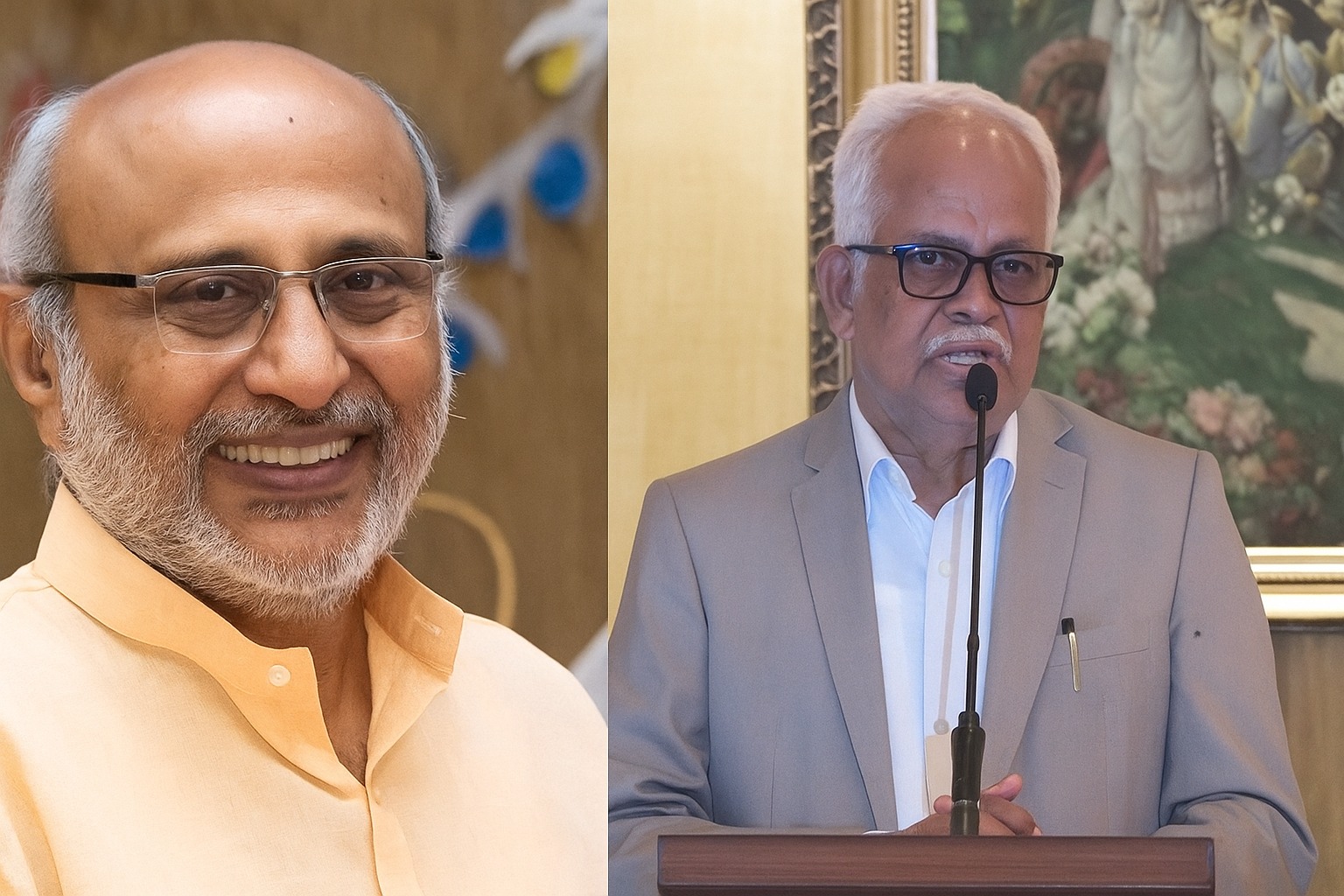
India’s Home Ministry has reassigned the Vice-President’s security detail from the Delhi Police to the Central Reserve Police Force (CRPF), following new threat inputs and a comprehensive risk review. The move signals not only the rising security challenges faced by constitutional authorities but also a recalibration of how the country prioritizes safety in a volatile environment.
The Editorial Team of Behind The Headlines examines why the change was made, what it means for the security architecture in New Delhi, and the larger implications for India’s political and institutional framework.
Why the Security Cover Was Reassessed
The Home Ministry regularly reviews the threat perceptions of top leaders, factoring in intelligence reports, domestic law-and-order scenarios, and global developments.
- Fresh intelligence inputs indicated an elevated risk to the Vice-President’s safety.
- The existing arrangement under Delhi Police, though effective, was deemed insufficient to counter evolving threats.
- After a high-level assessment, the government concluded that the CRPF, with its specialized VIP security wings, would be better suited to take over.
This decision mirrors similar past cases where CRPF, CISF, or SPG were brought in to ensure higher levels of protection.
Why the CRPF Was Chosen
The CRPF is India’s largest paramilitary force and has a specialized unit dedicated to VIP security.
- Trained for high-risk scenarios including terror threats, mob control, and convoy protection.
- Operates under the Ministry of Home Affairs, ensuring closer coordination with central intelligence agencies.
- Unlike Delhi Police, which is primarily tasked with maintaining law and order in the capital, the CRPF has a broader mandate and superior manpower strength.
The shift underscores the government’s intent to provide uniform, nationally controlled protection to constitutional functionaries.
Impact on Delhi Police
For the Delhi Police, losing the responsibility of guarding the Vice-President is both a logistical relief and a symbolic setback.
- Logistically, it frees up manpower that can be redirected toward city-wide law and order challenges.
- Symbolically, however, it reflects a lack of full trust in their capacity to handle the VP’s enhanced security requirements.
- In the larger ecosystem, such reassignments underline the central government’s reliance on paramilitary forces over local police in VIP protection.
Broader Political Context
The timing of the reassignment cannot be overlooked.
- With elections around the corner and political rhetoric intensifying, top leaders face growing risks of targeted violence.
- Social media amplification of hate campaigns and fake news adds unpredictability to threat perception.
- International developments, including regional terrorism and cyber threats, also feed into risk analyses.
Thus, the security shift is part of a broader political landscape where safeguarding constitutional heads becomes a priority.
Precedents of Security Reassignments
India has witnessed similar transitions in the past.
- The Special Protection Group (SPG) was once exclusive to the Prime Minister and immediate family but was later restricted to the PM alone.
- Several former presidents and governors have had their security reassigned between paramilitary and state forces based on evolving threats.
- Such transitions are common in democracies where intelligence-driven adjustments are prioritized over political optics.
The Vice-President’s case falls squarely into this category of proactive preventive action.
What This Means for the Vice-President’s Role
The Vice-President is not only the second-highest constitutional authority but also the Chairperson of the Rajya Sabha.
- Enhanced security ensures uninterrupted functioning of parliamentary responsibilities.
- It reflects the symbolic importance of protecting offices that represent constitutional continuity.
- For the Vice-President personally, the change brings a more structured, paramilitary-style protection model.
Public Perception and Political Debate
Whenever VIP security is upgraded or shifted, questions arise over resource allocation and priorities.
- Critics argue that excessive focus on VIP security diverts forces from public policing.
- Supporters counter that threats to national leaders must be taken seriously, as any lapse could destabilize governance.
- In this case, the scale of protests, regional unrest, and international factors make the reassignment more justifiable.
Conclusion
The reassignment of the Vice-President’s security from Delhi Police to CRPF underscores a broader shift in India’s approach to safeguarding its leaders. This decision, rooted in intelligence inputs and proactive risk assessment, reflects the evolving nature of security challenges in the world’s largest democracy.
The Editorial Team of Behind The Headlines concludes that while such moves may raise debates, they ultimately reinforce the state’s commitment to protect the sanctity of constitutional offices in an increasingly complex security environment.
Related Posts


Stay Informed With the Latest & Most Important News

Advertisement








Advertisement
