

Now Reading: “We’ve Settled for Less”: Industry Voices Slam OTT’s Grip on Cinema
-
01
“We’ve Settled for Less”: Industry Voices Slam OTT’s Grip on Cinema


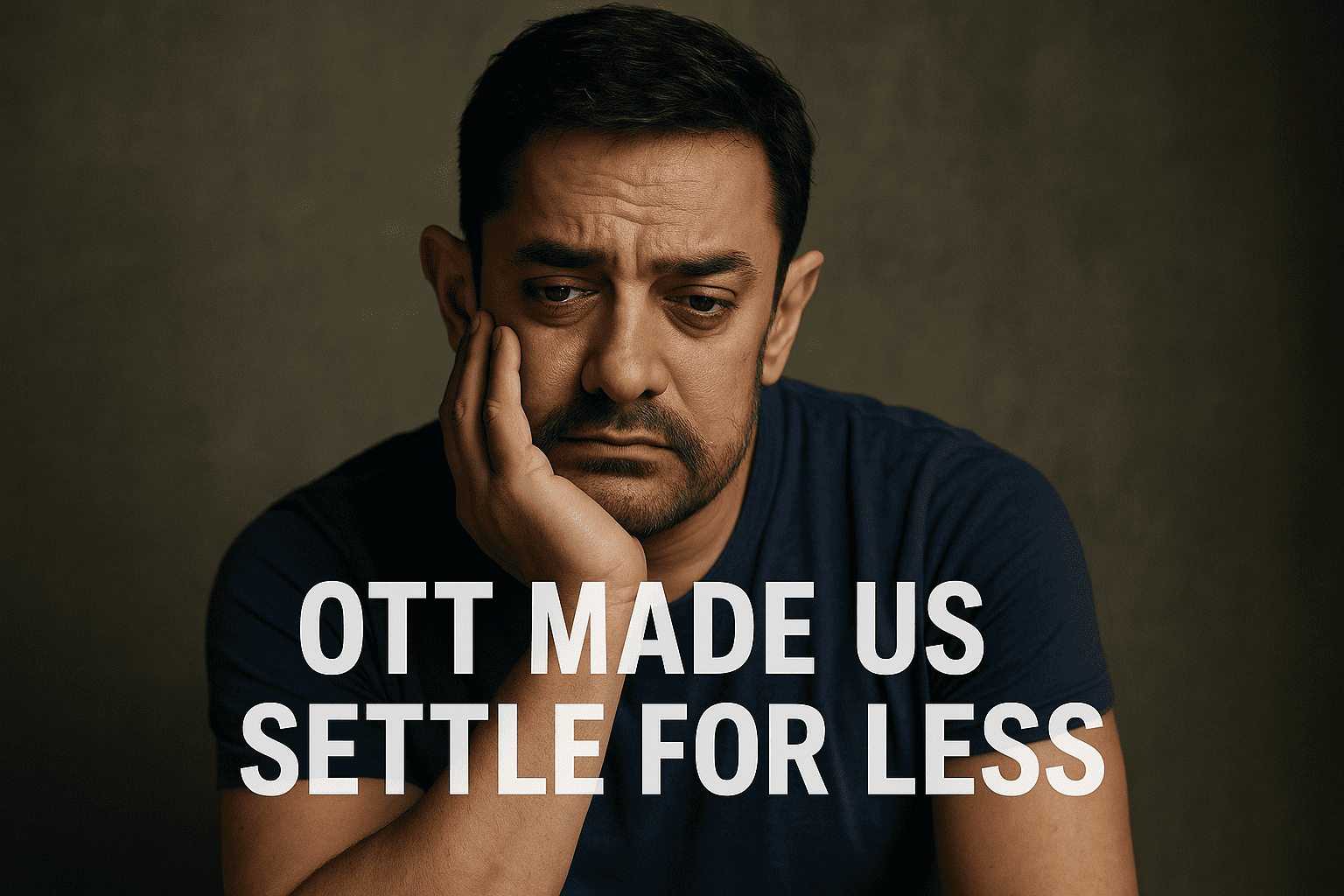
The Magic of the Big Screen Was My Oxygen
“If I’m selling you a product and you don’t buy it, I’ll still drop it at your home after eight weeks.” These words, spoken by Aamir Khan at a recent event, cut to the core of the shift that has redefined cinema. The ease of OTT has made us settle—for convenience, for fleeting engagement, for diluted experiences.
For many of us, theatres were not just venues; they were sanctuaries of emotion. From our earliest dreams, it was about that roar of applause, the shared gasp at a twist, the ecstasy of storytelling unfolding in unison. Ghosting our own cinematic sanctuaries—our theatres—feels like giving up a piece of ourselves.
Who Got Hurt?
- Mid-tier actors and filmmakers: We thrived on nuanced stories with heart and substance. OTT platforms often prefer binge-worthy content or star-driven fare, often pushing such films to the sidelines.
- Theatre owners and staff: Their livelihoods—projectionists, ushers, concession vendors—have been deeply impacted by dwindling footfalls.
- Audiences: Our patience shrank. House lights stay lit; distractions multiply. The immersive hush of a theatre is giving way to interruptions and choice fatigue.
Who Benefited?
- Indie creators & new voices: Those once ignored by big distributors have found homes and global viewership on OTT platforms.
- Local talent going global: A regional performance now reaches hearts across continents.
- Rural audiences: For people in small towns and remote areas, OTT offers access—stories that might otherwise never reach their screens.
Industry Voices Speaking the Truth
Filmmaker Anurag Kashyap laid it bare: “If what Aamir is doing works, it will disrupt the industry. Films should stay in theatres as long as they truly need to—until people are eager to watch them on OTT.” His words underline a longing for more intentional, lasting storytelling—not content dictated by subscription clocks.
Aamir Khan himself made the bold choice to decline a massive pre-sale deal for his film, saying: “That was a tough and big decision… I believe at the end of the day, it is the audience that decides how much they love the film… I would rather take the ₹100 from each audience of mine.” It’s a powerful reclaiming of faith in the public’s agency—and a stand against the quick-sell model that has become the norm.
The Emotional Cost
Watching a film on a phone or laptop may deliver the story, but it misses the heartbeat—the collective breath, the emotional resonance, the shared gasps. Cinema was always bigger
than its frames—it was about communion. OTT gave us reach, but it also taught us to settle for less depth, less spectacle, less connection.
Looking Ahead
This need not be a binary choice. OTT can champion smaller, daring stories; theatres can remain grand spaces for emotional immersion. But the creative ecosystem and audiences alike must choose to remember: convenience is not magic—and magic is worth the wait.
Related Posts


Stay Informed With the Latest & Most Important News
Previous Post
Next Post
Advertisement






Advertisement
