

Now Reading: What Will Happen If India Stops Buying Russian Oil? – A Detailed Analysis
-
01
What Will Happen If India Stops Buying Russian Oil? – A Detailed Analysis

What Will Happen If India Stops Buying Russian Oil? – A Detailed Analysis

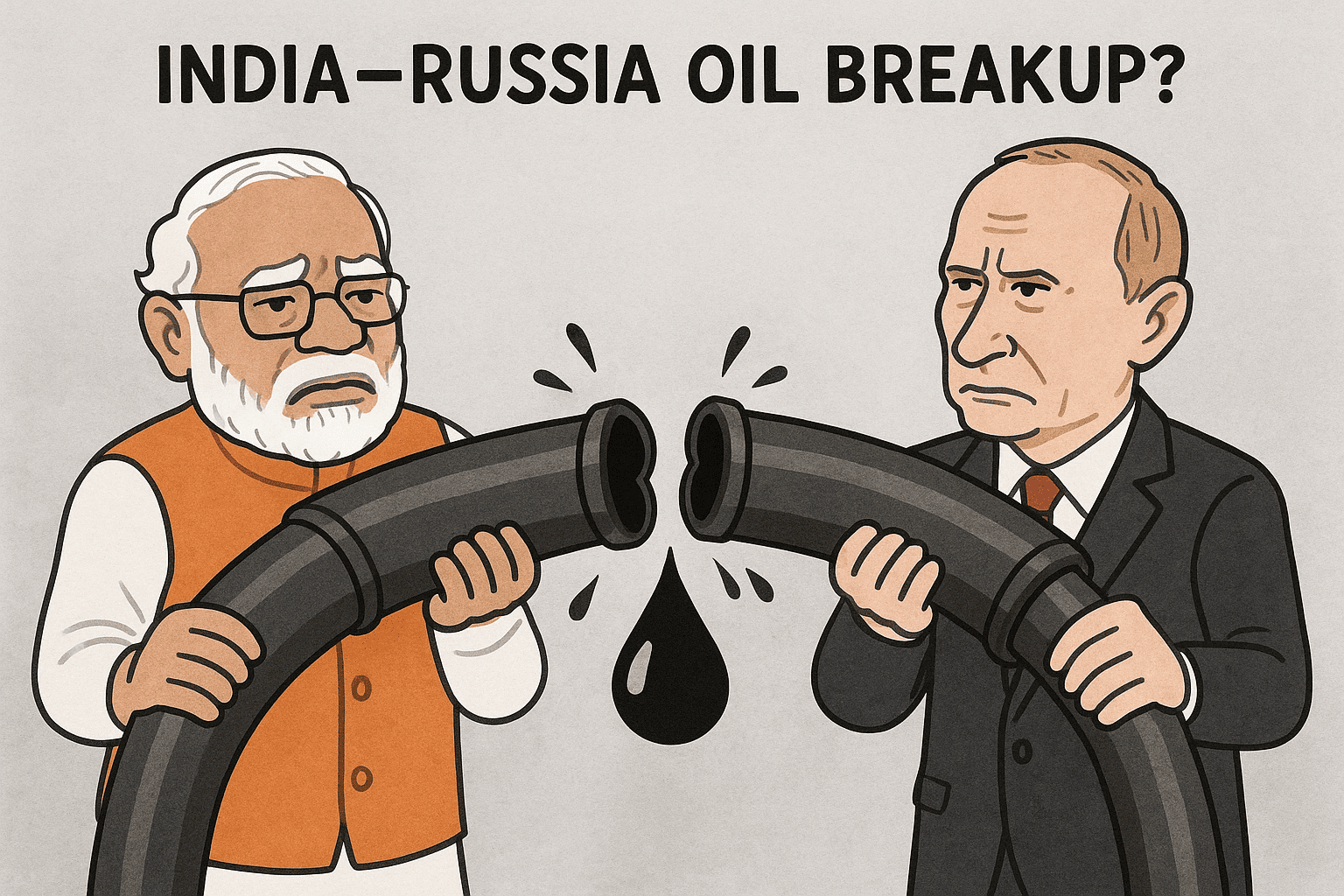
Introduction – The Question on Everyone’s Mind
India’s purchase of Russian oil has been in the spotlight ever since the Ukraine war began and Western nations imposed sanctions on Moscow. For the past two years, India has emerged as one of the largest buyers of Russian crude, benefiting from steep discounts. But what if India decides — or is forced — to stop buying Russian oil? The answer is not just about fuel prices; it is tied to geopolitics, national security, trade balance, and global energy markets.
1. India’s Current Dependence on Russian Oil
Before the war in Ukraine, Russia supplied less than 2% of India’s crude oil imports. Today, that figure has surged to nearly 35–40%, making Russia India’s single largest oil supplier. The reason is simple — price advantage.
- Russian crude is often priced $8–12 per barrel cheaper than Brent or Middle Eastern crude.
- This has allowed India to save billions in import costs, which in turn helps keep domestic fuel prices stable.
If India stops buying from Russia, this massive cost advantage disappears overnight.
2. Immediate Economic Impact
Fuel Prices Could Spike
- Indian refiners will have to source more crude from the Middle East, Africa, or the US — all of which are more expensive.
- Petrol and diesel prices, which have remained relatively stable for months, may increase by ₹5–10 per litre within weeks.
Widening Trade Deficit
- Oil imports already account for a large part of India’s import bill.
- Without Russian discounts, India’s annual import bill could rise by $12–15 billion, worsening the current account deficit and putting pressure on the rupee.
Inflationary Pressure
- Higher transport and manufacturing costs will push food and commodity prices upwards, directly affecting household budgets.
3. Impact on Global Oil Markets
India is not just a big buyer — it’s a price mover.
- If India stops buying from Russia, Moscow will have to find other buyers, possibly offering even steeper discounts to nations like China or Turkey.
- Meanwhile, demand for Gulf oil will rise, pushing up global crude prices.
Ironically, this could also increase fuel costs in Western countries, who initially pushed for sanctions.
4. Geopolitical Consequences
Strained Ties with Moscow
- Russia has been a long-standing defence and strategic partner for India.
- Stopping oil imports may strain relations, possibly impacting defence deals, energy projects, and geopolitical support in forums like the UN Security Council.
Closer US–India Cooperation?
- Washington has repeatedly expressed concerns over India’s oil trade with Russia.
- If India stops buying Russian oil, it could strengthen India–US ties, potentially leading to more trade, investment, and strategic cooperation.
- However, India will also lose an important card in balancing its foreign policy between East and West.
5. Effect on Indian Refining & Re-Export Business
Many Indian refiners process Russian crude and export refined fuels like diesel and jet fuel to Europe and other markets.
- This trade has been highly profitable for India.
- If Russian crude supply is cut, refiners may lose a significant competitive edge.
6. Strategic Risks
Energy Security Concerns
- One key principle of India’s energy policy is diversification of sources. Relying too heavily on any one country is risky, but so is cutting off a major source without a ready replacement.
- Sudden changes could make India more vulnerable to supply shocks and OPEC pricing strategies.
Impact on Rupee Stability
- A higher oil import bill increases demand for US dollars, weakening the rupee.
- A weaker rupee further increases the cost of imports, creating a vicious cycle.
7. Domestic Political Implications
Fuel prices are politically sensitive in India.
- A sudden spike could hurt consumer sentiment, increase living costs, and lead to public dissatisfaction — especially ahead of elections.
- The government may have to increase subsidies to shield consumers, which would strain public finances.
8. Is Stopping Russian Oil Even Realistic?
Completely stopping Russian oil imports is unlikely unless there is extreme international pressure or a major geopolitical shift.
- India’s position so far has been clear and consistent: it will buy oil from any country that offers the best price, as long as it is in the national interest.
- Officials have also argued that India’s per-capita oil consumption is far lower than the West, and therefore it should not be pressured in the same way.
9. The Possible Scenarios
Scenario 1: Gradual Reduction
India slowly reduces Russian imports while increasing purchases from the Middle East and the US.
- Less disruptive, but prices will still rise.
Scenario 2: Sudden Stop
Due to sanctions or political pressure, India halts Russian oil imports immediately.
- Sharp spike in fuel prices, inflation, and trade deficit.
- Could trigger short-term economic slowdown.
Scenario 3: Diversification with Russian Presence
India reduces dependence on Russia but continues partial imports while increasing renewable energy, biofuels, and domestic oil exploration.
Conclusion – Walking the Tightrope
If India stops buying Russian oil, the impact will be multi-layered — from higher fuel prices and inflation to geopolitical realignments. While it could strengthen relations with the US and Europe, it risks damaging ties with Moscow and raising costs for Indian consumers.
For now, New Delhi seems determined to balance diplomacy with economic pragmatism. Until alternative affordable sources are secured, Russian oil is likely to remain an important part of India’s energy mix. The bigger question is not whether India can stop buying Russian oil, but whether it should — and at what cost.
Related Posts



Stay Informed With the Latest & Most Important News
Previous Post
Next Post
Advertisement





Advertisement
