

Now Reading: Why GST Reforms Drive Up Benefits for Small Cars but Leave Luxury Vehicles Behind
-
01
Why GST Reforms Drive Up Benefits for Small Cars but Leave Luxury Vehicles Behind

Why GST Reforms Drive Up Benefits for Small Cars but Leave Luxury Vehicles Behind

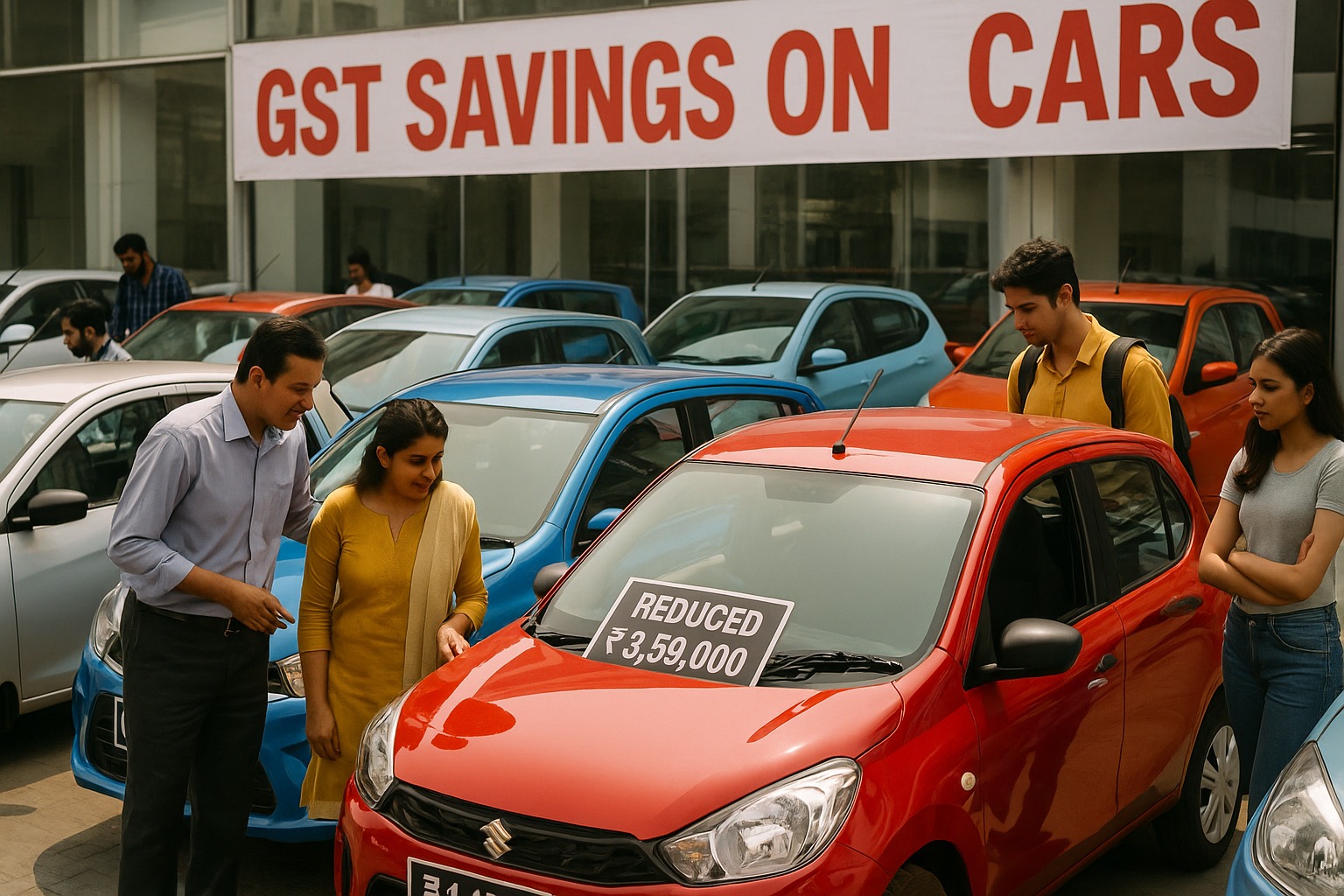
The Government of India’s latest GST reforms have set the automobile industry abuzz. The reforms restructure tax rates in a way that favours small and entry-level cars, while offering limited relief to luxury and high-end models.
For India—a market where over 70% of vehicle sales come from budget-friendly cars—this is a significant policy shift that could change consumer demand, industry strategies, and market dynamics in the years ahead.
Small Cars Get the Big Break
Under the new GST framework, small cars and compact hatchbacks will see reduced tax burdens, directly translating into lower prices. These are cars that form the backbone of India’s automotive market, catering to middle-class families, first-time buyers, and city commuters.
- Cars under 4 meters in length with smaller engine capacities enjoy the sharpest tax cuts.
- Popular models from Maruti Suzuki, Hyundai, and Tata Motors are expected to become more affordable.
- This reduction could boost sales volumes significantly, particularly in Tier-2 and Tier-3 cities.
For automakers, the relief ensures greater mobility penetration across India and opens new opportunities in rural and semi-urban markets.
Why Luxury Cars Don’t Reap Similar Gains
While budget vehicles benefit, luxury cars and SUVs—import-heavy and priced in crores—have not received equivalent concessions. The government maintains higher GST slabs on premium vehicles, citing:
- Revenue Considerations: Luxury cars generate significant tax income.
- Equity in Taxation: Concessions are designed for mass-market mobility, not niche buyers.
- Import Dependence: Luxury models from Mercedes-Benz, BMW, and Audi rely heavily on imports, which remain taxed at higher rates.
In effect, while a hatchback may now be ₹40,000–₹60,000 cheaper, a luxury sedan’s price tag barely shifts.
Consumer Psychology: Why This Matters
The reforms signal government prioritisation of affordability over extravagance.
- Middle-class families feel encouraged to upgrade from two-wheelers to small cars.
- Young professionals see greater accessibility to entry-level vehicles.
- Luxury buyers, often less price-sensitive, are unaffected—but manufacturers face stunted demand in a growing but delicate premium segment.
This divide between affordability and aspiration makes the GST reform socially inclusive but commercially uneven.
Impact on Automakers
Winners: Domestic Giants
Companies like Maruti Suzuki, Tata Motors, Hyundai, and Mahindra benefit directly. With improved affordability, sales volumes for hatchbacks, entry-level sedans, and compact SUVs are expected to rise sharply.
Neutral Players: Luxury Makers
Mercedes-Benz, BMW, Audi, and Volvo face stagnant benefits. Their sales may not rise significantly, forcing them to rethink local assembly strategies to mitigate costs.
Challengers: EV Players
Electric small cars may gain indirectly from the GST shift, as reduced taxes make them competitive against petrol/diesel models.
Wider Economic Implications
- Boost in Car Sales: Increased affordability could spark double-digit sales growth in 2025–26.
- Job Creation: Rising production in India’s auto hubs (Pune, Chennai, Gurugram) would generate thousands of new jobs.
- GST Revenues: While lower taxes reduce per-unit earnings, higher volumes are expected to balance government coffers.
- Environmental Concerns: Cheaper small cars could lead to higher vehicle density, straining urban infrastructure and air quality.
What Experts Say
- Industry Analysts: Applaud the focus on affordability but warn of growing inequality in the auto sector.
- Consumer Forums: Call it a “middle-class victory,” making mobility accessible.
- Luxury Car Executives: Stress that India risks stalling its premium market, which is essential for technological spillovers.
Future Outlook: Small Cars to Dominate, Luxury Cars to Wait
- Expect sales surges in sub-₹10 lakh vehicles over the next year.
- Luxury automakers may push for localised production to lobby for tax relief in future.
- Government could introduce separate EV incentives to balance environment and affordability.
The broader narrative is clear: GST reforms are about mobility for the many, not indulgence for the few.
Related Posts


Stay Informed With the Latest & Most Important News

Advertisement








Advertisement
