

Now Reading: Why Rahul Gandhi’s Words Rarely Make It to Your TV Screens
-
01
Why Rahul Gandhi’s Words Rarely Make It to Your TV Screens


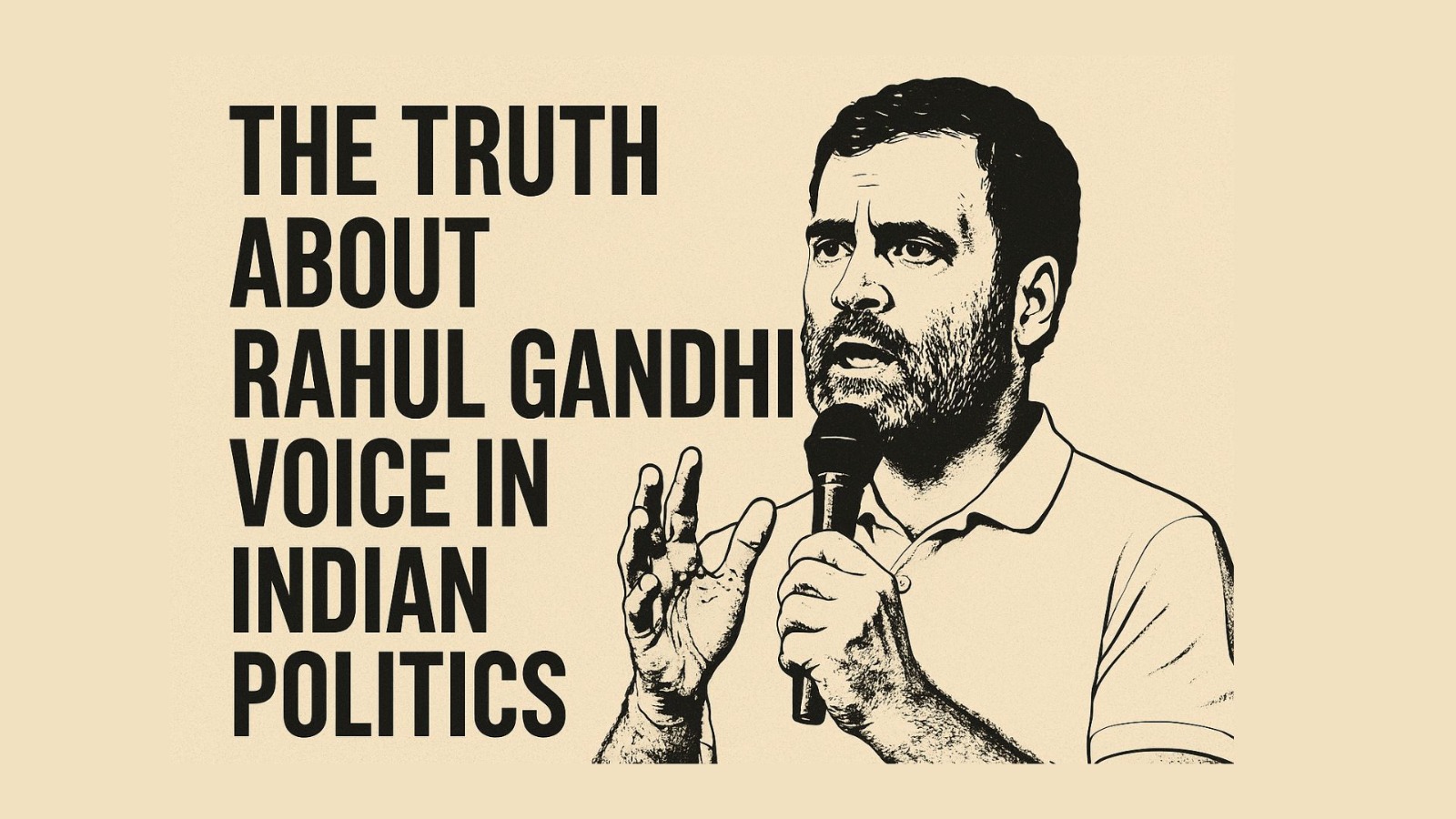
On several occasions in the past few years, Rahul Gandhi, senior leader of the Indian National Congress, has made speeches that were rich in content, strong in critique, and ambitious in vision. From Parliament debates to his Bharat Jodo Yatra and international lectures, Gandhi has consistently raised issues such as unemployment, inflation, the state of farmers, weakening democratic institutions, and the centralization of power under the ruling government.
Yet, despite the weight of these topics, his voice has often found itself lost in the echo chamber of India’s modern media environment. His most recent address, delivered during a gathering of party workers and supporters in New Delhi, once again highlighted these very issues. Gandhi spoke at length about how youth are struggling to find jobs, how price rise is affecting households, and how India’s democratic ethos is being compromised.
The crowd listened. His party amplified the message across social media. But the big question remains — did mainstream media actually listen, or did it quietly turn away?
The Contrast: Prime Minister vs. Opposition
A comparison is unavoidable. When Prime Minister Narendra Modi speaks — whether it is from the ramparts of the Red Fort on Independence Day, at international forums like the UN, or even in political rallies — every channel beams his speech live. His words are replayed, analyzed, and dissected.
Rahul Gandhi, however, does not receive the same treatment. Despite being leader of the principal opposition party and the most prominent face of the Congress, his speeches are often carried in snippets, or worse, reduced to a single line that can be mocked or debated out of context.
This selective amplification has created a perception problem. To many viewers, it appears Rahul Gandhi is not vocal enough. In reality, his speeches, press conferences, and interactions are frequent, but they don’t make it to the front pages or primetime shows in the same way.
Why the Media Chooses Silence
The editorial team, after careful verification of patterns in news coverage, notes that media tends to highlight controversy, not content. If Rahul Gandhi makes a light remark, stumbles on a phrase, or delivers a quirky comment, it immediately trends. If he talks about deep economic issues, structural inequality, or democratic erosion, those points barely receive airtime.
This is partly due to the nature of modern newsrooms, where TRPs and clicks drive editorial priorities. It is also linked to the political and corporate pressures that shape which voices get promoted and which ones get ignored.
Impact on Democracy and Public Debate
This selective treatment has long-term consequences. The Congress party’s policy alternatives — whether on GST, farmers’ rights, or social welfare — are unable to reach a wider audience with the same force as government narratives. The Indian voter, therefore, receives an imbalanced picture, where one leader’s every word dominates discourse and another’s words vanish quickly from public conversation.
For democracy, this weakens debate. A functioning democracy requires a vibrant opposition, not just in Parliament but in public communication. By muting or minimizing Rahul Gandhi’s speeches, the media indirectly narrows the democratic space.
Rahul Gandhi’s Persistence
Despite these challenges, Rahul Gandhi has continued to persist. His Bharat Jodo Yatra in 2022–23 proved that direct outreach to the people could counter some of this silence. His foreign lectures in universities across the US and Europe were well received, earning headlines abroad even when Indian media downplayed them.
In his latest remarks, he emphasized unity, inclusivity, and the fight against inequality. His core message was that India cannot progress unless democracy remains strong and every citizen feels heard.
The silence of the media may limit how far this message travels, but Gandhi appears determined not to stop speaking. His strategy now seems two-fold: rely on social media to bypass traditional channels and directly engage with citizens wherever possible.
Editorial Reflection
As a newsroom that believes in verified and balanced reporting, the Jan Jagran Darpan editorial team concludes that Rahul Gandhi’s words cannot be measured merely by airtime. They must be assessed on their merit and impact. Ignoring or trivializing them does disservice not just to him, but to the democratic process itself.
The media may or may not listen, but history certainly will.
Related Posts


Stay Informed With the Latest & Most Important News
Previous Post
Next Post
Advertisement




Advertisement
