

Now Reading: “My Dead Mother Was Abused”: PM Modi Targets Rahul Gandhi and Tejashwi Yadav Amid Bihar Election Heat
-
01
“My Dead Mother Was Abused”: PM Modi Targets Rahul Gandhi and Tejashwi Yadav Amid Bihar Election Heat

“My Dead Mother Was Abused”: PM Modi Targets Rahul Gandhi and Tejashwi Yadav Amid Bihar Election Heat

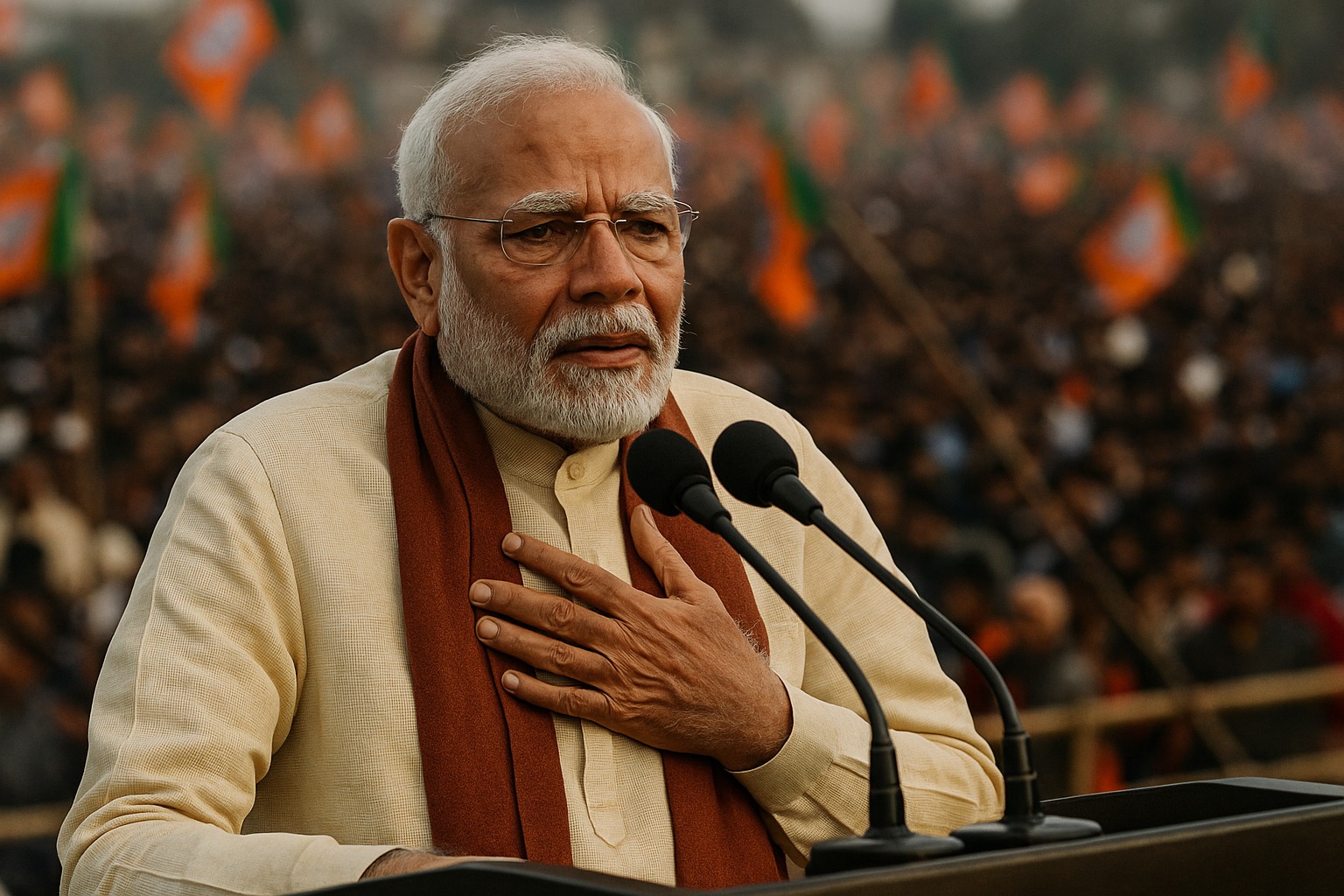
The political battleground in Bihar has turned more intense after Prime Minister Narendra Modi launched a scathing attack on Congress leader Rahul Gandhi and Rashtriya Janata Dal (RJD) leader Tejashwi Yadav. Speaking at an election rally, PM Modi accused opposition leaders of insulting his late mother, Hiraben Modi, from the stage of a joint RJD-Congress platform.
This statement has stirred a major political storm, with both the ruling and opposition camps exchanging sharp words as Bihar heads closer to its crucial 2025 Assembly Elections.
The Prime Minister’s Statement: A Personal Attack
Addressing a massive gathering of supporters in Bihar, PM Modi said: “My mother passed away last year. Even after her death, leaders of Congress and RJD insulted her from their stage. They abused a dead mother. This shows the level of politics they are doing.”
By invoking the memory of his late mother, Hiraben, who passed away in December 2022, PM Modi turned the campaign narrative deeply personal. His remarks were met with chants from the crowd, as he accused the opposition of crossing all limits of political decency.
Targeting Rahul Gandhi and Tejashwi Yadav
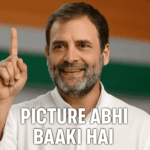
PM Modi’s sharp words were specifically directed at Rahul Gandhi and Tejashwi Yadav, who recently shared a stage in Bihar as part of the opposition’s campaign strategy. According to the Prime Minister, it was from this very platform that derogatory remarks were made against his mother.
While he did not quote the exact words used, Modi emphasized that such behavior reveals the character of the INDIA bloc, a coalition that includes the Congress and the RJD. He argued that when leaders stoop to insulting a deceased parent, it reflects their “bankruptcy of ideas and values.”
The Broader Political Context
The statement comes at a time when Bihar has become the epicenter of national politics. With elections just months away, every remark by major leaders is being closely scrutinized.
- The BJP-led NDA is attempting to consolidate its support base by projecting PM Modi as the face of development and stability.
- The opposition INDIA bloc, led by Congress and RJD in Bihar, is positioning itself as a united force against the ruling coalition.
By accusing Rahul Gandhi and Tejashwi Yadav of disrespecting his mother, Modi sought to turn the emotional tide in NDA’s favor, presenting himself as a leader who values family and culture while contrasting it with the opposition’s alleged lack of respect.
Why Hiraben’s Memory Matters in Modi’s Politics
Hiraben Modi, who lived a simple life in Gujarat, has often been part of Modi’s public narrative. He has spoken about how her values shaped his journey, emphasizing her humility and resilience.
Invoking her now in the context of an insult serves two purposes:
- Emotional Connect – It resonates with voters who respect family ties and cultural traditions.
- Moral Positioning – By portraying the opposition as insulting a deceased woman, Modi positions himself as morally superior, defending family honor.
This emotional appeal has historically worked in Indian politics, where leaders often use personal experiences to connect with the masses.
Opposition’s Stand and Counter-Narrative
While PM Modi’s statement has grabbed headlines, the Congress and RJD are expected to issue their counters. Opposition leaders have in the past accused the BJP of twisting statements or selectively quoting remarks for political mileage.
Tejashwi Yadav has often highlighted BJP’s failures in Bihar—unemployment, poverty, and rising prices—arguing that Modi shifts debates toward emotional issues whenever cornered on governance.
Rahul Gandhi, meanwhile, continues to push his message of “nyay” (justice) for youth and farmers, accusing the Modi government of ignoring the poor while favoring big corporates.
This clash of narratives sets the stage for an emotionally charged election season.
The Role of Emotional Politics in Bihar
Bihar is known for its complex caste-based and personality-driven politics. Leaders often use both identity and emotion to influence voters. By raising the issue of his late mother’s insult, PM Modi is playing directly into the cultural ethos of Bihar, where respect for elders, especially mothers, carries deep significance.
Political analysts believe this could become a turning point in the campaign, shifting attention away from bread-and-butter issues like unemployment and governance to emotional loyalty and morality.
Impact on Bihar Voters
The big question remains: how will voters perceive this development?
- Sympathy Factor – Many rural voters may resonate with Modi’s pain, seeing the opposition as disrespectful.
- Backlash Possibility – On the other hand, if the opposition convincingly argues that Modi is misrepresenting their words, some sections could view this as diversionary politics.
- Polarization of Debate – Instead of focusing on jobs, education, and development, the election debate may now revolve around personal attacks and dignity.
In Bihar’s unpredictable political landscape, even a single emotional trigger can swing large chunks of voter sentiment.
PM Modi’s Larger Election Strategy
The Prime Minister’s statement also fits into his broader election communication strategy. Over the past decade, Modi has frequently positioned himself as a leader connected to ordinary Indians through his personal struggles and family background.
- By invoking his tea-seller childhood, he appealed to the masses.
- By highlighting his mother’s humble life, he connected with traditional values.
- Now, by claiming she was insulted even after her death, he turns this into a question of cultural morality—an issue that cuts across caste and class divisions in Bihar.
This narrative strengthens Modi’s positioning as a victim of opposition’s arrogance while reinforcing his image as a protector of family honor.
Reactions Across the Political Spectrum
Political reactions to PM Modi’s remarks have been swift:
- BJP leaders defended Modi’s words, accusing the opposition of abandoning decency in politics.
- Opposition leaders questioned Modi’s timing, suggesting that such remarks are meant to distract voters from real issues.
- Social media erupted, with hashtags like #MyMotherAbused and #BiharElections2025 trending, reflecting the polarization of opinions.
For both camps, this controversy has become a rallying point—either as an example of emotional exploitation or as a genuine case of insult.
What Lies Ahead
As Bihar’s election campaign heats up, this controversy is unlikely to fade quickly. PM Modi’s statement ensures that his late mother’s memory will remain a central theme in political debates. For the BJP, it may energize cadres and build emotional connect. For the opposition, it presents both a challenge and an opportunity: to defend itself while redirecting attention to governance issues.
With every speech and counter-speech, Bihar’s political landscape is becoming more charged, setting the stage for one of the most emotionally volatile elections in recent history.
Conclusion
Prime Minister Modi’s declaration that his late mother was abused from an opposition stage has injected a highly emotional element into the Bihar election narrative. Whether it wins sympathy for the ruling NDA or backfires as an emotional diversion will depend on how voters perceive the sincerity of the claim.
But one fact is clear: the battle of Bihar is no longer just about development and policies—it has now entered the deeply personal realm of dignity, family, and cultural respect.
The Editorial Team of Behind The Headlines will continue to monitor this fast-developing story and bring fact-verified updates on every twist and turn of the Bihar election drama.
Related Posts


Stay Informed With the Latest & Most Important News
Previous Post
Next Post

Advertisement





Advertisement
