Now Reading: Trump Says He Is Not Considering Lowering Tariffs on India Imports: What It Means for Trade, Economy, and Diplomacy
-
01
Trump Says He Is Not Considering Lowering Tariffs on India Imports: What It Means for Trade, Economy, and Diplomacy

Trump Says He Is Not Considering Lowering Tariffs on India Imports: What It Means for Trade, Economy, and Diplomacy

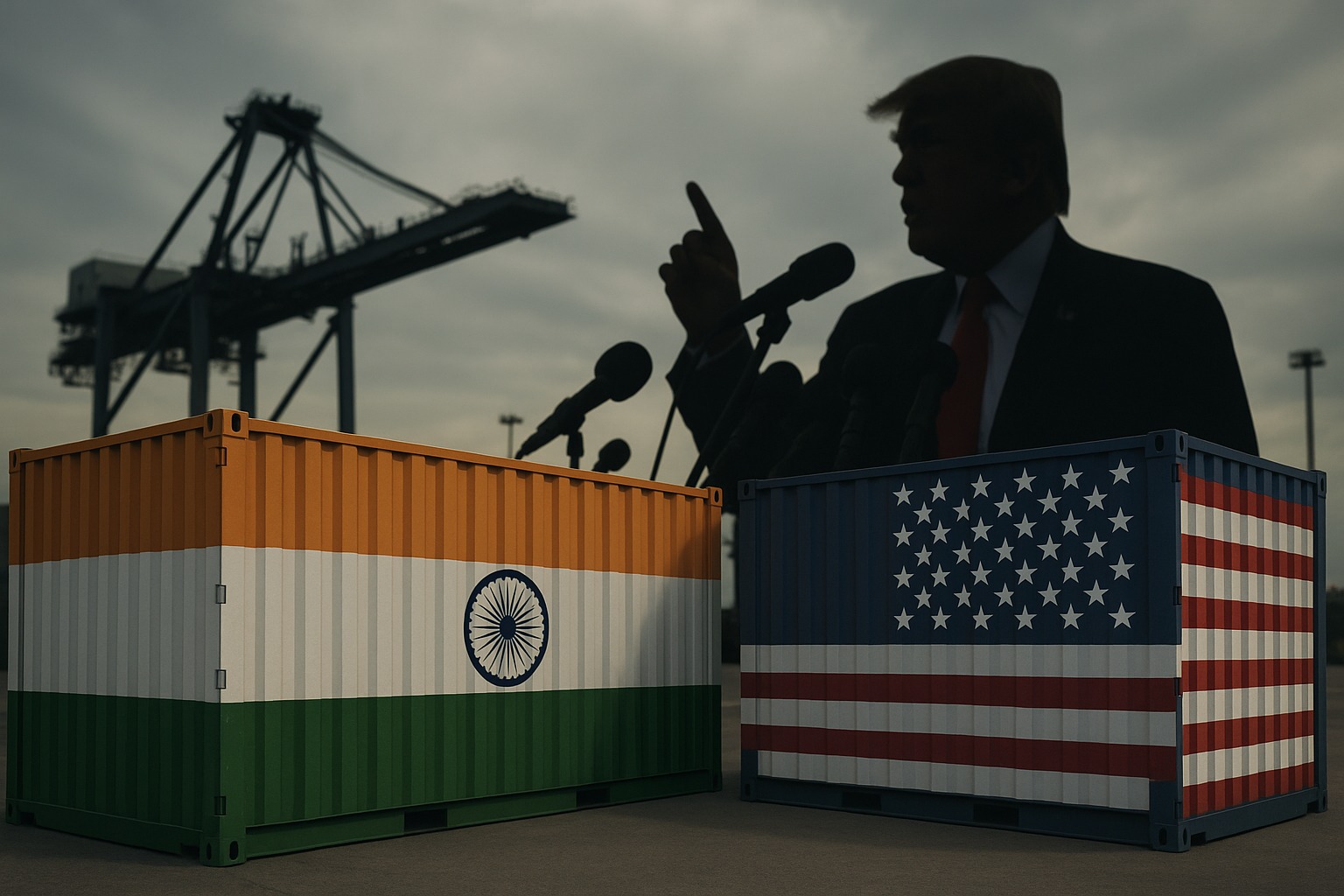
In a statement that could have significant implications for global trade, former US President Donald Trump has clarified that he is not considering any reduction in tariffs on imports from India. His remarks come amid heightened concerns about trade barriers, global economic slowdowns, and shifting geopolitical alliances.
For India, one of America’s largest trading partners, this signals a challenging road ahead in managing its export-driven industries and sustaining growth in key sectors like pharmaceuticals, textiles, information technology, and steel.
The Editorial Team of Behind The Headlines examines the context, the economic impact, and the diplomatic consequences of Trump’s stance on tariffs.
Trump’s Tariff Position: A Clear Stand
Speaking to reporters, Trump dismissed speculation that his administration or political circle was considering tariff relief for Indian goods.
“We are not lowering tariffs on India imports,” Trump said. “America needs fair trade, not one-sided deals that hurt our workers.”
This statement reinforces his long-standing “America First” trade philosophy, which has shaped his policies since his first term in office. Trump’s strategy has consistently focused on protecting American manufacturing and reducing trade deficits, even at the cost of straining ties with allies and partners.
The Background: US-India Trade Frictions
The US and India share a robust economic relationship, with bilateral trade crossing $190 billion in recent years. Yet, the partnership has also faced friction:
- In 2019, the US revoked India’s preferential trade status under the Generalized System of Preferences (GSP), which had allowed duty-free exports on certain products.
- The Trump administration imposed tariffs on steel and aluminum imports, directly impacting Indian exporters.
- India responded with retaliatory tariffs on American goods such as almonds, apples, and walnuts.
Though both sides continued negotiations, tariff tensions became a recurring theme in the trade dialogue.
Why Tariffs Matter for India
India exports a wide range of products to the US, many of which are labor-intensive and provide millions of jobs domestically. The sectors most affected by high tariffs include:
- Textiles and Apparel – One of India’s biggest export earners.
- Pharmaceuticals – Generics supply a major chunk of the American drug market.
- Steel and Aluminum – Already hit by US duties in earlier years.
- IT Services – Though less affected by tariffs, services trade often becomes entangled in larger disputes.
If tariffs remain high, Indian exporters could lose competitiveness to countries with more favorable trade terms.
Impact on Indian Economy
The continuation of tariffs on Indian imports carries several implications:
- Export Competitiveness
Indian goods become costlier in the American market, making it harder to compete with rivals like Vietnam, Bangladesh, and Mexico. - Pressure on Employment
Sectors like textiles and small manufacturing, which employ millions, could face job cuts if exports decline. - Foreign Exchange Earnings
With exports slowing, India risks losing valuable foreign exchange inflows, affecting the balance of payments. - Investment Climate
Global investors track tariff disputes closely. Higher tariffs create uncertainty, discouraging fresh investments in export-oriented sectors.
Impact on US Economy
While tariffs are meant to protect American workers, economists point out that they also:
- Raise costs for American businesses that rely on Indian raw materials.
- Lead to higher prices for consumers, particularly in categories like apparel and pharmaceuticals.
- Risk retaliation, which can hurt US agricultural exports.
Thus, Trump’s stance may resonate politically with certain voter bases but carries long-term risks for American businesses.
Diplomatic Consequences
India and the US have deepened their strategic partnership over the years, especially in defense, technology, and counterterrorism cooperation. However, trade disputes often act as irritants in the relationship.
- India has sought greater access to the American market, especially for its pharmaceuticals and agricultural products.
- The US has pushed India to reduce tariffs on American goods like motorcycles, medical devices, and agricultural commodities.
Trump’s refusal to ease tariffs signals a harder bargaining position, potentially complicating the trade negotiations that India has been pursuing with Washington.
Geopolitical Angle: India’s Balancing Act
At a time when India is being courted as a counterweight to China, Trump’s stance adds complexity.
- India may be encouraged to diversify its trade partnerships, strengthening ties with the EU, ASEAN, and BRICS partners.
- The risk is that Washington’s rigidity could push India closer to alternative trade blocs led by China and Russia.
- Given global uncertainties, India will have to balance its strategic partnership with the US against the need for economic flexibility.
Voices from Industry
Indian trade associations have reacted with concern:
- Textile exporters warn that continued high tariffs could cut into profit margins and reduce orders from US buyers.
- Pharma industry leaders argue that tariffs on essential medicines ultimately hurt American consumers by driving up drug prices.
- Steel producers demand more support from the Indian government to offset tariff losses.
Meanwhile, business chambers in the US caution that restricting Indian imports could hurt American supply chains, especially in sectors like IT and healthcare.
Expert Opinions
Trade analysts suggest that Trump’s tariff stance is aimed more at domestic political messaging than at India specifically. However, they also caution that India cannot afford to ignore the risk.
- Some experts argue that India should aggressively pursue bilateral free trade agreements with other economies to offset American restrictions.
- Others believe that India-US negotiations will continue, with tariffs being used as leverage in larger discussions on trade and investment.
The Road Ahead
The path forward is uncertain, but several scenarios are possible:
- Status Quo Maintained – Tariffs remain unchanged, India absorbs the costs and seeks alternative markets.
- Negotiated Relief – Under pressure from American businesses, Washington may eventually ease some tariffs.
- Escalation – If India retaliates with higher duties on US goods, the trade dispute could escalate.
Whatever the outcome, both nations must recognize that a prolonged tariff battle undermines the larger goal of building a robust strategic partnership.
Conclusion
Donald Trump’s declaration that he is not considering lowering tariffs on Indian imports underscores his protectionist trade approach. While the stance may appeal to his political base, it poses challenges for India’s exporters and risks complicating the broader US-India relationship.
As India prepares for the future, it must diversify trade ties, support affected industries, and maintain diplomatic dialogue with Washington to ensure that strategic cooperation is not derailed by economic disputes.
The Editorial Team of Behind The Headlines will continue monitoring this story, providing fact-verified updates on its economic and diplomatic impact.
Related Posts


Stay Informed With the Latest & Most Important News
Previous Post
Next Post


Advertisement