

Now Reading: Dependence on other countries India’s biggest challenge, says PM Modi
-
01
Dependence on other countries India’s biggest challenge, says PM Modi


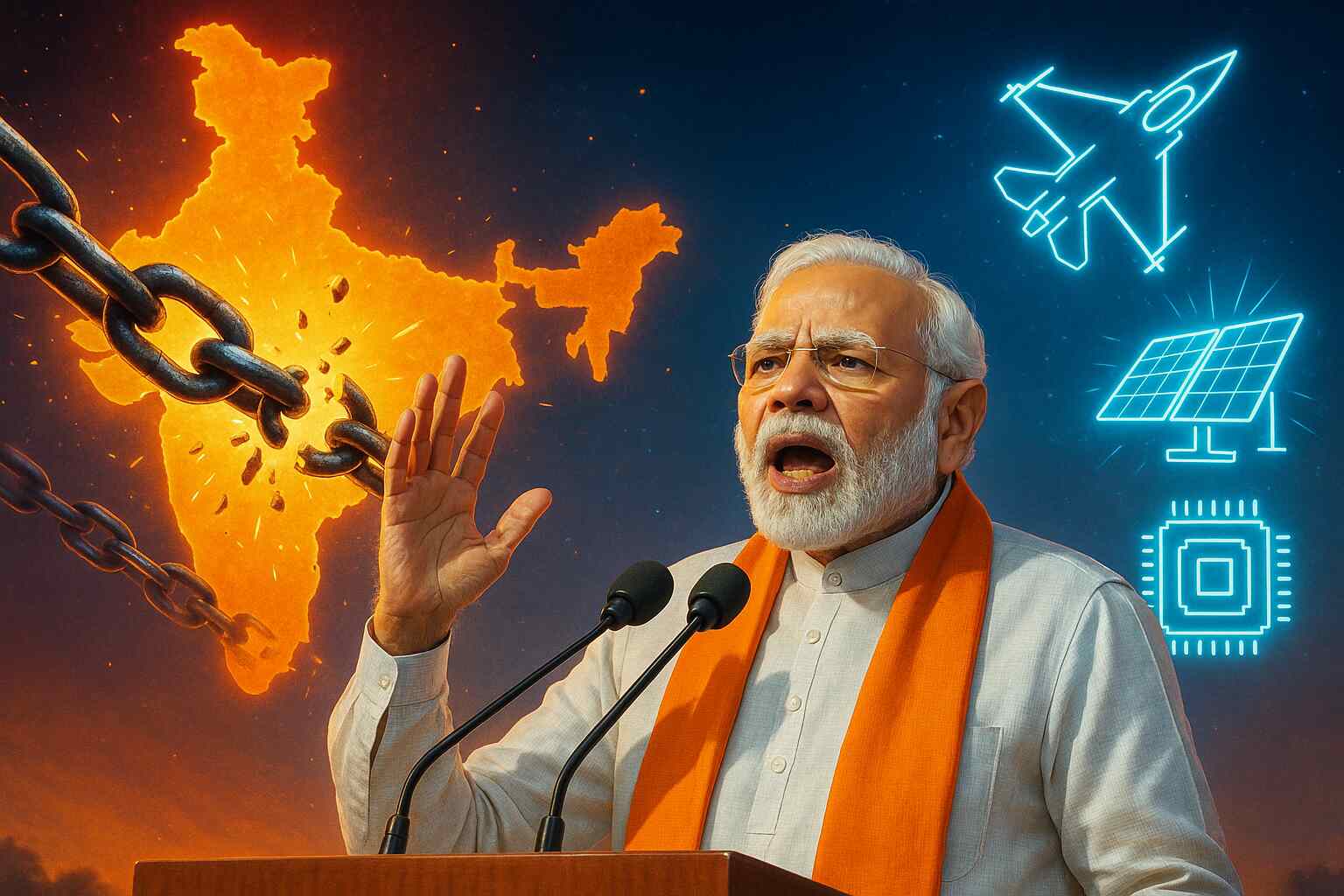
Prime Minister Narendra Modi has once again underlined a recurring theme in his vision for India: self-reliance. Speaking at a public address, he stressed that dependence on other nations is India’s “main enemy,” one that weakens economic sovereignty and limits the nation’s true potential. His statement comes at a time when global uncertainties—from supply chain disruptions to energy crises—have exposed the vulnerabilities of nations that rely heavily on imports.
India, the world’s fifth-largest economy, has been striving to cut down external dependence in critical areas such as defense, technology, and energy. Modi’s remarks highlight the urgency to accelerate this push for Atmanirbharta (self-reliance), a policy that has been central to his government’s agenda since 2020.
The core of Modi’s message
PM Modi’s comment was not just a passing remark but a strategic warning. According to him, dependence—whether on imported oil, foreign technology, or global financial systems—creates invisible chains that can restrict India’s growth. By reducing this dependence, India can ensure resilience against external shocks, build jobs at home, and strengthen its global bargaining power.
Self-reliance in defense
India has traditionally been one of the world’s largest arms importers. Modi argued that this dependence is unsustainable for a nation facing multiple security challenges. The push for indigenous defense manufacturing has already led to major projects such as the Tejas fighter jets and locally produced drones. The government has also restricted imports of nearly 400 defense items to encourage local industries.
Read our detailed report on India’s indigenous defense production push
Technology and digital sovereignty
Another area of concern Modi highlighted is technology. From semiconductors to telecom equipment, India continues to rely heavily on imports. The Prime Minister stressed the need to build India’s own semiconductor ecosystem and strengthen indigenous tech start-ups. Without this, he warned, India risks being caught in global tech wars without the power to decide its own digital future.
How India’s chip mission is shaping the digital future
Energy independence as a pillar
India imports more than 80% of its crude oil, leaving the economy exposed to volatile global prices. Modi said energy security must come from investments in renewable sources like solar, wind, and green hydrogen. The push for electric vehicles and domestic refining capacity is part of this roadmap.
Analysis: Why the warning matters now
Global geopolitics is shifting. The Russia-Ukraine war and tensions in West Asia have rattled supply chains. At the same time, US-China tech wars have shown how economic dependence can turn into political leverage. Modi’s remarks can be read as a call to prepare India for a world where self-reliance is not a choice, but a survival strategy.
Reactions from experts
Economists say Modi’s call reflects a global trend of nations securing their own supply chains. However, critics argue that self-reliance should not turn into isolationism. India must balance domestic manufacturing with global partnerships.
Bigger picture
Modi’s words reflect an aspiration to transform India into a manufacturing and innovation hub that does not merely consume but creates global value. The coming years will determine whether India can truly break free from its long-standing dependence.
Conclusion
PM Modi’s remark that “dependence is India’s main enemy” is more than political rhetoric. It is a reminder of the stakes in a changing world order. For India, the journey to self-reliance is not only about pride—it is about survival, growth, and global leadership.
Related Posts


Stay Informed With the Latest & Most Important News
Previous Post
Next Post

Advertisement



Advertisement
