

Now Reading: Sonam Wangchuk, Pak Link Allegations Rock Ladakh Protests: DGP’s Explosive Claim
-
01
Sonam Wangchuk, Pak Link Allegations Rock Ladakh Protests: DGP’s Explosive Claim

Sonam Wangchuk, Pak Link Allegations Rock Ladakh Protests: DGP’s Explosive Claim

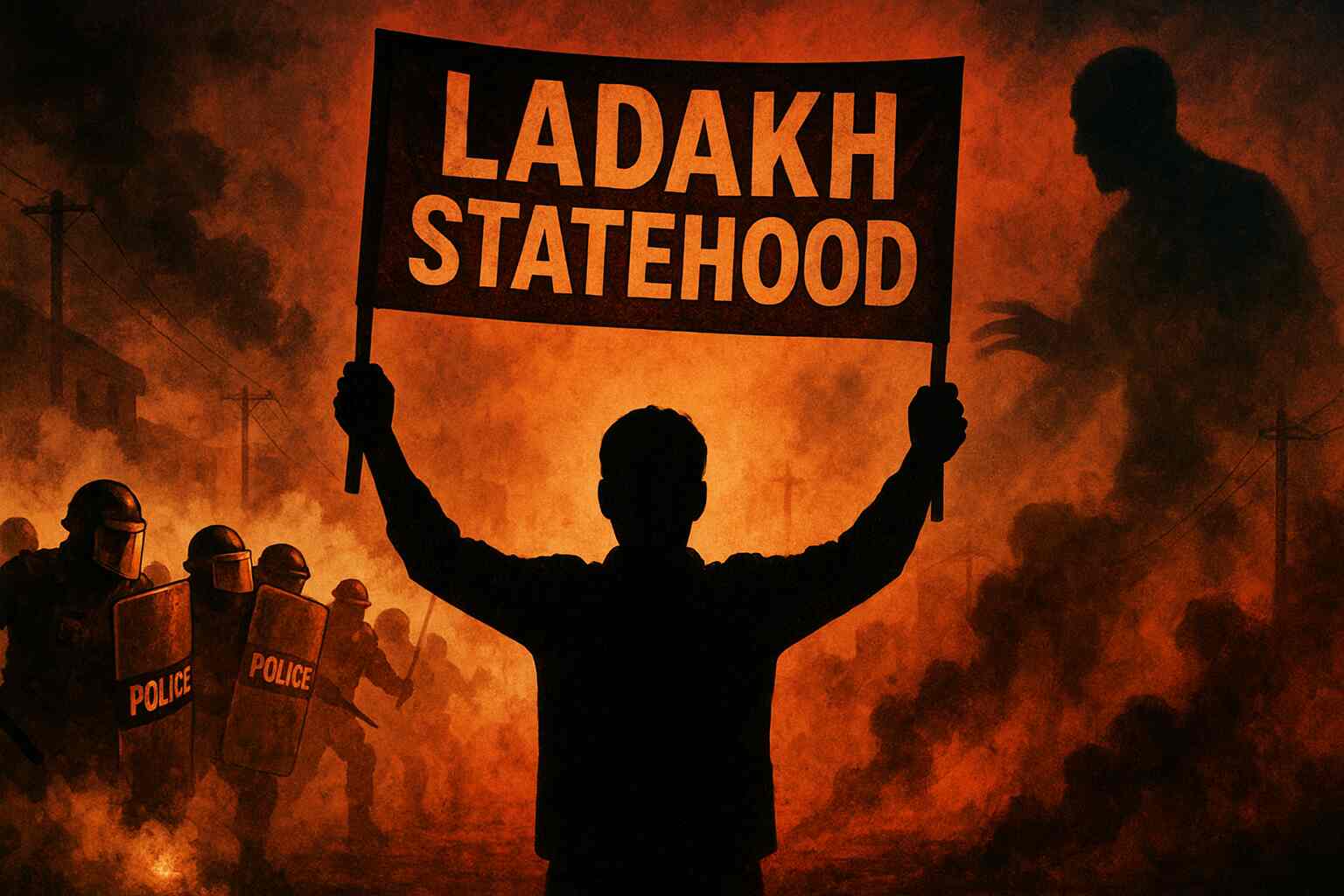
The ongoing unrest in Ladakh took a dramatic turn after the region’s Director General of Police (DGP) alleged that prominent climate activist and education reformer Sonam Wangchuk had attempted to derail peace talks while staying in contact with an arrested Pakistani intelligence operative. The revelation has added a fresh layer of complexity to the already volatile situation, with allegations of cross-border influence now being tied to local protests over statehood and autonomy.
Authorities maintain that these links pose a serious security concern, as the protests have recently escalated into stone-pelting, torching of vehicles, and violent clashes. The development raises troubling questions about the fine line between activism, separatist demands, and external manipulation.
Background: Ladakh’s statehood movement
For months, Ladakh has witnessed an intensifying demand for full statehood and constitutional safeguards under the Sixth Schedule. Protesters argue that Ladakh’s unique ecological, cultural, and strategic position requires stronger legal protections against unregulated development and demographic shifts.
Earlier demonstrations were largely peaceful, but in recent weeks they turned violent, forcing the imposition of curfew and deployment of additional forces. The BJP office in Leh was also set on fire amid mounting anger, highlighting the sharp disconnect between local demands and government responses.
(Also read: India imposes curfew in Ladakh after violent protests)
DGP’s allegations against Sonam Wangchuk
At a press briefing, the Ladakh DGP claimed that Wangchuk was actively involved in derailing the peace process, adding that his movements and communications were being closely tracked. According to police officials, Wangchuk was allegedly in touch with a Pakistani intelligence operative who was recently arrested during the unrest.
The DGP further alleged that coordinated acts of violence—including stone pelting and arson—were not spontaneous but influenced by outside elements. If proven, these claims could shift the narrative from local grievances to a matter of national security.
Who is Sonam Wangchuk?
Sonam Wangchuk is internationally known for his work in sustainable education and environmental innovation, including the Ice Stupa project. Over the years, he has also emerged as a strong voice for Ladakh’s cultural preservation and ecological rights.
While he commands wide respect both in India and abroad, his increasing political activism has put him at odds with government authorities. Allegations of foreign links, however, represent the most serious charges against him so far.
The Pakistan connection: What is known so far
Police sources claim that a Pakistani-origin intelligence operative was detained in Ladakh recently, and preliminary investigations suggest that there were digital traces connecting the operative to Wangchuk’s circle. The DGP did not disclose the full nature of these communications but stated that evidence was being analyzed for possible charges under national security laws.
This angle, if substantiated, could not only weaken the legitimacy of the statehood movement but also provide the government grounds for a tougher crackdown on protests.
Political reactions and public divide
The allegations have triggered sharp political responses. Government representatives argue that the revelations prove their warnings about external forces fueling unrest were correct. Critics, however, accuse the administration of attempting to discredit a popular activist to suppress legitimate democratic demands.
Public opinion in Ladakh appears divided: while some see Wangchuk as a victim of political targeting, others are concerned that foreign links—if proven—would compromise the region’s stability and aspirations.
(Related: Gen Z protests in Leh explained in 10 points)
The bigger security picture
Ladakh’s strategic importance cannot be overstated. Situated along sensitive borders with both China and Pakistan, any unrest in the region carries national security implications. Allegations of cross-border influence add urgency to concerns already heightened by recurring skirmishes at the Line of Actual Control (LAC) with China.
By framing the unrest in terms of foreign interference, authorities may attempt to reorient the debate from constitutional safeguards to counter-terrorism and intelligence.
Impact on Ladakh’s statehood demand
The statehood movement now faces a crucial credibility test. If the claims against Wangchuk gain traction, the movement risks being painted as externally manipulated rather than locally driven. This could dilute support from national political allies and weaken the negotiating position of protest leaders.
For protesters, the challenge lies in dissociating their core demands from individuals accused of controversial links, while maintaining pressure on the government for genuine dialogue.
International attention on Wangchuk
Given Wangchuk’s reputation as an internationally recognized activist, the allegations are likely to attract global scrutiny. Foreign media outlets may frame the development either as a crackdown on dissent or as a legitimate counter-intelligence measure, depending on how evidence is presented.
The international spotlight could therefore complicate both India’s diplomatic messaging and Ladakh’s local activism.
Conclusion: A turning point in Ladakh’s unrest
The DGP’s claims against Sonam Wangchuk mark a potential turning point in Ladakh’s unfolding crisis. If proven, they could redefine the protests as a matter of national security rather than democratic rights. If not, the credibility of law enforcement could face serious backlash.
Either way, the allegations highlight the fragile balance between activism, governance, and geopolitics in Ladakh—a region whose importance extends far beyond its borders.
Related Posts



Stay Informed With the Latest & Most Important News
Previous Post
Next Post


Advertisement





Advertisement
