

Now Reading: India’s Silent Poison: Inside the System That Keeps Failing Its Children
-
01
India’s Silent Poison: Inside the System That Keeps Failing Its Children

India’s Silent Poison: Inside the System That Keeps Failing Its Children

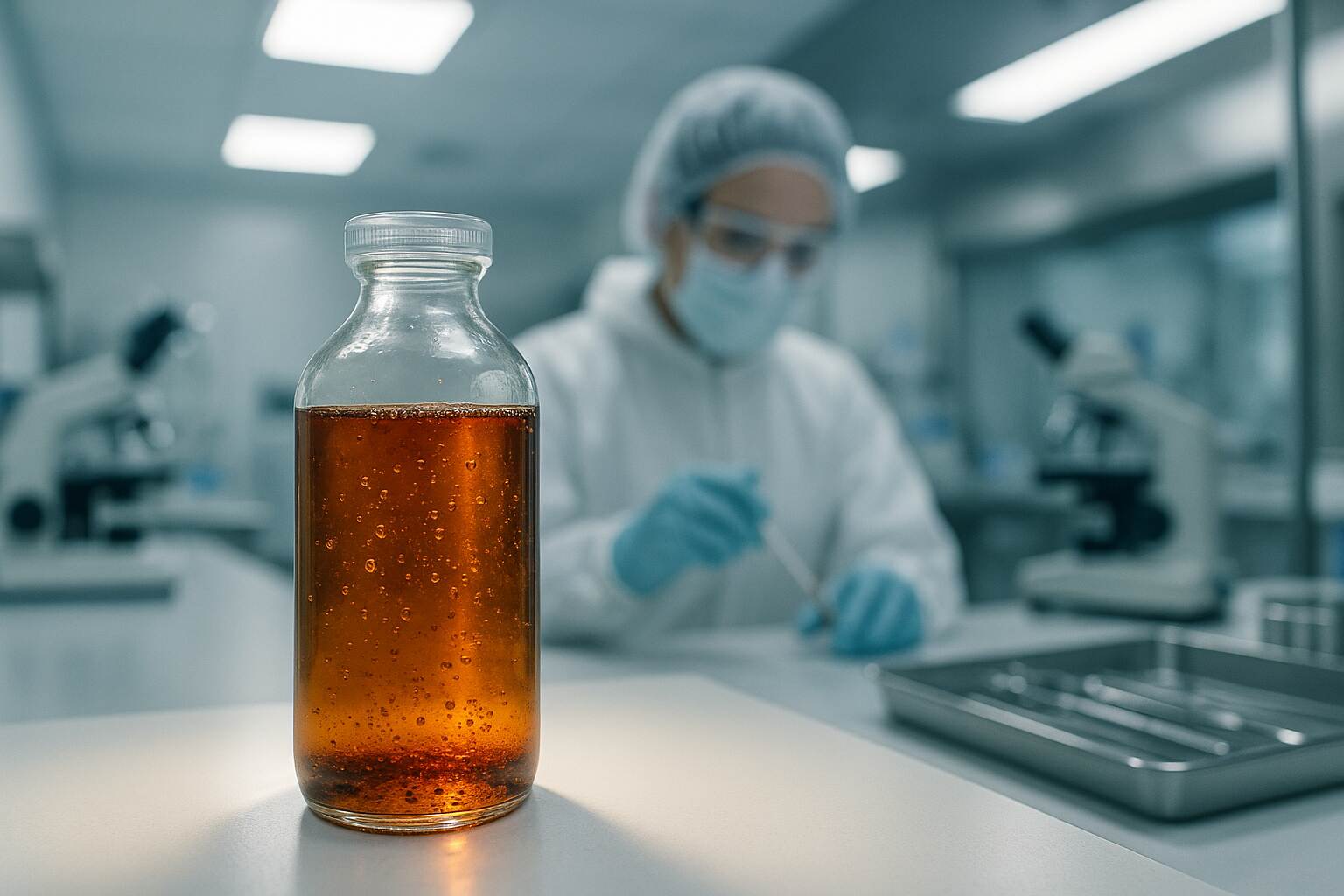
Across small towns and faraway nations, a familiar tragedy keeps repeating — children dying after consuming cough syrups made in India. Each time, the outrage is loud, the investigations delayed, and the system moves on until another disaster strikes. Behind the silence of policy briefings and lab reports lies a crisis that has made India’s vast pharmaceutical industry face an uncomfortable truth: it has built the world’s “pharmacy,” but one that often forgets to check what it sells.
In recent years, incidents from Gambia to Uzbekistan and now Madhya Pradesh have brought India’s drug safety to the global spotlight. The deaths linked to toxic cough syrups show a pattern of weak testing, poor regulatory oversight, and blurred accountability between government departments and private manufacturers. The tragedy is not just about failed bottles of medicine; it is about a public health system unable to protect its youngest citizens.
The Madhya Pradesh Tragedy
In September 2025, a cluster of child deaths in Madhya Pradesh once again raised questions about the safety of over-the-counter syrups. Local hospitals in Morena and Gwalior reported that several children developed severe kidney damage after consuming a cough syrup later found to contain diethylene glycol (DEG) and ethylene glycol — industrial solvents used in brake fluid. For the families, the medicine was meant to ease a seasonal cough. Instead, it became a poison.
Health officials sealed the factory in Indore that supplied the syrup and suspended its license. But as always, action came after loss. For weeks, state laboratories had no updated testing reports because of equipment delays and bureaucratic backlogs. By the time samples were confirmed as toxic, the medicine had already reached hundreds of pharmacies.
Global Echoes from Gambia and Uzbekistan
This story is painfully similar to what the world witnessed in Gambia in 2022 and Uzbekistan in 2023. In Gambia, 70 children died after consuming cough syrups exported from India’s Maiden Pharmaceuticals. In Uzbekistan, at least 65 deaths were linked to a similar product from another Indian firm, Marion Biotech. Both cases involved the same deadly chemicals — diethylene glycol and ethylene glycol — which damage kidneys and block urine output.
The World Health Organization issued global alerts, banning the products and warning of “unacceptable levels of contamination.” These deaths shook India’s global image as a reliable generic medicine supplier. For decades, India had proudly carried the title of “pharmacy of the world.” But these tragedies revealed what many insiders already knew — that the regulatory network overseeing the country’s 10,000-plus drug manufacturers is stretched, fragmented, and often reactive rather than preventive.
The Gaps in India’s Drug Regulation
India’s drug regulation structure is built around the Central Drugs Standard Control Organisation (CDSCO) and state drug controllers. In theory, it is a two-layered system designed to ensure quality before a product hits the market. In practice, coordination gaps often leave loopholes big enough for entire factories to slip through.
Many smaller manufacturers operate under state licenses, with minimal central monitoring. Once they obtain a license, periodic inspections are rare due to staff shortages. Official data shows India has one drug inspector for every 250 manufacturing units. States like Uttar Pradesh, Haryana, and Madhya Pradesh struggle to meet inspection norms. Laboratories often function with outdated equipment and limited technical staff.
When a tragedy strikes, the immediate reaction is suspension and inquiry. But rarely do these investigations translate into permanent reform. Batches are recalled, a few officials are transferred, and the pattern resets. The result is an industry that works largely on trust and paperwork rather than continuous quality verification.
Case Study: The Gurgaon Link
In 2024, a batch of contaminated syrups in Gurgaon triggered a local recall after hospital tests found DEG traces. The manufacturer claimed it sourced raw materials from a certified supplier. The supplier blamed a sub-vendor who had diluted chemicals to cut costs. The chain of accountability blurred so quickly that no single entity could be held responsible. This pattern — of scattered responsibility — remains one of India’s deepest governance failures in pharmaceutical oversight.
Behind The Headlines had earlier reported on regulatory challenges in food safety and environmental audits. The same systemic weakness echoes in the drug industry — a dependence on self-certification and after-the-fact action. The lack of a centralized, digital tracking mechanism for raw materials allows bad actors to re-enter the system under new names.
The Economic Pressure to Produce Fast
India’s low-cost drug ecosystem is both its strength and its vulnerability. With over 60% of global vaccines and 20% of generic medicines supplied from India, there is immense pressure on small firms to deliver large volumes quickly. Margins are thin, competition is high, and compliance costs are often viewed as a burden.
Many manufacturers work on contract production for larger pharmaceutical brands, which means the brand carries the reputation while the small unit bears the risk. These smaller players, often operating in industrial clusters like Baddi, Sikkim, or Indore, lack modern testing facilities. Some rely on local chemists’ networks to push their products faster than regulatory bodies can verify them.
This race to supply faster and cheaper creates conditions ripe for shortcuts. When global demand rises — as it did during COVID — the temptation to skip safety checks grows stronger. The result is a system where ethics compete with economics, and too often, economics win.
The Global Fallout and India’s Response
After the Gambia and Uzbekistan cases, the Indian government promised stronger oversight. Exported drugs now require additional certification, and foreign buyers can request random testing. Yet on the ground, enforcement remains uneven. Reports suggest that some firms still bypass standard testing by changing batch numbers or using temporary labs for certification.
The central government has proposed a National Drug Regulatory Authority with unified data systems, but progress is slow. Meanwhile, states continue to manage their own fragmented testing infrastructure. This division of responsibility keeps India’s system reactive. Every tragedy prompts a new circular, but rarely a structural overhaul.
Public Health at the Edge
The most disturbing aspect of these recurring tragedies is their quiet acceptance. In smaller districts, families rarely file formal complaints because they lack the knowledge or resources to pursue legal cases. Post-mortem reports are often inconclusive, especially when local doctors avoid naming brands to prevent disputes.
This silence enables repetition. Without a national public database of adverse drug reactions or product recalls, patterns go unnoticed. The few who raise concerns — doctors, pharmacists, or journalists — often face bureaucratic pushback. It takes international headlines to move domestic authorities.
At its core, the crisis is not about individual negligence but institutional fatigue. Regulators, manufacturers, and politicians share a collective comfort with patchwork solutions. The result is a public health ecosystem that can respond to emergencies but not prevent them.
Learning from the Past
India has faced similar crises before. The first recorded case of diethylene glycol poisoning in India dates back to 1972 in Chennai. Since then, at least a dozen major incidents have been documented. Each led to temporary reforms — new testing mandates, quality audits, or industry advisories — but none created a sustained culture of safety.
The lesson from global health systems is clear: transparency and accountability prevent tragedies. In the United States, the FDA publishes real-time product recalls. In the European Union, manufacturers must report every serious adverse reaction. India’s fragmented reporting structure, spread across states, leaves dangerous gaps.
There is an urgent need for a central database linking every stage — raw material sourcing, manufacturing, batch testing, distribution, and sales. The technology exists. What’s missing is the political will to make it mandatory.
The Role of Global Buyers
International buyers, especially in Africa and Southeast Asia, often purchase Indian medicines due to affordability. However, their regulatory systems are weaker, making them easy targets for poor-quality exports. This has led some nations to quietly reduce procurement from Indian firms, even when official ties remain.
For India, the long-term cost could be severe. Once global trust erodes, rebuilding credibility becomes difficult. Already, some African governments have started negotiating directly with European suppliers despite higher costs. For a country that earns over $25 billion annually from pharmaceutical exports, these reputation hits matter.
The Way Forward
India’s health ministry has begun digital initiatives like the SUGAM portal for licensing and the Track-and-Trace project for exports. But implementation remains partial. State-level resistance, outdated infrastructure, and lack of skilled manpower slow the process. A transparent, unified system — one that publicly lists violations, recalls, and testing results — would mark a real shift.
Public awareness also plays a key role. Just as citizens now read food safety ratings in restaurants, consumers should have access to verified lists of safe and banned medicines. India’s strength lies in its scientific capacity. What it needs is accountability to match it.
The Bigger Picture
The recurring cough syrup tragedies are not isolated failures. They represent a deeper question about how India values safety in pursuit of growth. A country that prides itself on medical innovation must also take responsibility for its weakest links. From industrial parks to government testing labs, the focus must shift from damage control to prevention.
Drug safety is not just a technical issue; it is a measure of governance. When children die from preventable contamination, it becomes a moral test for a nation that calls itself a health leader.
Conclusion
India’s pharmaceutical success story is remarkable, but incomplete. It has delivered life-saving drugs to the world, yet it struggles to guarantee the safety of its simplest syrups at home. Until transparency, regulation, and ethical oversight align, this contradiction will continue to cost lives.
Behind The Headlines believes that accountability must go beyond statements. It must begin with visible reform — a system where every batch, every test, and every license can be publicly verified. Only then will India’s title as the “pharmacy of the world” truly mean safety for all.
Editorial Disclaimer:
The views expressed are those of The Editorial Team of Behind The Headlines after independent fact verification.
Related Posts



Stay Informed With the Latest & Most Important News
Previous Post
Next Post


Advertisement








Advertisement
