

Now Reading: Grounded Gains – How Pakistan’s Airspace Ban Cost Them ₹127 Crore in 60 Days
-
01
Grounded Gains – How Pakistan’s Airspace Ban Cost Them ₹127 Crore in 60 Days

Grounded Gains – How Pakistan’s Airspace Ban Cost Them ₹127 Crore in 60 Days


In a move aimed at sending a political message to India, Pakistan closed its airspace to Indian flights for two months. But as numbers now reveal, the decision ended up hurting Pakistan’s own economy far more than anticipated.
Why the Airspace Was Closed
The closure traces back to heightened diplomatic tensions earlier this year. Pakistan’s Civil Aviation Authority (CAA) announced that its skies would be shut to flights originating from India, especially those on long-haul routes to Europe, North America, and parts of West Asia.
The official stance was that this was a “retaliatory measure” in response to political disagreements, aimed at applying pressure on New Delhi. However, shutting the skies also meant shutting down a crucial revenue stream — overflight fees that airlines pay for each crossing.
How the Losses Added Up
On average, Indian carriers like Air India and Vistara operate dozens of flights per day to destinations across Europe, the US, and Canada. Many of these flights use the shorter, more fuel-efficient route through Pakistani skies.
When the ban was in place, these flights had to take longer alternate routes over the Arabian Sea and Middle East, increasing travel time by up to 90 minutes and forcing airlines to burn extra fuel.
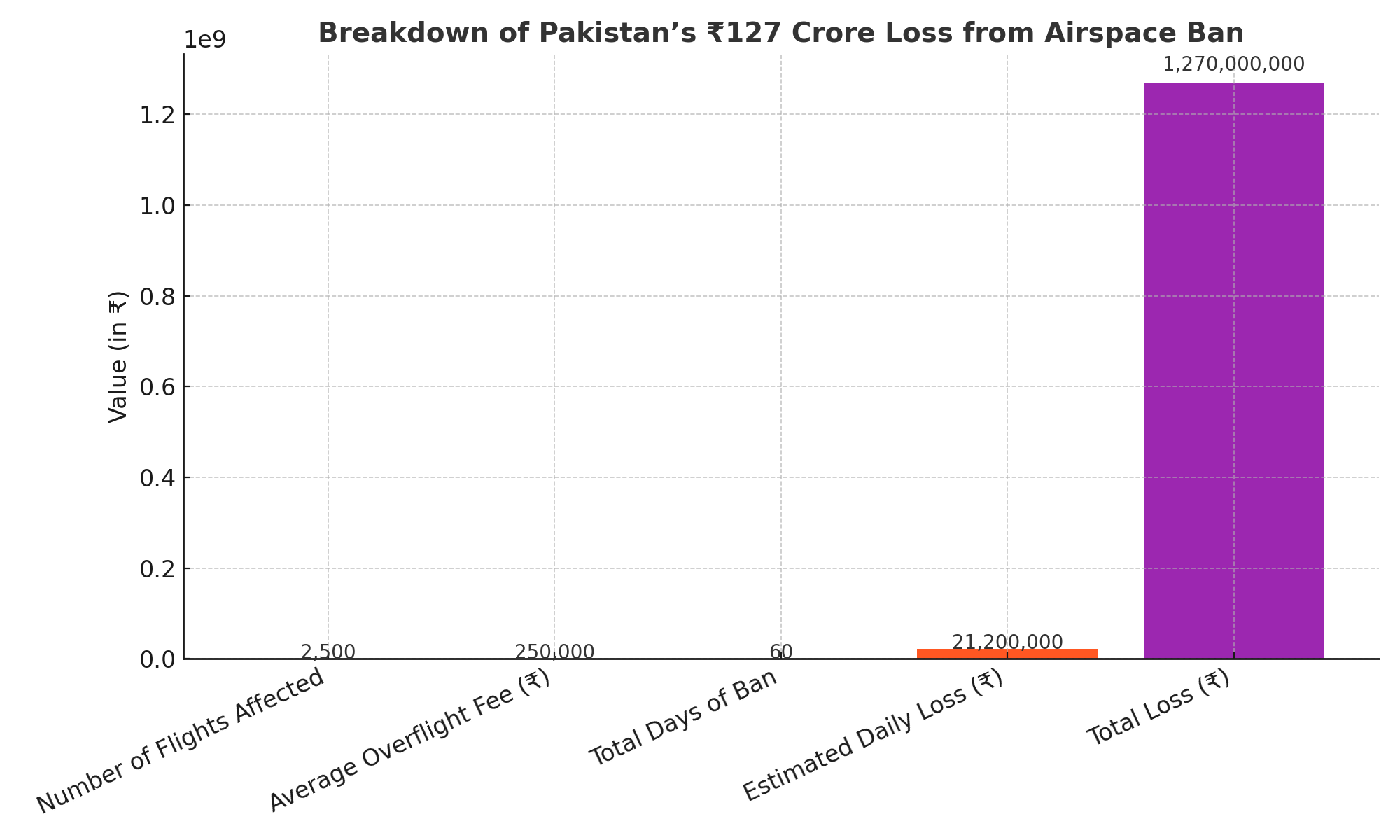
For Pakistan, this meant zero overflight income from dozens of flights each day. Industry insiders told Jan Jagran Darpan that each long-haul overflight can earn Pakistan thousands of dollars in charges. Over 60 days, this accumulated into a staggering ₹127 crore loss.
Impact Beyond the Balance Sheet
While the monetary loss is measurable, the real impact extends further:
- Reputation hit: The decision signaled instability in Pakistan’s aviation policy, which can deter future route planning by airlines.
- Operational strain: The CAA had to adjust flight permissions for other nations, sometimes causing confusion and congestion on alternate routes.
- Passenger inconvenience: Extended flight times and increased ticket prices due to higher fuel costs affected travelers on both sides of the border.
India’s Response
From India’s perspective, while the airspace closure caused inconvenience to passengers and additional operational costs to Indian airlines, it did not create a long-term strategic setback. Indian carriers adapted by using alternative corridors, though at higher costs.
Privately, Indian aviation experts view Pakistan’s move as “economically self-harming,” noting that overflight fees form a consistent revenue stream that countries generally avoid disrupting without strong cause.
Historical Context
This is not the first time Pakistan has shut its airspace to India. A similar closure occurred after the Balakot airstrike in 2019, lasting over four months and costing Pakistan an estimated ₹350 crore in overflight revenue. Aviation analysts point out that such bans tend to hurt the country enforcing them more than the target nation, especially when the enforcing country’s airspace is part of key global flight corridors.
The Bigger Picture
The ₹127 crore figure is a reminder of how interconnected global aviation is, and how political moves can directly dent national revenues. While Pakistan may have aimed to display political firmness, the outcome has highlighted the high cost of such strategies — both in terms of finances and international perception.
As per industry observers, with rising economic pressures domestically, Pakistan may find it increasingly difficult to justify similar long closures in the future.
Related Posts


Stay Informed With the Latest & Most Important News
Previous Post
Next Post


Advertisement









Advertisement
