

Now Reading: Inflation Holds Steady – A Temporary Relief for Consumers
-
01
Inflation Holds Steady – A Temporary Relief for Consumers


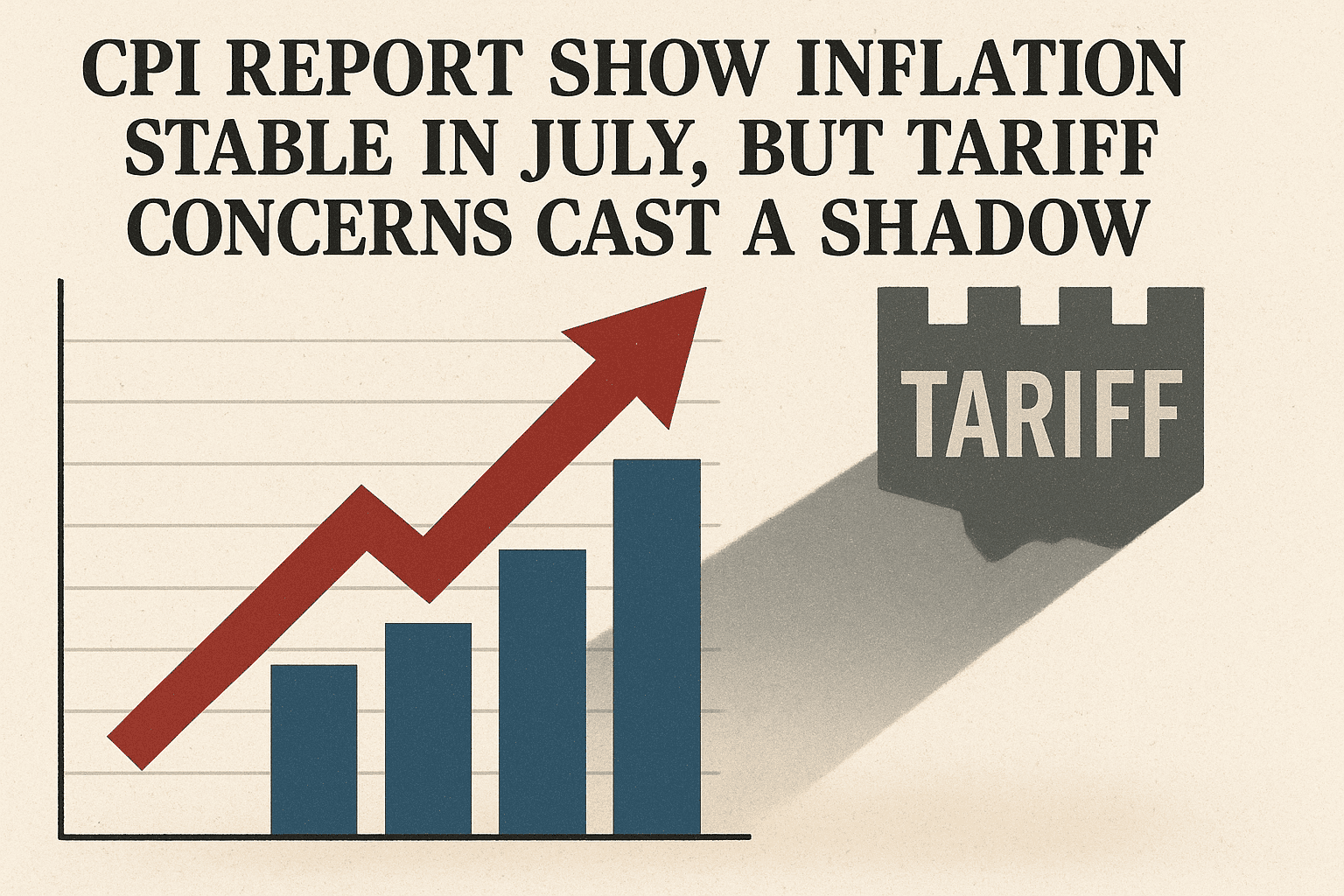
The latest Consumer Price Index (CPI) report for July has revealed that inflation remained stable, neither surging nor dropping sharply compared to the previous month. This consistency comes as a relief to households and businesses that have been navigating a turbulent economic landscape marked by fluctuating prices over the past year.
According to official data, core inflation — which excludes volatile food and energy prices — showed minimal movement, suggesting that underlying price pressures have not worsened in the short term. Food prices, however, continue to remain on the higher side, particularly for essentials like grains, pulses, and cooking oil, while certain energy segments saw slight corrections due to stable global crude prices.
Tariff Tensions Loom Large
While inflation numbers for July appear under control, looming economic headwinds are on the horizon. The recent announcement of additional tariffs by the United States, particularly targeting key global supply chains, has raised fears of price escalation in the coming months.
Economists warn that these tariffs, if fully implemented, could disrupt the movement of goods, increase input costs for manufacturers, and lead to a cascading effect on retail prices. For countries like India, which are deeply integrated into global trade networks, the indirect impact could be significant — especially for electronics, machinery parts, and certain agricultural imports.
Impact on India’s Economy
Indian trade experts believe that while direct exposure to some tariff categories may be limited, the indirect consequences — such as costlier imports from third countries and delays in global shipping routes — could feed into domestic inflation.
- Manufacturing Costs: Industries dependent on imported components, especially in electronics, automotive, and textiles, might see a rise in costs.
- Export Competitiveness: Higher tariffs in destination markets could slow demand for certain Indian products, particularly in the U.S. and Europe.
- Consumer Spending: If manufacturers pass on increased costs to buyers, household budgets could face renewed strain.
What Experts Are Saying
Several market analysts have cautioned that the “calm” in July’s inflation numbers may be temporary. A senior economist from a leading policy think tank stated that “once tariffs begin to filter through global supply chains, the impact on prices could be visible within a quarter.”
On the other hand, some industry bodies are optimistic that proactive government measures, such as promoting domestic manufacturing under ‘Make in India’ and securing alternate trade agreements, could cushion the blow.
Government’s Response
The Indian Ministry of Finance is closely monitoring the situation. Sources indicate that internal meetings have been held to assess the possible impact of U.S. tariffs and to identify sectors most at risk. The Reserve Bank of India (RBI) is also expected to keep interest rates steady for now, balancing the need for growth with inflation control.
The Road Ahead
For now, July’s CPI data gives policymakers some breathing space. However, the next few months will be crucial. If tariffs take effect on a large scale, India — along with many other economies — could see a fresh wave of inflationary pressure.
The Editorial Team of Jan Jagran Darpan will continue to track how global trade tensions, domestic policy moves, and consumer price trends interact to shape the country’s economic health. For households and businesses alike, the key message is clear — stay prepared for potential cost adjustments ahead.
Related Posts



Stay Informed With the Latest & Most Important News
Previous Post
Next Post


Advertisement









Advertisement
