

Now Reading: High-Speed Diplomacy: India and Japan Seal Ties on the Shinkansen Tracks
-
01
High-Speed Diplomacy: India and Japan Seal Ties on the Shinkansen Tracks

High-Speed Diplomacy: India and Japan Seal Ties on the Shinkansen Tracks

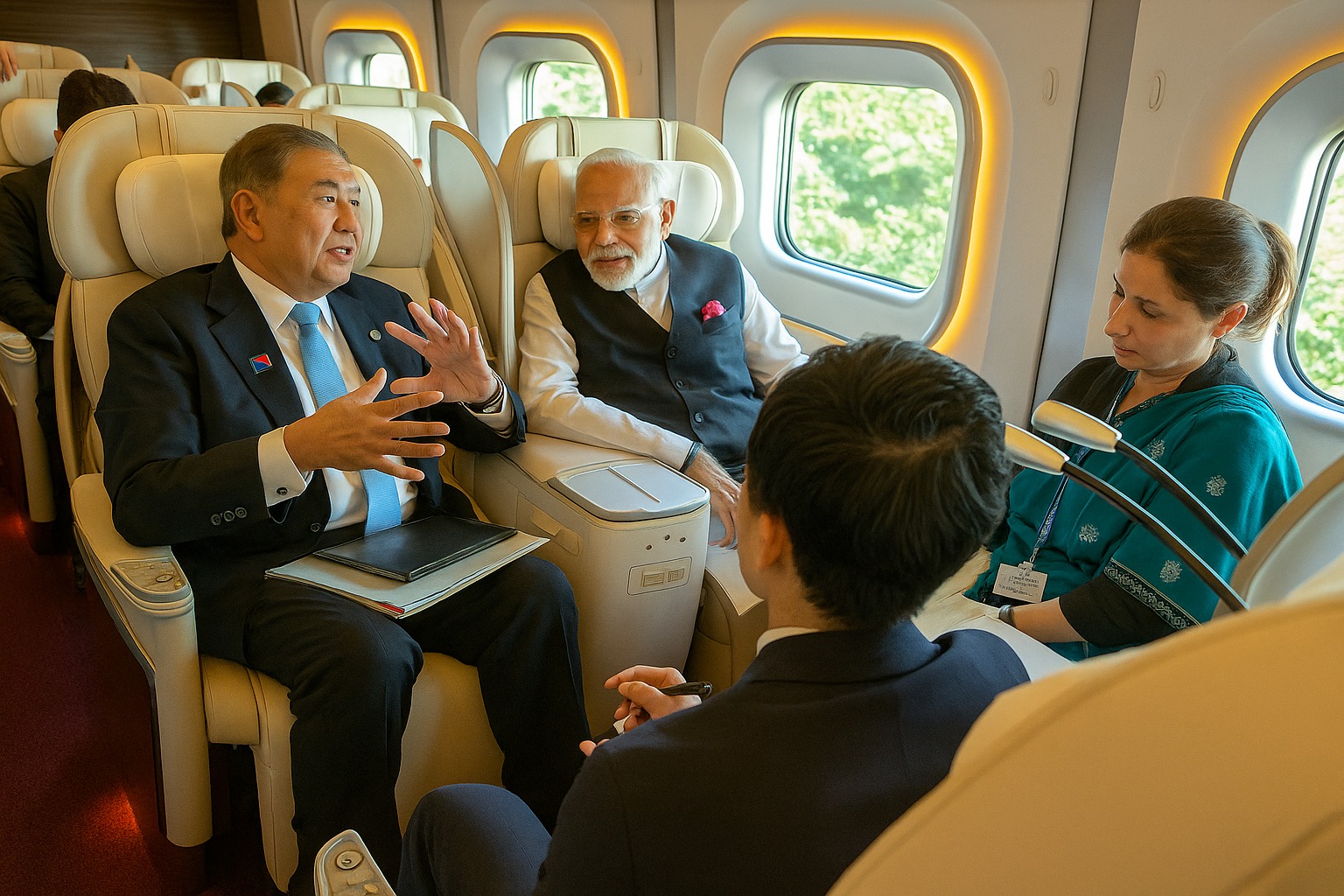
A Journey Beyond Tracks: A Diplomatic Gesture in Motion. In the fast-moving world of high-stakes diplomacy, few gestures are as evocative as a shared ride on Japan’s legendary Shinkansen. During his two-day visit to Japan, Prime Minister Narendra Modi and Japanese Prime Minister Shigeru Ishiba collectively boarded a bullet train from Tokyo to Sendai. The move encapsulated the deepening bond between the two democracies—highlighting technological camaraderie, strategic alignment, and forward-looking cooperation.
Highlights That Defined the Bullet Ride
Witnessing the ALFA-X Prototype
En route, both leaders observed Japan’s cutting-edge high-speed rail prototype—the ALFA-X. Developed to push speeds to 360–400 km/h, the train symbolizes next-generation rail innovation. Modi’s presence during the ALFA-X briefing showcased his recognition of technological excellence—reflective of India’s own bullet train ambitions connecting Mumbai and Ahmedabad.
Engaging With Indian Locomotive Pilots in Training
At Sendai, Modi personally met Indian locomotive drivers undergoing training under Japan’s East Railway Company (JR East). These exchanges underline how the bullet train is more than a piece of machinery—it’s a bridge for skill transfer, an exchange of craftsmanship and confidence-building, strengthening India’s institutional and technical readiness.
Symbolic Arrival and Cultural Warmth
Arriving in Sendai, Modi was greeted with heartfelt chants of “Modi-san, welcome!” by residents and the Indian diaspora, illustrating mutual respect and warmth. The moment encapsulated how infrastructure diplomacy can flow into deeper cultural embrace and trust.
Rail Diplomacy Under the Broader Indo-Pacific Vision
This symbolic journey unfolded against a backdrop of strategic urgency. Amid rising U.S. tariffs affecting Indian exports and China’s expanding influence, India and Japan reaffirmed their alignment in critical domains.
- Strategic Infrastructure Collaboration: The high-speed rail journey signals symbolic backing for projects like the Mumbai–Ahmedabad corridor, where Japanese technology and funding are integral.
- Bilateral Momentum Across Sectors: Beyond rail, the visit saw 21 key agreements signed—spanning semiconductors, AI, clean energy, defense, and innovation—pointing toward technology-dense cooperation.
- Investment Surge: Japan pledged up to ¥10 trillion over the next decade to Indian ventures spanning defense, infrastructure, and emerging tech.
- Human Capital and Exchange: The two nations set a target of 500,000 student and worker exchanges over five years—cementing mobility as a pillar of future strategy.
The High-Speed Symbolism: What It Means for India
Technology Meets Scale
India stands at an inflection point—welcome investments fuse with visionary infrastructure to drive not just growth, but transformation. The Shinkansen ride embodies this: world-class technology meeting Indian ambition and scale.
Diplomacy in Motion
Few acts convey partnership better than traveling together—especially at 300 km/h. The ride evoked both precision and pace, metaphors essential for India’s global strategy as it navigates geopolitical currents.
Continuity in a Long-Term Vision
Photographs from Modi’s 2007 visit—when he, as Gujarat Chief Minister, peeked into a bullet train cockpit—resurfaced, reinforcing continuity. Two decades later, seeing him take that journey in summit-level company underscores the strategic arc between vision and execution.
Related Posts
Stay Informed With the Latest & Most Important News
Previous Post
Next Post

Advertisement








Advertisement